wa Makokha – författare
Visar alla böcker från författaren wa Makokha. Handla med fri frakt och snabb leverans.
2 produkter
2 produkter
E-bok
PDF, Engelska, 2018577 kr
Läs direkt efter köp
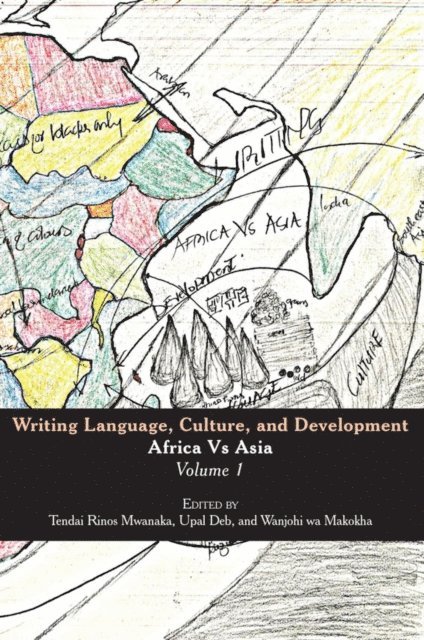
Writing Language, Culture and Development has 2 essays, 6 stories, 63 poems, 2 plays, and 50 translations into 13 languages; Chinese, Japanese, Nepalese, Arabic, Russian, Korean, Kiswahili, Shona, Hausa, Idoma, Igbo, Akan Twi, and of course, English, from Authors and poets who reside in these among other countries: South Africa, Japan, Vietnam, Nepal, China, Korea, Rusia, Tunisia, Nigeria, India, USA, Canada, Australia, Italy, Zimbabwe, Ghana, Kenya, and the UK, who are connected to these two continents, Asia and Africa. Nurturing South-South interactions and interlocutions, spiritually is an open ended discourse and praxis. We envision this ground-breaking idea as testament to future cooperations between the two continents. We believe Africa and Asia can use their competencies, i.e., human capital, culture, and langauges, histories, and deconstructionist agendas, to create developmental competences and this book highlights and explore a number of pathways that creatives of the two lands can explore and exploit as they march into a future of Weltliteratur. The cast and nature of the book and its content is a product of thought, imagination and environment. We invite you to it,s offerings that individually, and collectively, accentuate our allied artistic commitment to the Humanities as an arena of thought on identities, languages, cultures, histories and epistemologies of postcolonial posture.
E-bok
PDF, Engelska, 2010553 kr
Läs direkt efter köp
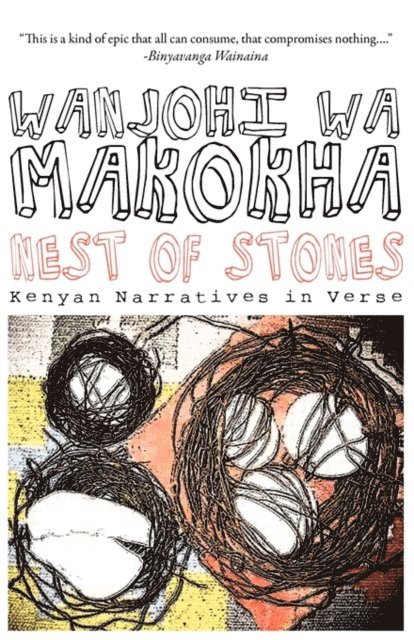
Wanjohi wa Makokha�s Nest of Stones is the second book of poems, since the publication of Sitawa Namwalie�s Cut off my Tongue (Storymoja: 2009), devoted in principal to the moment of the 2007-2008 Kenyan Crisis. The crisis is locally known as the Post-Election Violence (PEV). The book collects over sixty pieces of his recent verse chosen on the basis of artistic merit and social relevance. The poems focus sharply on the tumultuous period between the General Elections of 2007 and August 4th Referendum of 2010. Some of the poems relate to events drawn out of earlier moments in Kenyan history but are invoked as contexts of the recent discord. Wa Makokha�s interesting narratives are written in the form of lyrical folk verse. The verses are poignant vignettes, out of experiences of different communities and regions of Kenya, serving as repositories of the memory of a tumultuous moment in the life of a nation. Nest of Stones derives its themes from the commonwealth of Kenyan experiences across ethnic and political divides. This idea of the interrelatedness of the peoples inhabiting the Kenyan space; is in a way, a veritable interrogation of the �imagined community� leitmotif most often recoursed to when analyzing the tensions of co-existence in the postcolonial world. The heart of these amazing poems lies in Kenya but their philosophy of life is universal.