W.A. Poucher – författare
Visar alla böcker från författaren W.A. Poucher. Handla med fri frakt och snabb leverans.
10 produkter
10 produkter
Inbunden, Engelska, 1992
2 161 kr
Skickas inom 10-15 vardagar
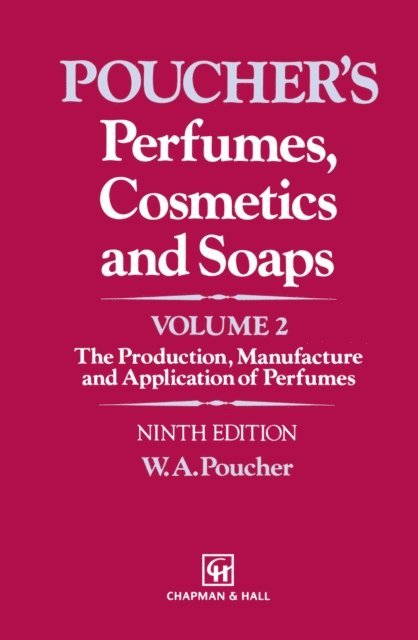
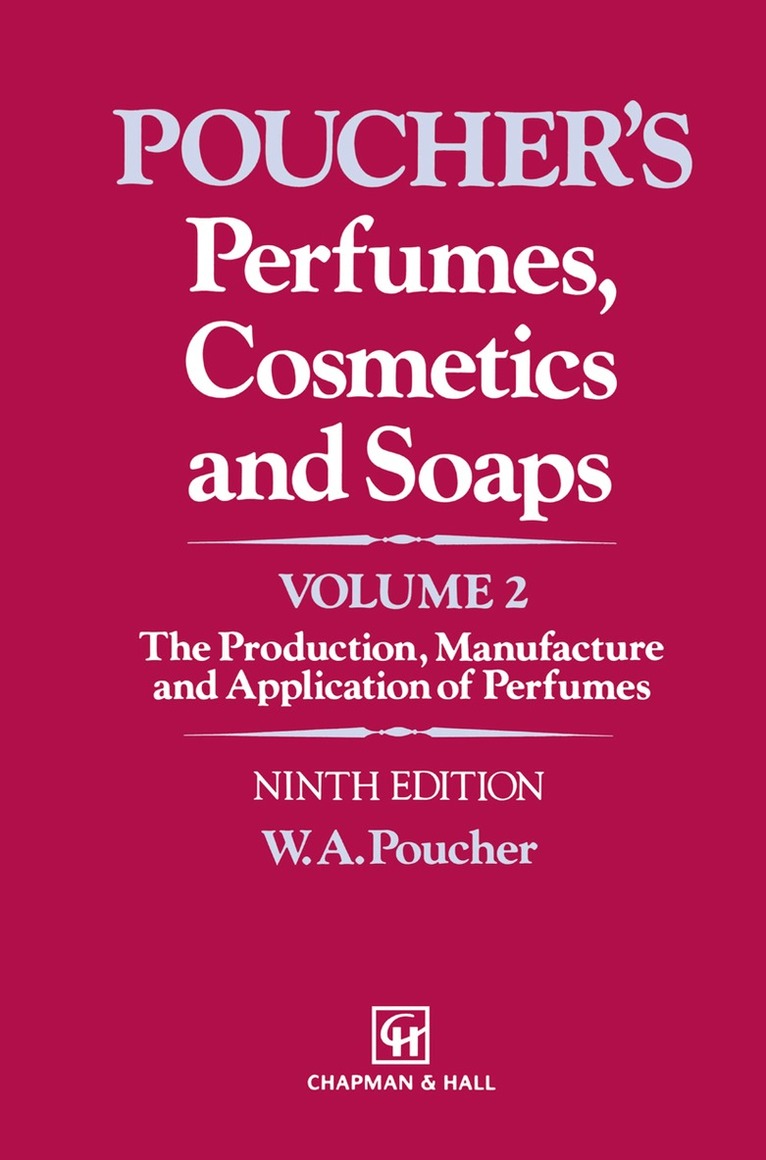
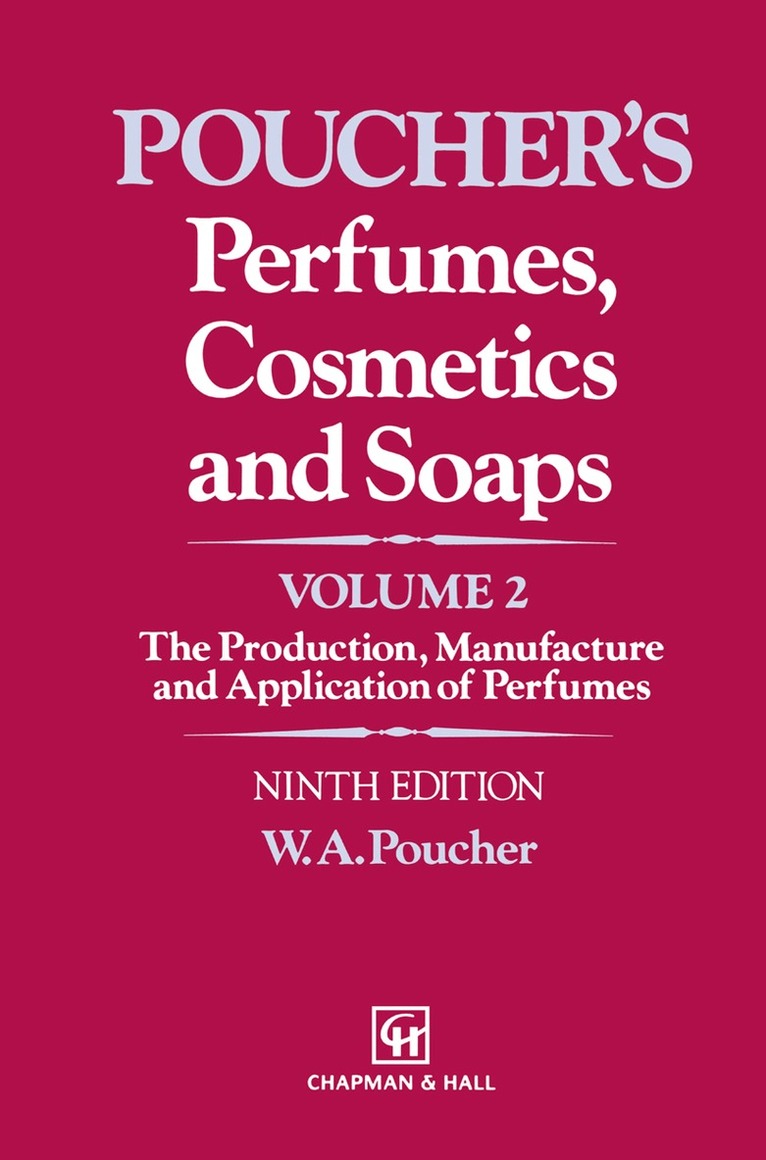
During the past decade there have been many changes in the perfumery industry which are not so much due to the discovery and application of new raw materials, but rather to the astronomic increase in the cost of labour required to produce them. This is reflected more particularly in the flower industry, where the cost of collecting the blossoms delivered to the factories has gone up year after year, so much so that most flowers with the possible exception of Mimosa, have reached a cost price which has compelled the perfumer to either reduce his purchases of absolutes and concretes, or alternatively to substitute them from a cheaper source, or even to discontinue their use. This development raises an important and almost insoluble problem for the perfumer, who is faced with the necessity of trying to keep unchanged the bouquet of his fragrances, and moreover, to ensure no loss of strength and diffusiveness. Of course, this problem applies more especially to the adjustment of formulae for established perfumes, because in every new creation the present high cost of raw materials receives imperative con sideration before the formula is approved.
Häftad, Engelska, 2012
562 kr
Skickas inom 10-15 vardagar
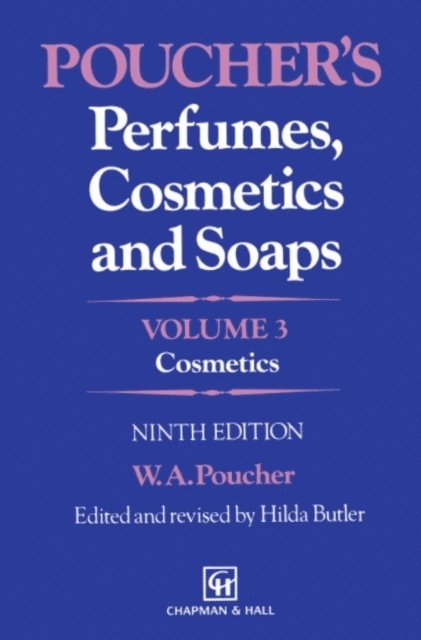
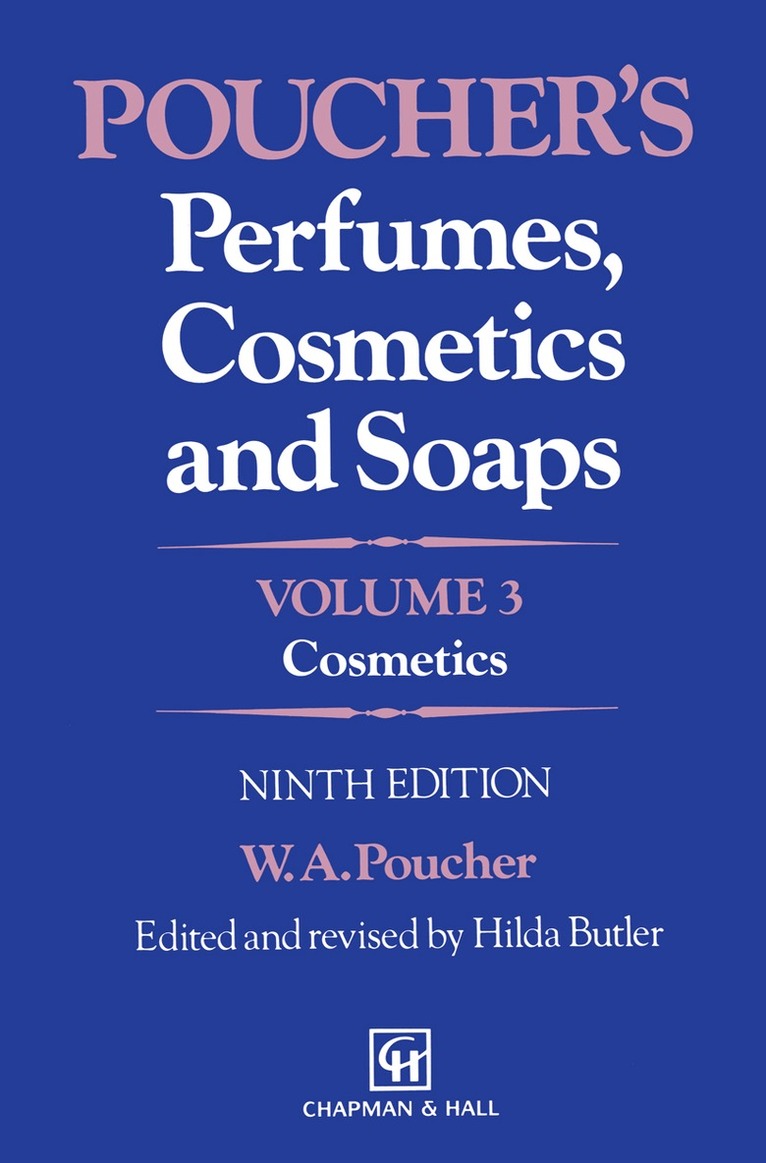
Cosmetic Science has developed greatly since the publication of the 8th edition of this textbook in 1974. Although the first part of this volume still consists of chapters about product preparations in alphabetical order, each product category has been revised and updated by a specialist. An outline of the biology, structure and function of skin, hair, teeth and nails and the reasons for the need for cosmetics are given in those dealing with the relevant preparations. Throughout, the word Cosmetics includes toiletries and thus all products which protect, cleanse, adorn, and perfume the human body, and combat body odour and perspiration. The 'f' spelling for the element 'sulfur' and its derivatives has been used following the recommendations of the International Union of Pure and Applied Chemistry (IUP AC) and the decision taken by the Royal Society of Chemistry (RSC) and the British Standards Institute (BSI) to use 'f' instead of 'ph' in all their publications. This stems from the derivation of the use of the 'f' from Latin and its use in England until the 15th century.
Häftad, Engelska, 2012
2 557 kr
Skickas inom 10-15 vardagar
During the past decade there have been many changes in the perfumery industry which are not so much due to the discovery and application of new raw materials, but rather to the astronomic increase in the cost of labour required to produce them. This is reflected more particularly in the flower industry, where the cost of collecting the blossoms delivered to the factories has gone up year after year, so much so that most flowers with the possible exception of Mimosa, have reached a cost price which has compelled the perfumer to either reduce his purchases of absolutes and concretes, or alternatively to substitute them from a cheaper source, or even to discontinue their use. This development raises an important and almost insoluble problem for the perfumer, who is faced with the necessity of trying to keep unchanged the bouquet of his fragrances, and moreover, to ensure no loss of strength and diffusiveness. Of course, this problem applies more especially to the adjustment of formulae for established perfumes, because in every new creation the present high cost of raw materials receives imperative con sideration before the formula is approved.
Häftad, Engelska, 2013
1 448 kr
Skickas inom 10-15 vardagar
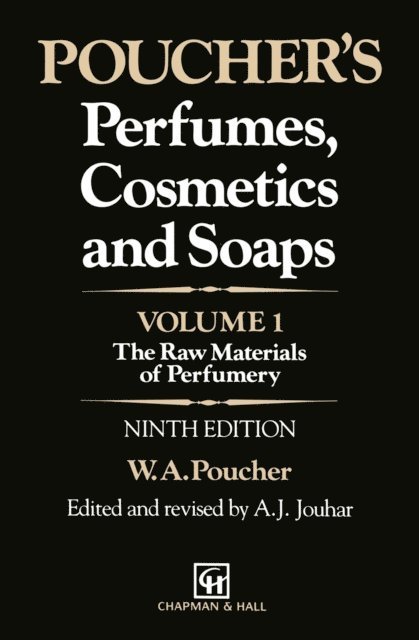
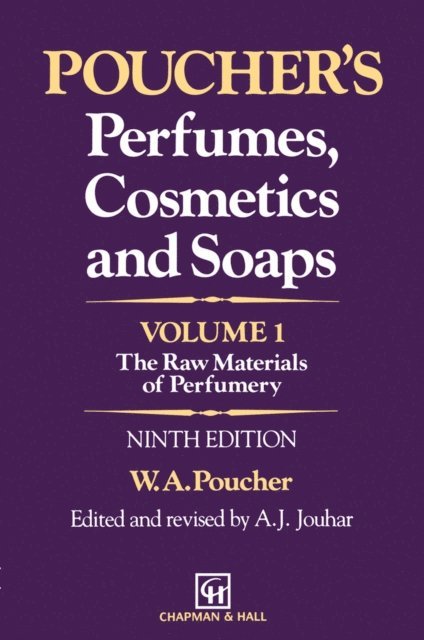
This classic work by Poucher, first published in 1923, was last produced in three volumes titled, respectively The Raw Materials of Perfumery (seventh edition, 1974), The Production, Manufacture and Application of Perfumes (eighth edition, 1974) and Modern Cosmetics (eighth edition, 1974). Its popularity is well demonstrated by there having been three reprints of these editions in 1976, 1979 and 1984, res pecti vel y . The history of events can be traced by reference to the prefaces to earlier editions and those interested should study these with care since they give a fascinating insight into developments in the subject fields covered by Poucher's Perfumes, Cosmetics and Soaps over the years. It is not proposed to provide a resume here. In this Volume I, the current edition attempts to provide data about raw materials in a more formalized way than before, so that not only the history of some compounds can be checked, but also so that useful reference information can be obtained. It is particularly relevant to do this, since it is not always easy to be certain of nomenclature. Moreover, as we move towards 'ingredient labelling' (a trend not welcomed by some), a high level of uniformity will be needed. Whether this will come from adoption of CTFA terminology, use of CAS numbers or some other system is not clear. Where possible, such data have been included so that readers may identify materials more readily. Where given, CAS numbers are located in the top right-hand corner of each entry.
E-bok
PDF, Engelska, 2012755 kr
Läs direkt efter köp
This classic work by Poucher, first published in 1923, was last produced in three volumes titled, respectively The Raw Materials of Perfumery (seventh edition, 1974), The Production, Manufacture and Application of Perfumes (eighth edition, 1974) and Modern Cosmetics (eighth edition, 1974). Its popularity is well demonstrated by there having been three reprints of these editions in 1976, 1979 and 1984, respectively. The history of events can be traced by reference to the prefaces to earlier editions and those interested should study these with care since they give a fascinating insight into developments in the subject fields covered by Poucher''s Perfumes, Cosmetics and Soaps over the years. It is not proposed to provide a resume here. In this Volume I, the current edition attempts to provide data about raw materials in a more formalized way than before, so that not only the history of some compounds can be checked, but also so that useful reference information can be obtained. It is particularly relevant to do this, since it is not always easy to be certain of nomenclature. Moreover, as we move towards ''ingredient labelling'' (a trend not welcomed by some), a high level of uniformity will be needed. Whether this will come from adoption of CTFA terminology, use of CAS numbers or some other system is not clear. Where possible, such data have been included so that readers may identify materials more readily. Where given, CAS numbers are located in the top right-hand corner of each entry.
Häftad, Engelska, 2012
599 kr
Skickas inom 10-15 vardagar
This classic work by Poucher, first published in 1923, was last produced in three volumes titled, respectively The Raw Materials of Perfumery (seventh edition, 1974), The Production, Manufacture and Application of Perfumes (eighth edition, 1974) and Modern Cosmetics (eighth edition, 1974). Its popularity is well demonstrated by there having been three reprints of these editions in 1976, 1979 and 1984, respectively. The history of events can be traced by reference to the prefaces to earlier editions and those interested should study these with care since they give a fascinating insight into developments in the subject fields covered by Poucher's Perfumes, Cosmetics and Soaps over the years. It is not proposed to provide a resume here. In this Volume I, the current edition attempts to provide data about raw materials in a more formalized way than before, so that not only the history of some compounds can be checked, but also so that useful reference information can be obtained. It is particularly relevant to do this, since it is not always easy to be certain of nomenclature. Moreover, as we move towards 'ingredient labelling' (a trend not welcomed by some), a high level of uniformity will be needed. Whether this will come from adoption of CTFA terminology, use of CAS numbers or some other system is not clear. Where possible, such data have been included so that readers may identify materials more readily. Where given, CAS numbers are located in the top right-hand corner of each entry.
E-bok
PDF, Engelska, 2012714 kr
Läs direkt efter köp
Cosmetic Science has developed greatly since the publication of the 8th edition of this textbook in 1974. Although the first part of this volume still consists of chapters about product preparations in alphabetical order, each product category has been revised and updated by a specialist. An outline of the biology, structure and function of skin, hair, teeth and nails and the reasons for the need for cosmetics are given in those dealing with the relevant preparations. Throughout, the word Cosmetics includes toiletries and thus all products which protect, cleanse, adorn, and perfume the human body, and combat body odour and perspiration. The ''f'' spelling for the element ''sulfur'' and its derivatives has been used following the recommendations of the International Union of Pure and Applied Chemistry (IUP AC) and the decision taken by the Royal Society of Chemistry (RSC) and the British Standards Institute (BSI) to use ''f'' instead of ''ph'' in all their publications. This stems from the derivation of the use of the ''f'' from Latin and its use in England until the 15th century.
E-bok
PDF, Engelska, 20122 760 kr
Läs direkt efter köp
During the past decade there have been many changes in the perfumery industry which are not so much due to the discovery and application of new raw materials, but rather to the astronomic increase in the cost of labour required to produce them. This is reflected more particularly in the flower industry, where the cost of collecting the blossoms delivered to the factories has gone up year after year, so much so that most flowers with the possible exception of Mimosa, have reached a cost price which has compelled the perfumer to either reduce his purchases of absolutes and concretes, or alternatively to substitute them from a cheaper source, or even to discontinue their use. This development raises an important and almost insoluble problem for the perfumer, who is faced with the necessity of trying to keep unchanged the bouquet of his fragrances, and moreover, to ensure no loss of strength and diffusiveness. Of course, this problem applies more especially to the adjustment of formulae for established perfumes, because in every new creation the present high cost of raw materials receives imperative con sideration before the formula is approved.
E-bok
PDF, Engelska, 20121 785 kr
Läs direkt efter köp
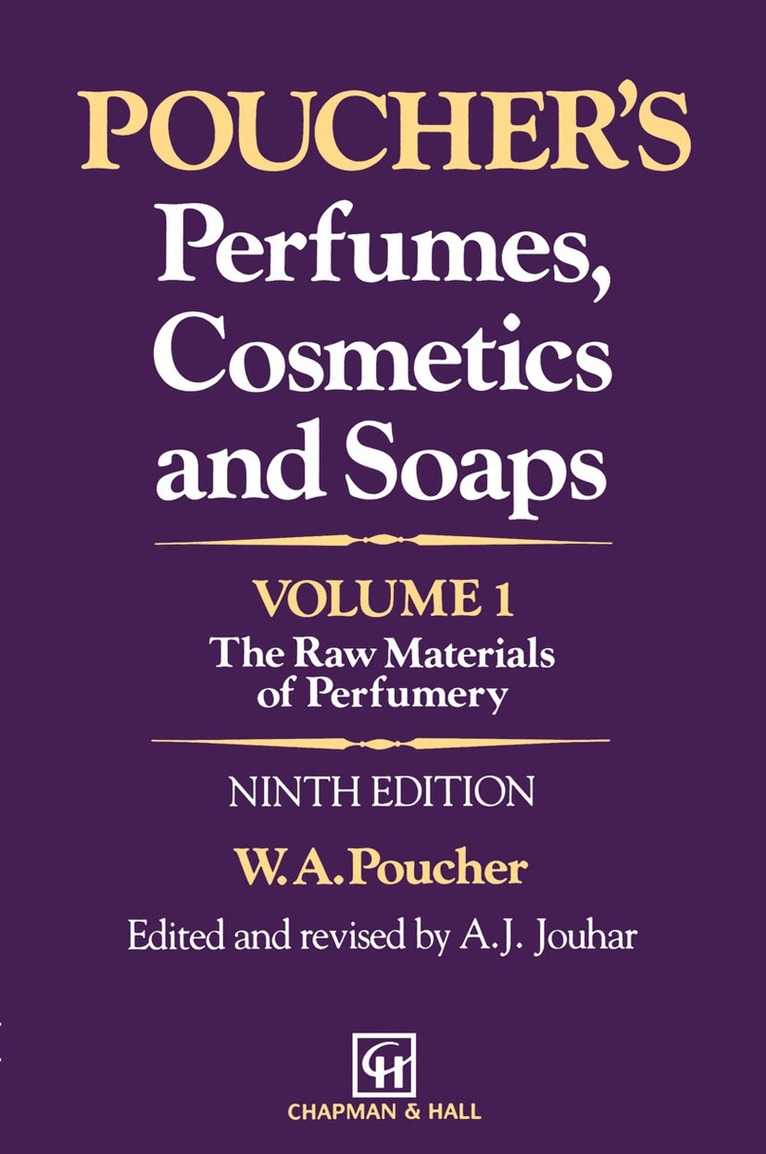
This classic work by Poucher, first published in 1923, was last produced in three volumes titled, respectively The Raw Materials of Perfumery (seventh edition, 1974), The Production, Manufacture and Application of Perfumes (eighth edition, 1974) and Modern Cosmetics (eighth edition, 1974). Its popularity is well demonstrated by there having been three reprints of these editions in 1976, 1979 and 1984, res pecti vel y . The history of events can be traced by reference to the prefaces to earlier editions and those interested should study these with care since they give a fascinating insight into developments in the subject fields covered by Poucher''s Perfumes, Cosmetics and Soaps over the years. It is not proposed to provide a resume here. In this Volume I, the current edition attempts to provide data about raw materials in a more formalized way than before, so that not only the history of some compounds can be checked, but also so that useful reference information can be obtained. It is particularly relevant to do this, since it is not always easy to be certain of nomenclature. Moreover, as we move towards ''ingredient labelling'' (a trend not welcomed by some), a high level of uniformity will be needed. Whether this will come from adoption of CTFA terminology, use of CAS numbers or some other system is not clear. Where possible, such data have been included so that readers may identify materials more readily. Where given, CAS numbers are located in the top right-hand corner of each entry.
667 kr
Skickas inom 5-8 vardagar