Waheed Shahzad – författare
Visar alla böcker från författaren Waheed Shahzad. Handla med fri frakt och snabb leverans.
4 produkter
4 produkter
E-bok
Engelska, 2022110 kr
Läs direkt efter köp
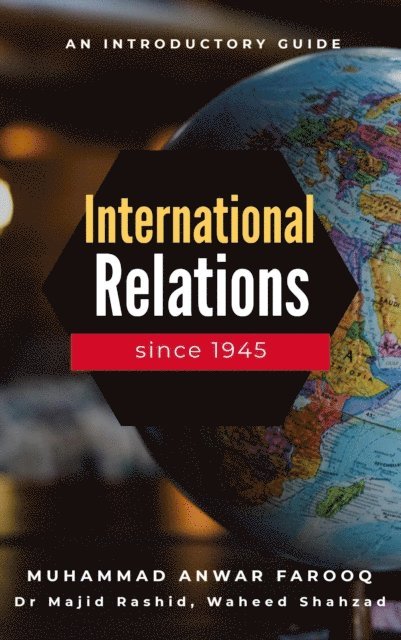
First of all, thank you for choosing this book. This book contains an introduction to available approaches and theories in studying international relations. The content also includes details about different schools of thought in IR. International Relations is an emerging and essential area of study in Political Sciences.The study of international relations in our time is an introduction to the art and science of the survival of mankind. If civilization is killed in the nearest future, it will not be killed by famine or plague, but by foreign policy and international relations. Due to increasing human-activities, the relations among various states has been changing and due to these continuous changes in international relations, the meaning, nature and scope of international relations have been changing. Many factors affect the nature of international relations such as the evolution of new nations, technological development, nuclear research, the rise of a multipolar world, the emergence of a new order, non-state organizations, global problems, so and so forth. Due to changing nature of international relations, new approaches and theories are continuously replacing the old ones. So, it is necessary to have a clear idea of the approaches and theories involved in the study of IR.This is an introductory book and it is based on the handouts that we prepared as course material to facilitate our students in IR class. We hope this collection will help the reader to understand the basic theories and philosophical aspects of the study of IR.
E-bok
Engelska, 202258 kr
Läs direkt efter köp
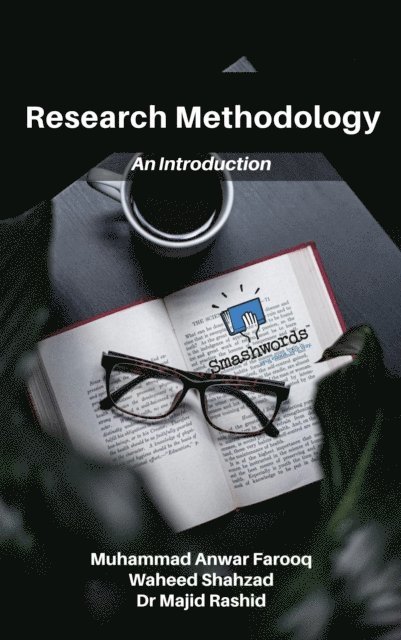
This book is designed to introduce students to the basic concepts of research in the social sciences and related disciplines. This book is based on our lecture materials developed during teaching the class on Research Methodology. The target audience for this book includes students, junior researchers, and instructors teaching courses on research methodology. The content of this book is designed to introduce basic concepts in research especially in social sciences. It contains a basic definition of research, research methodology and research methods. Concise details about primary and secondary sources of research are also part of this book. Details about classification of research, qualitative & quantitative research, objectivity & subjectivity in research, definition and types of hypothesis, variables in research, literature review and methods of data collection are also included in the book. In the last chapter, a brief about the research proposal is included and it would be helpful for beginner researchers.The book is succinct and compact by design. While writing the book, we decided to focus only on essential concepts, and not fill pages with clutter that can divert the students' attention to less relevant or tangential issues. The book is structured into 10 chapters. However, instructors can add, drop, stretch, or condense topics to customize the book to the specific needs of their curriculum.Lastly, we plan to continually update this book based on emerging trends in social research. If there is any new or interesting content that you wish to see in future editions, please drop us a note, and we shall try our best to accommodate them. Comments, criticisms, or corrections to any of the existing content will also be gratefully appreciated.
E-bok
Engelska, 2023101 kr
Läs direkt efter köp
In the ever-evolving landscape of global politics, understanding the intricate dynamics of East-West relations has remained a paramount endeavor. This book serves as an indispensable guide on an illuminating journey through the tumultuous corridors of history, providing profound insights into the pivotal moments, ideologies, and actors that have shaped the world from the ashes of World War II to the early 21st century.The impact of World War II on global politics cannot be overstated. It was a crucible that reshaped the international order, sowing the seeds of both cooperation and confrontation. As the dust settled, the world found itself divided into two superpower blocs, giving birth to the Cold War and a new era of bipolarity. The policy of containment became the cornerstone of Western strategy, leading to a series of events that would define the course of history.In response to containment, the Soviet Union undertook its own initiatives, setting the stage for a prolonged ideological struggle. Meanwhile, the Third World became a battleground for influence, with South Asia, the Middle East, and Afghanistan emerging as key theaters of conflict and cooperation. Simultaneously, the winds of decolonization swept across the globe, reshaping the map of nations and fostering the emergence of the Non-aligned Movement.The internal divisions within the Communist bloc were not to be ignored. The Sino-Soviet split marked a significant rupture in the ideological unity of the Eastern bloc, while Sino-American rapprochement would have profound implications for global politics. The era of détente offered a glimpse of East-West cooperation and peaceful co-existence, but it was a fragile peace that would eventually yield to new realities.The disintegration of the Soviet Union marked the culmination of a complex web of factors, with profound consequences for global politics and international relations. It was a watershed moment that reverberated across the world.In the wake of the Cold War's end, the United Nations found itself facing a new set of challenges and opportunities. Its role and effectiveness in this transformed world order would be a subject of ongoing debate and adaptation. Meanwhile, Russia, emerging from the ashes of the Soviet Union, embarked on a tumultuous journey to find its place in the post-Soviet setting.The changing role of NATO in a world no longer defined by Cold War rivalry raised questions about its purpose and mission. Emerging regionalism and the proliferation of economic organizations reflected the shifting sands of international politics.The rise of China as a major global power has been one of the most consequential developments in recent history. Its ascent has not only reshaped the balance of power in Asia but has had far-reaching implications for the entire international system. In parallel, Japan and Germany emerged as economic powerhouses, playing influential roles in global economics. The Asia-Pacific region, with its economic dynamism and strategic significance, has risen to prominence, challenging traditional centers of power.As we delve into the pages of this book, we embark on a journey of discovery, exploring these complex and interwoven themes. We encounter statesmen and diplomats, ideologies and strategies, conflicts and collaborations. Through meticulous research and thoughtful analysis, the authors unravel the tapestry of East-West relations, providing readers with the tools to navigate the complexities of our ever-changing world. This introductory book is not just a historical account; it is a compass for understanding the past, present, and future of international relations.
E-bok
Engelska48 kr
Läs direkt efter köp