Wai-ming Ng – författare
Visar alla böcker från författaren Wai-ming Ng. Handla med fri frakt och snabb leverans.
3 produkter
3 produkter
Häftad, Engelska, 2000
340 kr
Skickas inom 10-15 vardagar
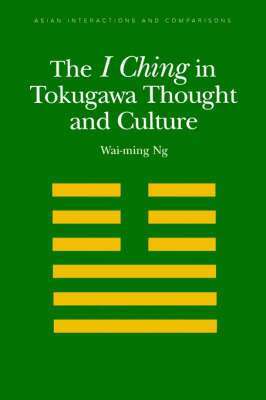
This pioneering study uses the I Ching (Book of Changes) to investigate the role of Chinese learning in the development of thought and culture in Tokugawa Japan (1603-1868). I Ching scholarship reached its apex during the Tokugawa, becoming one of the most popular and influential texts among Japanese intellectuals. It penetrated into many areas of Tokugawa life: politics, economics, religion, natural science, medicine, military studies, and popular culture. The I Ching in Tokugawa Thought and Culture represents a scholarly attempt to expose uncharted research territory, offering new analysis and materials. Many of the primary sources discussed here have never before been used in research or translated into English.
Häftad, Engelska, 2020
446 kr
Skickas
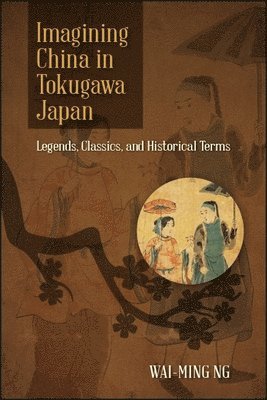
Pioneering study of the localization of Chinese culture in early modern Japan, using legends, classics, and historical terms as case studies.While current scholarship on Tokugawa Japan (1603–1868) tends to see China as either a model or "the Other," Wai-ming Ng's pioneering and ambitious study offers a new perspective by suggesting that Chinese culture also functioned as a collection of "cultural building blocks" that were selectively introduced and then modified to fit into the Japanese tradition. Chinese terms and forms survived, but the substance and the spirit were made Japanese. This borrowing of Chinese terms and forms to express Japanese ideas and feelings could result in the same things having different meanings in China and Japan, and this process can be observed in the ways in which Tokugawa Japanese reinterpreted Chinese legends, Confucian classics, and historical terms. Ng breaks down the longstanding dichotomies between model and "the other," civilization and barbarism, as well as center and periphery that have been used to define Sino-Japanese cultural exchange. He argues that Japanese culture was by no means merely an extended version of Chinese culture, and Japan's uses and interpretations of Chinese elements were not simply deviations from the original teachings. By replacing a Sinocentric perspective with a cross-cultural one, Ng's study represents a step forward in the study of Tokugawa intellectual history.
Inbunden, Engelska, 2019
1 241 kr
Tillfälligt slut
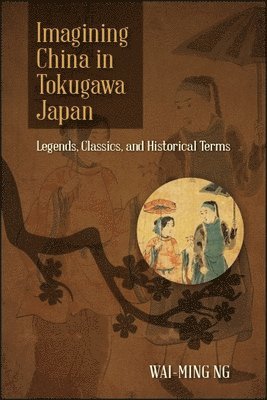
Pioneering study of the localization of Chinese culture in early modern Japan, using legends, classics, and historical terms as case studies.While current scholarship on Tokugawa Japan (1603–1868) tends to see China as either a model or "the Other," Wai-ming Ng's pioneering and ambitious study offers a new perspective by suggesting that Chinese culture also functioned as a collection of "cultural building blocks" that were selectively introduced and then modified to fit into the Japanese tradition. Chinese terms and forms survived, but the substance and the spirit were made Japanese. This borrowing of Chinese terms and forms to express Japanese ideas and feelings could result in the same things having different meanings in China and Japan, and this process can be observed in the ways in which Tokugawa Japanese reinterpreted Chinese legends, Confucian classics, and historical terms. Ng breaks down the longstanding dichotomies between model and "the other," civilization and barbarism, as well as center and periphery that have been used to define Sino-Japanese cultural exchange. He argues that Japanese culture was by no means merely an extended version of Chinese culture, and Japan's uses and interpretations of Chinese elements were not simply deviations from the original teachings. By replacing a Sinocentric perspective with a cross-cultural one, Ng's study represents a step forward in the study of Tokugawa intellectual history.