Wali Aslam – författare
1 183 kr
Skickas inom 5-8 vardagar
3 119 kr
Skickas inom 10-15 vardagar
2 359 kr
Skickas inom 10-15 vardagar
2 286 kr
Skickas inom 10-15 vardagar
763 kr
Läs direkt efter köp
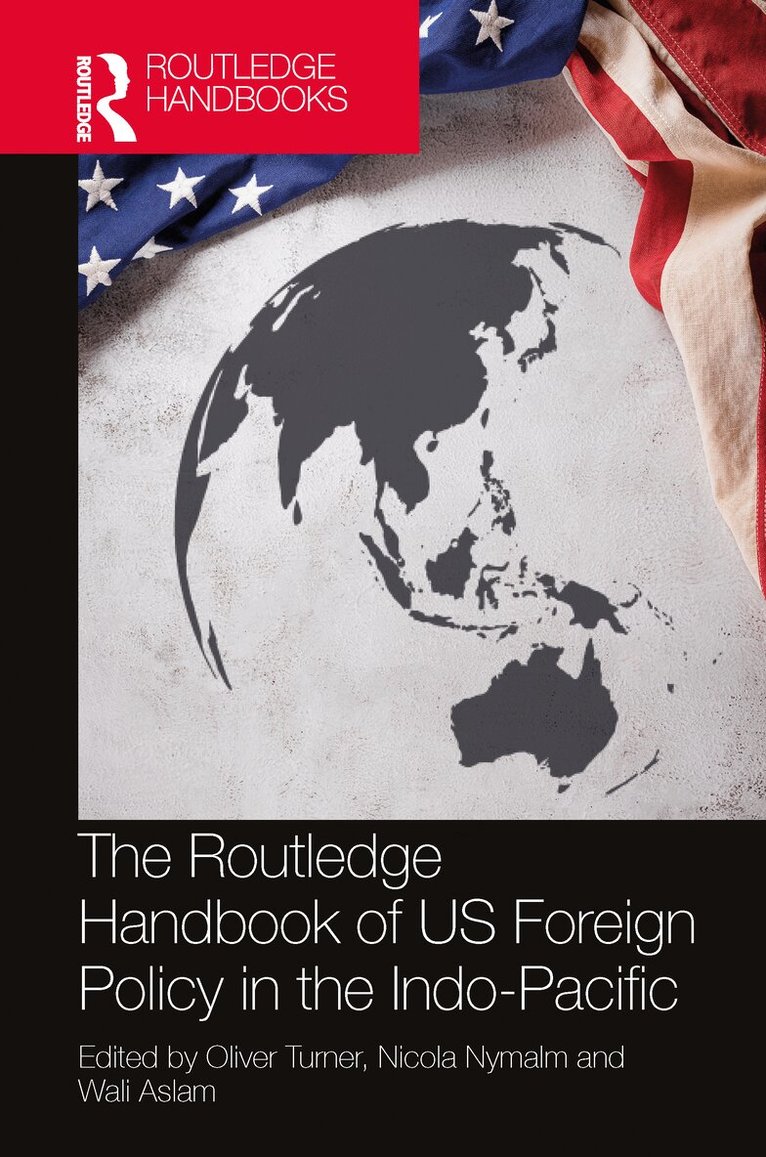
This handbook provides a comprehensive survey of US foreign policy throughout the Indo-Pacific. Home to around 60 percent of the world’s population; most of the world’s largest and fastest-growing economies; around half of the world’s states with full nuclear capabilities; and a complicated web of unresolved tensions, disputes, and conflicts, the Indo-Pacific is arguably the most diverse, dynamic, and contested region on Earth. US strategy there has evolved over centuries, with its physical presence going broadly unchallenged since at least the middle of the last century. However, the rapid development and expanding influence of China – alongside the growth of India, Indonesia, Vietnam, the Philippines, and others – as well as political and economic crises and disruptions within the United States itself, mean that in recent times the US has come to occupy a newly uncertain position and perceive a range of highly unfamiliar challenges.
To explore how the US has managed, and continues to manage, its regional history, and how it approaches the modern-day landscape of an Indo-Pacific only recently normalised within international political discourse, the book contains 33 newly commissioned chapters from leading experts in the field. It does so partly with help from the more traditional realms of International Relations theory as well as more critical realms. It also unpacks US policy and strategy as it pertains to regional governments, states, and multilateral institutions, as well as to pressing issues including inter-state security, human rights, trade, artificial intelligence, and cyber strategy. It does so in four parts:
History of the US in the Indo-Pacific Theorising US Policy and Presence in the Indo-Pacific The US and Indo-Pacific States and Institutions The US and Indo-Pacific IssuesThe book is designed to be of interest to students and scholars of the US in the Indo-/Asia Pacific; the international relations of the Indo-/Asia Pacific; and US foreign policy.
763 kr
Läs direkt efter köp
This handbook provides a comprehensive survey of US foreign policy throughout the Indo-Pacific. Home to around 60 percent of the world’s population; most of the world’s largest and fastest-growing economies; around half of the world’s states with full nuclear capabilities; and a complicated web of unresolved tensions, disputes, and conflicts, the Indo-Pacific is arguably the most diverse, dynamic, and contested region on Earth. US strategy there has evolved over centuries, with its physical presence going broadly unchallenged since at least the middle of the last century. However, the rapid development and expanding influence of China – alongside the growth of India, Indonesia, Vietnam, the Philippines, and others – as well as political and economic crises and disruptions within the United States itself, mean that in recent times the US has come to occupy a newly uncertain position and perceive a range of highly unfamiliar challenges.
To explore how the US has managed, and continues to manage, its regional history, and how it approaches the modern-day landscape of an Indo-Pacific only recently normalised within international political discourse, the book contains 33 newly commissioned chapters from leading experts in the field. It does so partly with help from the more traditional realms of International Relations theory as well as more critical realms. It also unpacks US policy and strategy as it pertains to regional governments, states, and multilateral institutions, as well as to pressing issues including inter-state security, human rights, trade, artificial intelligence, and cyber strategy. It does so in four parts:
History of the US in the Indo-Pacific Theorising US Policy and Presence in the Indo-Pacific The US and Indo-Pacific States and Institutions The US and Indo-Pacific IssuesThe book is designed to be of interest to students and scholars of the US in the Indo-/Asia Pacific; the international relations of the Indo-/Asia Pacific; and US foreign policy.
657 kr
Skickas inom 10-15 vardagar
714 kr
Läs direkt efter köp
This book evaluates American foreign policy actions from the perspective of great power responsibility, with three case studies: Operation Iraqi Freedom, American drone strikes in Pakistan and the post- 9/11 practice of extraordinary rendition.
This book argues that the US invasion of Iraq in 2003, American drone attacks in Pakistan and the practice of extraordinary rendition are the examples of irresponsible actions undertaken by the U.S. acting as a great power in international society. Focusing on a major theoretical approach of International Relations, the English School, this book considers the responsibilities of great powers in international society. It points to three obligations of great powers: to act according to the norm of legality, to act according to the norm of legitimacy, and to adhere to the principles of prudence. The author applies the criteria of legality, legitimacy and prudence, to analyse the three foreign policy endeavours of the U.S., and, developing a normative framework, clarifies the implications for future U.S. foreign policy.
This book will be of strong interest to students and scholars of international relations, international relations theory, American politics, foreign policy studies, international law, South Asian studies and Middle Eastern studies.
714 kr
Läs direkt efter köp
This book evaluates American foreign policy actions from the perspective of great power responsibility, with three case studies: Operation Iraqi Freedom, American drone strikes in Pakistan and the post- 9/11 practice of extraordinary rendition.
This book argues that the US invasion of Iraq in 2003, American drone attacks in Pakistan and the practice of extraordinary rendition are the examples of irresponsible actions undertaken by the U.S. acting as a great power in international society. Focusing on a major theoretical approach of International Relations, the English School, this book considers the responsibilities of great powers in international society. It points to three obligations of great powers: to act according to the norm of legality, to act according to the norm of legitimacy, and to adhere to the principles of prudence. The author applies the criteria of legality, legitimacy and prudence, to analyse the three foreign policy endeavours of the U.S., and, developing a normative framework, clarifies the implications for future U.S. foreign policy.
This book will be of strong interest to students and scholars of international relations, international relations theory, American politics, foreign policy studies, international law, South Asian studies and Middle Eastern studies.
677 kr
Skickas inom 10-15 vardagar
657 kr
Skickas inom 10-15 vardagar
763 kr
Läs direkt efter köp
This book explores whether the new capabilities made possible by precision-strike technologies are reshaping approaches to international intervention.
Since the end of the Cold War, US technological superiority has led to a more proactive and, some would argue, high risk approach to international military intervention. New technologies including the capacity to mount precision military strikes from high-level bombing campaigns and, more recently, the selective targeting of individuals from unmanned aerial vehicles (UAVs) have facilitated air campaigns, supported by Special Forces, without the commitment of large numbers of troops on the ground.
Such campaigns include, for example, NATO’s high-level aerial bombardment of Milosevic’s forces in Kosovo in 1999 and of Gaddafi’s in Libya in 2011, and the US operation involving Special Forces against Osama Bin Laden. The development of UAVs and electronic data intercept technologies has further expanded the potential scope of interventions, for example against Islamic militants in the tribal areas of Pakistan.
This volume examines three key and interrelated dimensions of these new precision-strike capabilities: (1) the strategic and foreign policy drivers and consequences; (2) the legal and moral implications of the new capabilities; and (3), the implications for decision-making at the strategic, operational and tactical levels.
This book will be of much interest to students of war and technology, air power, international intervention, security studies and IR.
763 kr
Läs direkt efter köp
This book explores whether the new capabilities made possible by precision-strike technologies are reshaping approaches to international intervention.
Since the end of the Cold War, US technological superiority has led to a more proactive and, some would argue, high risk approach to international military intervention. New technologies including the capacity to mount precision military strikes from high-level bombing campaigns and, more recently, the selective targeting of individuals from unmanned aerial vehicles (UAVs) have facilitated air campaigns, supported by Special Forces, without the commitment of large numbers of troops on the ground.
Such campaigns include, for example, NATO’s high-level aerial bombardment of Milosevic’s forces in Kosovo in 1999 and of Gaddafi’s in Libya in 2011, and the US operation involving Special Forces against Osama Bin Laden. The development of UAVs and electronic data intercept technologies has further expanded the potential scope of interventions, for example against Islamic militants in the tribal areas of Pakistan.
This volume examines three key and interrelated dimensions of these new precision-strike capabilities: (1) the strategic and foreign policy drivers and consequences; (2) the legal and moral implications of the new capabilities; and (3), the implications for decision-making at the strategic, operational and tactical levels.
This book will be of much interest to students of war and technology, air power, international intervention, security studies and IR.