Walter Block - Böcker
Visar alla böcker från författaren Walter Block. Handla med fri frakt och snabb leverans.
8 produkter
8 produkter
386 kr
Skickas inom 3-6 vardagar
447 kr
Skickas inom 5-8 vardagar
336 kr
Skickas inom 5-8 vardagar
244 kr
Skickas inom 3-6 vardagar
255 kr
Skickas inom 3-6 vardagar
566 kr
Skickas inom 10-15 vardagar
Dieser Buchtitel ist Teil des Digitalisierungsprojekts Springer Book Archives mit Publikationen, die seit den Anfängen des Verlags von 1842 erschienen sind. Der Verlag stellt mit diesem Archiv Quellen für die historische wie auch die disziplingeschichtliche Forschung zur Verfügung, die jeweils im historischen Kontext betrachtet werden müssen. Dieser Titel erschien in der Zeit vor 1945 und wird daher in seiner zeittypischen politisch-ideologischen Ausrichtung vom Verlag nicht beworben.
1 892 kr
Skickas inom 11-20 vardagar
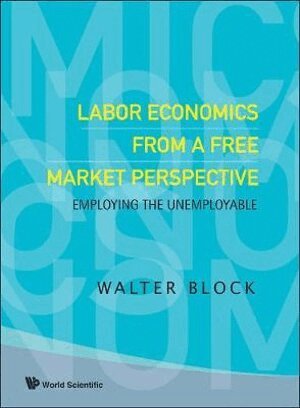
Labor is the most important of the three traditional factors of production (land, labor and capital), accounting for some 75% of the GDP. It is therefore important to focus on issues of labor economics. In this book the approach taken will be that of the free market philosophy of libertarianism, the perspective that allows the maximum of freedom, consistent with the responsibility of all to respect the equal rights of all others.The position of this book on unions is unique outside of the libertarian movement, and this is indicative of its analysis of several other issues, such as minimum wages. For scholars on the left, it is almost true that unions can do no wrong (for Marxists, they do not do enough, but that is another story). Their role is to raise wages for the workingman, and this task is almost unstintingly applauded. Conservatives, on the other hand, oppose unions root and branch (except for their support of foreign wars, which is also another story). To this end they support a welter of regulations, designed to reduce their power: limitations of check offs, forced secret ballots, etc.For libertarians, the analysis depends, intimately, on whether or not these are voluntary organizations. If they are, there is no more justification for imposing secret ballots on them than to do so for the chess or garden club. If they are not, they should not be weakened by restrictions, but, rather, banned, and their leaders imprisoned.

459 kr
Tillfälligt slut
Labor is the most important of the three traditional factors of production (land, labor and capital), accounting for some 75% of the GDP. It is therefore important to focus on issues of labor economics. In this book the approach taken will be that of the free market philosophy of libertarianism, the perspective that allows the maximum of freedom, consistent with the responsibility of all to respect the equal rights of all others.The position of this book on unions is unique outside of the libertarian movement, and this is indicative of its analysis of several other issues, such as minimum wages. For scholars on the left, it is almost true that unions can do no wrong (for Marxists, they do not do enough, but that is another story). Their role is to raise wages for the workingman, and this task is almost unstintingly applauded. Conservatives, on the other hand, oppose unions root and branch (except for their support of foreign wars, which is also another story). To this end they support a welter of regulations, designed to reduce their power: limitations of check offs, forced secret ballots, etc.For libertarians, the analysis depends, intimately, on whether or not these are voluntary organizations. If they are, there is no more justification for imposing secret ballots on them than to do so for the chess or garden club. If they are not, they should not be weakened by restrictions, but, rather, banned, and their leaders imprisoned.