Walter K. Dodds – författare
Visar alla böcker från författaren Walter K. Dodds. Handla med fri frakt och snabb leverans.
5 produkter
Freshwater Ecology
Concepts and Environmental Applications of Limnology
Av Walter K. Dodds, Matt R. Whiles
Häftad, 2019
1305 kr
Lägg i varukorg
Freshwater Ecology, Third Edition, covers everything from the basic chemical and physical properties of water, to the advanced and unifying concepts of community ecology and ecosystem relationships found in continental waters. Giving students a solid foundation for both courses and future …
Freshwater Ecology
Concepts and Environmental Applications
E-bok, 2002
1283 kr
Lägg i varukorg
Freshwater Ecology: Concepts and Environmental Applications is a general text covering both basic and applied aspects of freshwater ecology and serves as an introduction to the study of lakes and streams. Issues of spatial and temporal scale, anthropogenic impacts, and application of current …
Freshwater Ecology
Concepts and Environmental Applications of Limnology
Av Matt R. Whiles, Walter K. Dodds
E-bok, 2010
1119 kr
Lägg i varukorg
Freshwater Ecology, Second Edition, is a broad, up-to-date treatment of everything from the basic chemical and physical properties of water to advanced unifying concepts of the community ecology and ecosystem relationships as found in continental waters.With 40% new and expanded coverage, this text …
Freshwater Ecology
Concepts and Environmental Applications of Limnology
Av Matt R. Whiles, Walter K. Dodds
E-bok, 2019
1393 kr
Lägg i varukorg
Freshwater Ecology, Third Edition, covers everything from the basic chemical and physical properties of water, to the advanced and unifying concepts of community ecology and ecosystem relationships found in continental waters. Giving students a solid foundation for both courses and future …
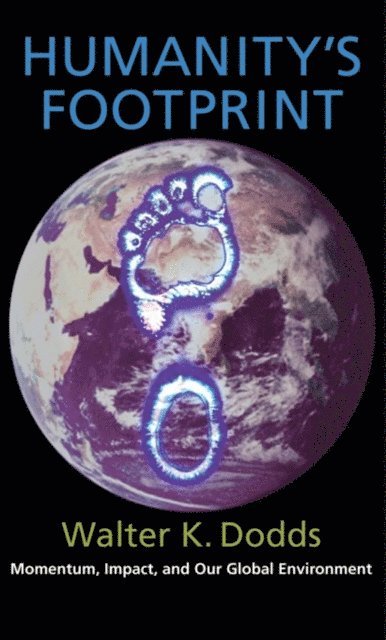
Humanity's Footprint
Momentum, Impact, and Our Global Environment
E-bok, 2008
464 kr
Lägg i varukorg
For the first time in history, humans have exceeded the sustaining capacity of Earth''s global ecosystems. Our expanding footprint has tremendous momentum, and the insidious explosion of human impact creates a shockwave that threatens ecosystems worldwide for decades-possibly centuries. Walter K. …