Walter Kaufmann – författare
Visar alla böcker från författaren Walter Kaufmann. Handla med fri frakt och snabb leverans.
37 produkter
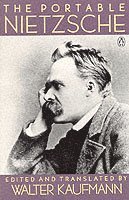
Portable Nietzsche
Av Friedrich Nietzsche, Walter Kaufmann
Häftad, 1994
2,0 utav 5 stjärnor. Totalt antal röster: (1)
187 kr
Lägg i varukorg
The works of Friedrich Nietzsche have fascinated readers around the world ever since the publication of his first book more than a hundred years ago. As Walter Kaufmann, one of the world’s leading authorities on Nietzsche, notes in his introduction, “Few writers in any age were so full of ideas,” …
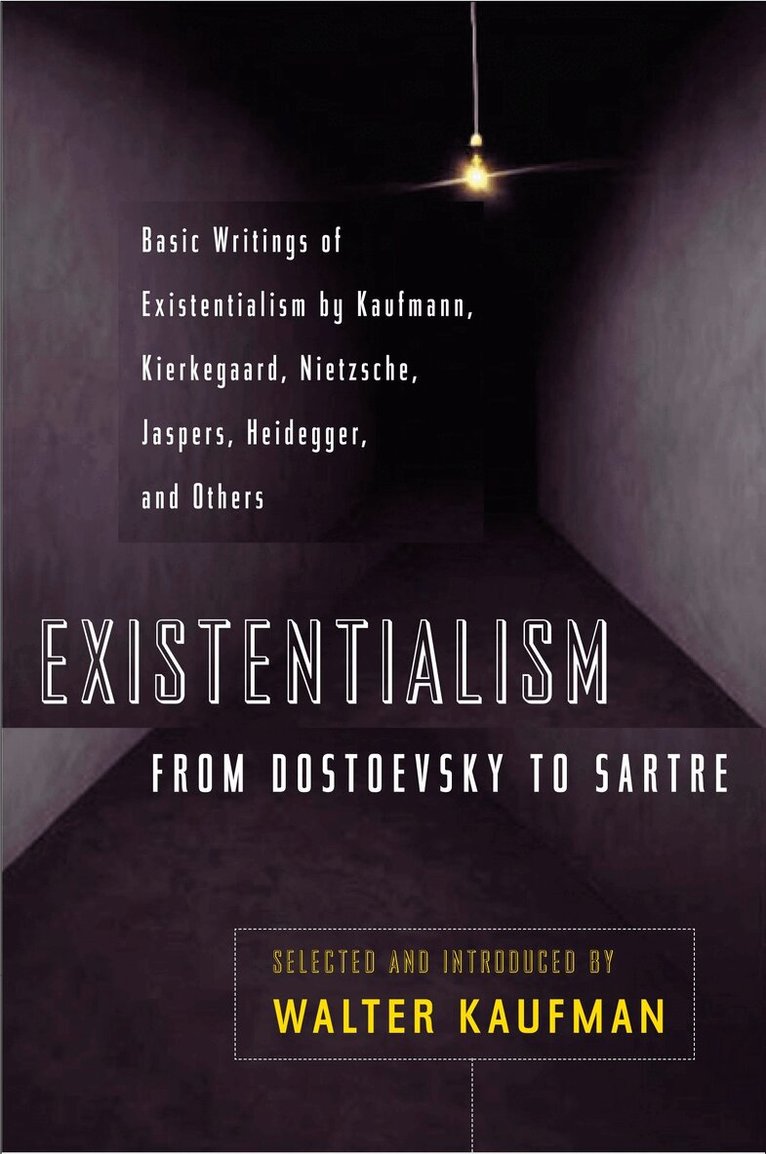
Existentialism from Dostoevsky to Sartre
Basic Writings of Existentialism by Kaufmann, Kierkegaard, Nietzsche, Jaspers, Heidegger, and Others
Häftad, 1975
211 kr
Lägg i varukorg
One of the foremost resources on existentialism from renowned philosopher, poet, and Nietzsche translator Walter Kaufmann—a must-read for philosophers, both armchair and professional. Existentialism from Dostoevsky to Sartre provides basic writings of Dostoevsky, Kierkegaard, Nietzsche, Rilke, …
Hegel
Texts and Commentary
Av G. W. F. Hegel, Walter Kaufmann
Inbunden, 2022
1155 kr
Lägg i varukorg
Herbert Marcuse called the preface to Hegel's Phenomenology "one of the greatest philosophical undertakings of all times." This summary of Hegel's system of philosophy is now available in English translation with commentary on facing pages. While remaining faithful to the author's meaning, Walter …
Musical Notations of the Orient
Notational Systems of Continental East, South, and Central Asia
Inbunden, 2003
531 kr
Lägg i varukorg
This book provides a description and preservation of Oriental notational systems, the study of which makes possible a deeper understanding of Eastern art music and demonstrates its character to the student more meaningfully than does the mere presentation of recordings and musical examples written …
Hegel
A Reinterpretation
Häftad, 1988
458 kr
Lägg i varukorg
The continuing discovery of important Hegel manuscripts and advances in the criticism of Hegel's works have set the stage for a major reevaluation of one of the greatest philosophers of all time. This volume constitutes the comprehensive reinterpretation of Hegel that has long been needed.The first …
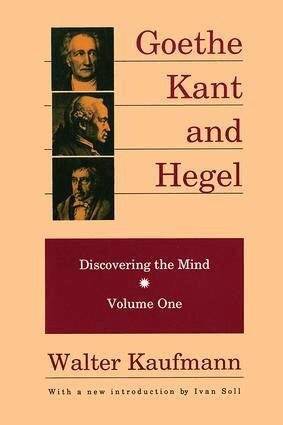
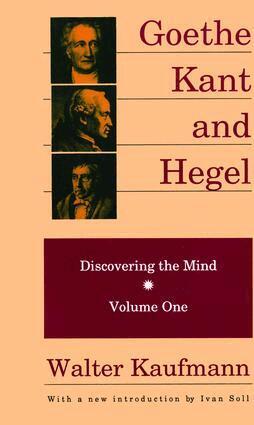
Goethe, Kant, and Hegel
Discovering the Mind
Häftad, 1991
765 kr
Lägg i varukorg
This immensely readable and absorbing book - the first of a three-volume series on understanding the human mind - concentrates on three major figures who have changed our image of human beings. Kaufmann drastically revises traditional conceptions of Goethe, Kant, and Hegel, showing how their ideas …
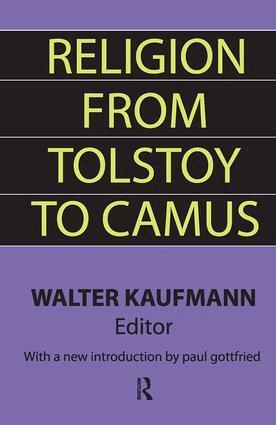
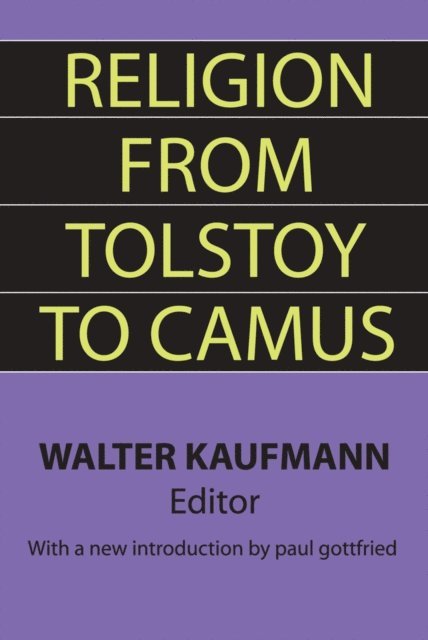
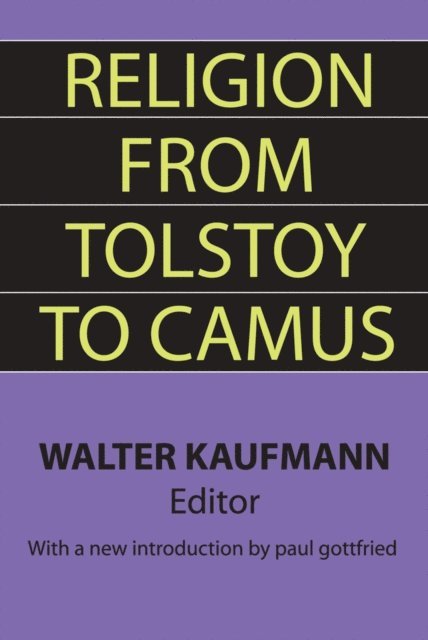
Religion from Tolstoy to Camus
Inbunden, 2017
2519 kr
Lägg i varukorg
Walter Kaufmann devoted his life to exploring the religious implications of literary and philosophical texts. Deeply skeptical about the human and moral benets of modern secularism, he also criticized the quest for certainty pursued through dogma. Kaufmann saw a risk of loss of authenticity in what …
Hegel
Texts and Commentary
Av G. W. F. Hegel, Walter Kaufmann
Häftad, 1977
402 kr
Lägg i varukorg
Herbert Marcuse called the preface to Hegel's Phenomenology "one of the greatest philosophical undertakings of all times." This summary of Hegel's system of philosophy is now available in English translation with commentary on facing pages. While remaining faithful to the author's meaning, Walter …
Hegel
A Reinterpretation
Inbunden, 1978
1537 kr
Lägg i varukorg
The continuing discovery of important Hegel manuscripts and advances in the criticism of Hegel's works have set the stage for a major reevaluation of one of the greatest philosophers of all time. This volume constitutes the comprehensive reinterpretation of Hegel that has long been needed.The first …
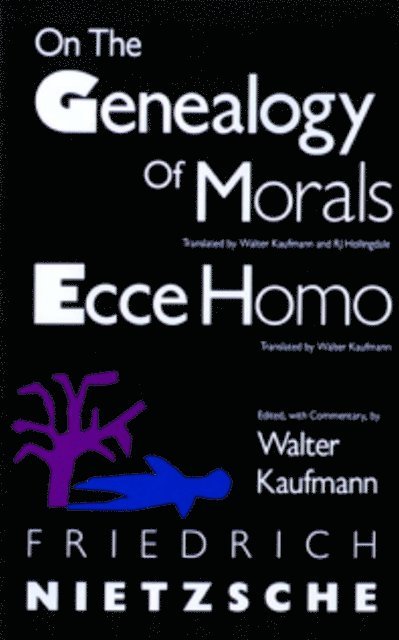
On the Genealogy of Morals and Ecce Homo
Av Friedrich Nietzsche, Walter Kaufmann
E-bok, 2010
211 kr
Lägg i varukorg
The great philosopher''s major work on ethics, along with ECCE HOMO, Nietzche''s remarkable review of his life and works. Translated by Walter Kaufmann.
Twenty-Five German Poets
A Bilingual Collection
Av Walter Arnold Kaufmann, Walter Kaufmann
Häftad, 1976
361 kr
Lägg i varukorg
The book spans three centuries—opening with Angelus Silesius, Klopstock, Claudius, Goethe, and Schiller, and ending with Brecht and Böll—but it has considerable continuity. The prefaces for each of the twenty-five poets integrate the selections into a story, and often poems by different writers …
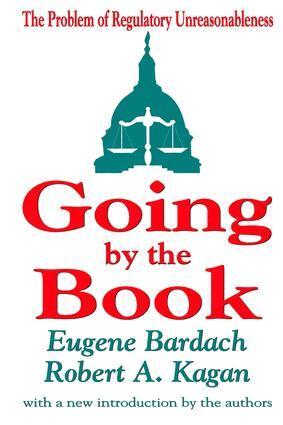
Going by the Book
The Problem of Regulatory Unreasonableness
Häftad, 2002
752 kr
Lägg i varukorg
What is regulation? Under what circumstances is it needed? What forms should it take? Such questions are especially relevant at a time in United States history when governmental involvement in decisions formerly left to individuals and business firms evokes concern on all sides of the political …
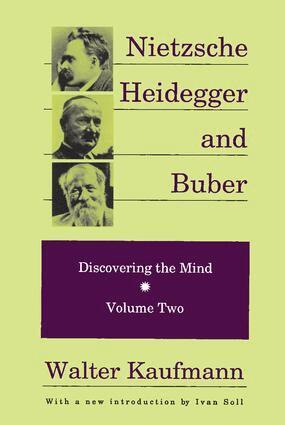
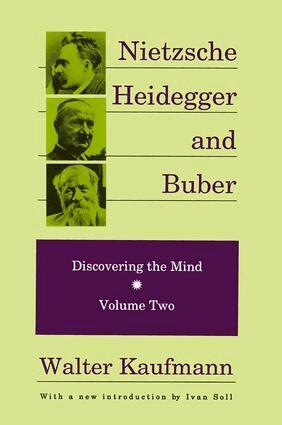
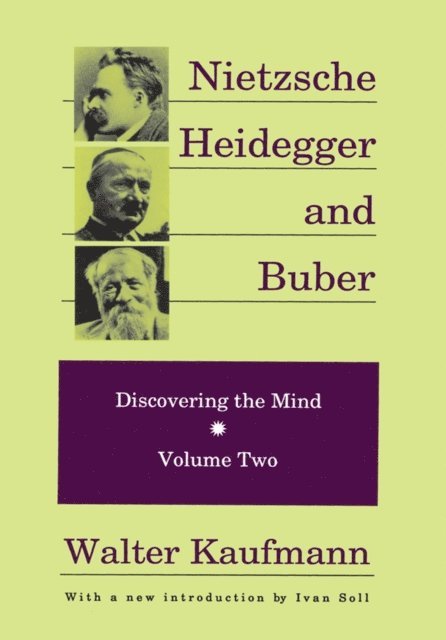
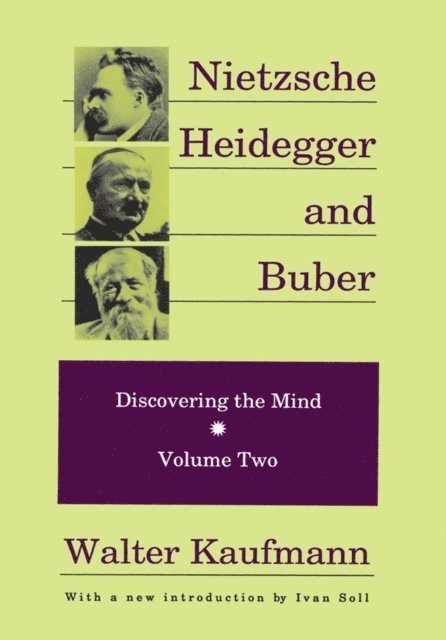
Nietzsche, Heidegger, and Buber
Häftad, 1991
765 kr
Lägg i varukorg
In this second volume of a trilogy that represents a landmark contribution to philosophy, psychology, and intellectual history, Walter Kaufmann has selected three seminal figures of the modem period who have radically altered our understanding of what it is to be human. His interpretations of …
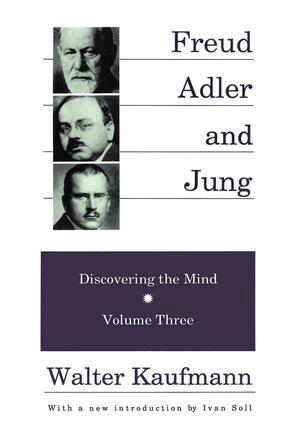
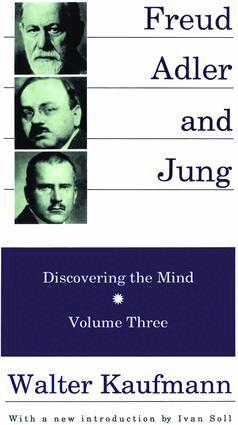
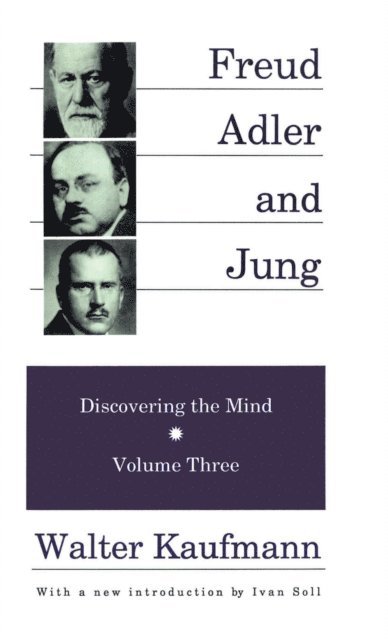
Freud, Alder, and Jung
Discovering the Mind
Häftad, 1992
765 kr
Lägg i varukorg
Walter Kaufmann completed this, the third and final volume of his landmark trilogy, shortly before his death in 1980. The trilogy is the crowning achievement of a lifetime of study, writing, and teaching. This final volume contains Kaufmann's tribute to Sigmund Freud, the man he thought had done as …
Freud, Alder, and Jung
Discovering the Mind
Inbunden, 2017
2752 kr
Lägg i varukorg
Walter Kaufmann completed this, the third and final volume of his landmark trilogy, shortly before his death in 1980. The trilogy is the crowning achievement of a lifetime of study, writing, and teaching. This final volume contains Kaufmann's tribute to Sigmund Freud, the man he thought had done as …
Goethe, Kant, and Hegel
Discovering the Mind
Inbunden, 2017
2752 kr
Lägg i varukorg
This immensely readable and absorbing book - the first of a three-volume series on understanding the human mind - concentrates on three major figures who have changed our image of human beings. Kaufmann drastically revises traditional conceptions of Goethe, Kant, and Hegel, showing how their ideas …
Going by the Book
The Problem of Regulatory Unreasonableness
Inbunden, 2017
2752 kr
Lägg i varukorg
What is regulation? Under what circumstances is it needed? What forms should it take? Such questions are especially relevant at a time in United States history when governmental involvement in decisions formerly left to individuals and business firms evokes concern on all sides of the political …
Nietzsche, Heidegger, and Buber
Inbunden, 2017
2519 kr
Lägg i varukorg
In this second volume of a trilogy that represents a landmark contribution to philosophy, psychology, and intellectual history, Walter Kaufmann has selected three seminal figures of the modem period who have radically altered our understanding of what it is to be human. His interpretations of …
Religion from Tolstoy to Camus
E-bok, 2017
1075 kr
Lägg i varukorg
Walter Kaufmann devoted his life to exploring the religious implications of literary and philosophical texts. Deeply skeptical about the human and moral benets of modern secularism, he also criticized the quest for certainty pursued through dogma. Kaufmann saw a risk of loss of authenticity in what …
Religion from Tolstoy to Camus
E-bok, 2017
1075 kr
Lägg i varukorg
Walter Kaufmann devoted his life to exploring the religious implications of literary and philosophical texts. Deeply skeptical about the human and moral benets of modern secularism, he also criticized the quest for certainty pursued through dogma. Kaufmann saw a risk of loss of authenticity in what …
Nietzsche, Heidegger, and Buber
E-bok, 2017
872 kr
Lägg i varukorg
In this second volume of a trilogy that represents a landmark contribution to philosophy, psychology, and intellectual history, Walter Kaufmann has selected three seminal figures of the modem period who have radically altered our understanding of what it is to be human. His interpretations of …
Nietzsche, Heidegger, and Buber
E-bok, 2017
881 kr
Lägg i varukorg
In this second volume of a trilogy that represents a landmark contribution to philosophy, psychology, and intellectual history, Walter Kaufmann has selected three seminal figures of the modem period who have radically altered our understanding of what it is to be human. His interpretations of …
Going by the Book
The Problem of Regulatory Unreasonableness
E-bok, 2017
717 kr
Lägg i varukorg
The extent to which government should be involved with regulation in the private sector is much debated. More fundamentally, one might ask exactly what is regulation, why is it needed, how is it formulated, and how is it enforced? These questions are especially relevant at a time in United States …
Going by the Book
The Problem of Regulatory Unreasonableness
E-bok, 2017
717 kr
Lägg i varukorg
The extent to which government should be involved with regulation in the private sector is much debated. More fundamentally, one might ask exactly what is regulation, why is it needed, how is it formulated, and how is it enforced? These questions are especially relevant at a time in United States …
Goethe, Kant, and Hegel
Discovering the Mind
E-bok, 2017
901 kr
Lägg i varukorg
This immensely readable and absorbing book - the first of a three-volume series on understanding the human mind - concentrates on three major figures who have changed our image of human beings. Kaufmann drastically revises traditional conceptions of Goethe, Kant, and Hegel, showing how their ideas …
Goethe, Kant, and Hegel
Discovering the Mind
E-bok, 2017
901 kr
Lägg i varukorg
This immensely readable and absorbing book - the first of a three-volume series on understanding the human mind - concentrates on three major figures who have changed our image of human beings. Kaufmann drastically revises traditional conceptions of Goethe, Kant, and Hegel, showing how their ideas …
Freud, Alder, and Jung
Discovering the Mind
E-bok, 2017
846 kr
Lägg i varukorg
Walter Kaufmann completed this, the third and final volume of his landmark trilogy, shortly before his death in 1980. The trilogy is the crowning achievement of a lifetime of study, writing, and teaching. This final volume contains Kaufmann''s tribute to Sigmund Freud, the man he thought had done …
Freud, Alder, and Jung
Discovering the Mind
E-bok, 2017
846 kr
Lägg i varukorg
Walter Kaufmann completed this, the third and final volume of his landmark trilogy, shortly before his death in 1980. The trilogy is the crowning achievement of a lifetime of study, writing, and teaching. This final volume contains Kaufmann''s tribute to Sigmund Freud, the man he thought had done …
Religion from Tolstoy to Camus
Häftad, 1993
795 kr
Lägg i varukorg
Walter Kaufmann devoted his life to exploring the religious implications of literary and philosophical texts. Deeply skeptical about the human and moral benets of modern secularism, he also criticized the quest for certainty pursued through dogma. Kaufmann saw a risk of loss of authenticity in what …
Rett Syndrome
Inbunden, 2017
1182 kr
Lägg i varukorg
Among the vast body of literature that has grown around Rett syndrome, this volume is the first to be aimed at both clinicians and researchers. It presents a comprehensive overview of the disorder and examines the areas where gaps in knowledge are most significant. Rett Syndrome is intended to be a …