
Warren Treadgold – författare
Visar alla böcker från författaren . Handla med fri frakt och snabb leverans.
11 produkter
11 produkter

Häftad, Engelska, 1997
724 kr
Skickas inom 10-15 vardagar
This is the first comprehensive and up-to-date history of Byzantium to appear in almost sixty years, and the first ever to cover both the Byzantine state and Byzantine society. It begins in A.D. 285, when the emperor Diocletian separated what became Byzantium from the western Roman Empire, and ends in 1461, when the last Byzantine outposts fell to the Ottoman Turks.Spanning twelve centuries and three continents, the Byzantine Empire linked the ancient and modern worlds, shaping and transmitting Greek, Roman, and Christian traditions—including the Greek classics, Roman law, and Christian theology—that remain vigorous today, not only in Eastern Europe and the Middle East but throughout Western civilization. Though in its politics Byzantium often resembled a third-world dictatorship, it has never yet been matched in maintaining a single state for so long, over a wide area inhabited by heterogeneous peoples.Drawing on a wealth of original sources and modern works, the author treats political and social developments as a single vivid story, told partly in detailed narrative and partly in essays that clarify long-term changes. He avoids stereotypes and rejects such old and new historical orthodoxies as the persistent weakness of the Byzantine economy and the pervasive importance of holy men in Late Antiquity.Without neglecting underlying social, cultural, and economic trends, the author shows the often crucial impact of nearly a hundred Byzantine emperors and empresses. What the emperor or empress did, or did not do, could rapidly confront ordinary Byzantines with economic ruin, new religious doctrines, or conquest by a foreign power. Much attention is paid to the complex life of the court and bureaucracy that has given us the adjective "byzantine." The major personalities include such famous names as Constantine, Justinian, Theodora, and Heraclius, along with lesser-known figures like Constans II, Irene, Basil II the Bulgar-Slayer, and Michael VIII Palaeologus.Byzantine civilization emerges as durable, creative, and realistic, overcoming repeated setbacks to remain prosperous almost to the end. With 221 illustrations and 18 maps that complement the text, A History of the Byzantine State and Society should long remain the standard history of Byzantium not just for students and scholars but for all readers.

Häftad, Engelska, 1998
346 kr
Skickas inom 5-8 vardagar
The Byzantine Empire was almost always ready to fight, and often fought for its life. During much of its history its provinces were military districts called themes, and acclamation by the army, not coronation or inheritance, was what made a man emperor. The army overthrew twenty-odd rulers, and tried to oust many more. It was large and expansive but on the whole it served its purpose well. Over eight centuries, despite losing a surprising number of battles, the army succeeded in preserving both itself and Byzantium. In view of its importance in Byzantine history, it is surprising that this volume is the first general book on the Byzantine army in any language.The author traces the army's impact on the Byzantine state and society from the army's reorganization under Diocletian (284-305) until its disintegration in the aftermath of the battle of Manzikert (1071). He suggests solutions to some major unresolved questions of Byzantine military history: how big was the army, how was it organized, how much of it was cavalry, how much was it paid, how was it supplied, when and why did it receive land grants in the themes, and why, after surviving so many disasters, did it fail to survive the not particularly disastrous eleventh century?

E-bok
Engelska, 1997228 kr
Läs direkt efter köp
This is the first comprehensive and up-to-date history of Byzantium to appear in almost sixty years, and the first ever to cover both the Byzantine state and Byzantine society. It begins in A.D. 285, when the emperor Diocletian separated what became Byzantium from the western Roman Empire, and ends in 1461, when the last Byzantine outposts fell to the Ottoman Turks.Spanning twelve centuries and three continents, the Byzantine Empire linked the ancient and modern worlds, shaping and transmitting Greek, Roman, and Christian traditions—including the Greek classics, Roman law, and Christian theology—that remain vigorous today, not only in Eastern Europe and the Middle East but throughout Western civilization. Though in its politics Byzantium often resembled a third-world dictatorship, it has never yet been matched in maintaining a single state for so long, over a wide area inhabited by heterogeneous peoples.Drawing on a wealth of original sources and modern works, the author treats political and social developments as a single vivid story, told partly in detailed narrative and partly in essays that clarify long-term changes. He avoids stereotypes and rejects such old and new historical orthodoxies as the persistent weakness of the Byzantine economy and the pervasive importance of holy men in Late Antiquity.Without neglecting underlying social, cultural, and economic trends, the author shows the often crucial impact of nearly a hundred Byzantine emperors and empresses. What the emperor or empress did, or did not do, could rapidly confront ordinary Byzantines with economic ruin, new religious doctrines, or conquest by a foreign power. Much attention is paid to the complex life of the court and bureaucracy that has given us the adjective "byzantine." The major personalities include such famous names as Constantine, Justinian, Theodora, and Heraclius, along with lesser-known figures like Constans II, Irene, Basil II the Bulgar-Slayer, and Michael VIII Palaeologus.Byzantine civilization emerges as durable, creative, and realistic, overcoming repeated setbacks to remain prosperous almost to the end. With 221 illustrations and 18 maps that complement the text, A History of the Byzantine State and Society should long remain the standard history of Byzantium not just for students and scholars but for all readers.

Inbunden, Engelska, 2025
1 082 kr
Skickas inom 10-15 vardagar
No other book on Byzantium manages to pack so much useful information into so few pages.’ -Jonathan Harris, Royal Holloway, University of London, UK. Now published in the Bloomsbury Revelations series, this edition marks the 25th anniversary of this classic text, featuring a brand new preface from the author. Offering a concise overview of the broad and complex history of Byzantium, Warren Treadgold examines the causes behind Byzantium’s successes, failures, and remarkable longevity. Spanning twelve centuries and three continents, Byzantium linked the ancient and modern world, shaping and transmitting Greek, Roman and Christian traditions that survive today. Approachable and highly readable, A Concise History of Byzantium covers Byzantine political leadership, military strategy, cultural attitudes, and social, institutional, and demographic changes.

Häftad, Engelska, 2025
375 kr
Skickas inom 5-8 vardagar
No other book on Byzantium manages to pack so much useful information into so few pages.’ -Jonathan Harris, Royal Holloway, University of London, UK. Now published in the Bloomsbury Revelations series, this edition marks the 25th anniversary of this classic text, featuring a brand new preface from the author. Offering a concise overview of the broad and complex history of Byzantium, Warren Treadgold examines the causes behind Byzantium’s successes, failures, and remarkable longevity. Spanning twelve centuries and three continents, Byzantium linked the ancient and modern world, shaping and transmitting Greek, Roman and Christian traditions that survive today. Approachable and highly readable, A Concise History of Byzantium covers Byzantine political leadership, military strategy, cultural attitudes, and social, institutional, and demographic changes.

E-bok
PDF, Engelska, 2025358 kr
Läs direkt efter köp
No other book on Byzantium manages to pack so much useful information into so few pages.' -Jonathan Harris, Royal Holloway, University of London, UK. Now published in the Bloomsbury Revelations series, this edition marks the 25th anniversary of this classic text, featuring a brand new preface from the author. Offering a concise overview of the broad and complex history of Byzantium, Warren Treadgold examines the causes behind Byzantium's successes, failures, and remarkable longevity. Spanning twelve centuries and three continents, Byzantium linked the ancient and modern world, shaping and transmitting Greek, Roman and Christian traditions that survive today. Approachable and highly readable, A Concise History of Byzantium covers Byzantine political leadership, military strategy, cultural attitudes, and social, institutional, and demographic changes.

E-bok
Engelska, 2025358 kr
Läs direkt efter köp
No other book on Byzantium manages to pack so much useful information into so few pages.' -Jonathan Harris, Royal Holloway, University of London, UK. Now published in the Bloomsbury Revelations series, this edition marks the 25th anniversary of this classic text, featuring a brand new preface from the author. Offering a concise overview of the broad and complex history of Byzantium, Warren Treadgold examines the causes behind Byzantium's successes, failures, and remarkable longevity. Spanning twelve centuries and three continents, Byzantium linked the ancient and modern world, shaping and transmitting Greek, Roman and Christian traditions that survive today. Approachable and highly readable, A Concise History of Byzantium covers Byzantine political leadership, military strategy, cultural attitudes, and social, institutional, and demographic changes.
E-bok
Engelska, 2020405 kr
Läs direkt efter köp
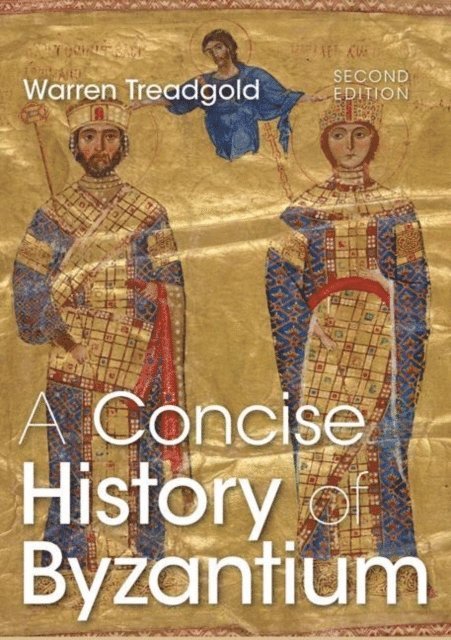
This introductory text provides a concise overview of the history of Byzantium, from AD 285, when it first separated from the Western Roman Empire, to 1461, when the last Byzantine splinter state disappeared. Over the course of this period, the Byzantine state and society underwent many crises, triumphs, declines and recoveries. Spanning twelve centuries and three continents, the Byzantine empire linked the ancient and modern worlds, shaping and transmitting Greek, Roman and Christian traditions that remain vigorous today. This book examines the causes behind Byzantium''s successes, failures and remarkable longevity. The author shows how Byzantine political leadership, military strategy, cultural attitudes and social, institutional and demographic changes combined with the strengths and weaknesses of the empire''s enemies to explain the paradoxes of Byzantium''s long history.This revised second edition has been updated throughout to incorporate new research, most notably on gender, iconoclasm and environmental history. It is an essential text for students taking courses on Byzantine history seeking an introductory overview to this broad and complex topic.New to this Edition:- Updated throughout to incorporate the new research to have come out since the new edition published – most notably on gender, iconoclasm and environmental history- More attention paid to primary sources- Improved maps and images- A new timeline

E-bok
Engelska, 2018300 kr
Läs direkt efter köp
Though many people know that American universities now offer an inadequate and incoherent education from a leftist viewpoint that excludes moderate and conservative ideas, few people understand how much this matters, how it happened, how bad it is, or what can be done about it. In The University We Need, Professor Warren Treadgold shows the crucial role of universities in American culture and politics, the causes of their decline in administrative bloat and inept academic hiring, the effects of the decline on teaching and research, and some possible ways of reversing the downward trend. He explains that one suggested reform, the abolition of tenure, would further increase the power of administrators, further decrease the quality of professors, and make universities even more doctrinaire and intolerant. Instead, he proposes federal legislation to monitor the quality and honesty of professors and to limit spending on administration to no more than 20 percent of university budgets (Harvard now spends 40 percent). Finally, he offers a specific proposal for the founding of a new leading university that could seriously challenge the dominance of Harvard, Princeton, Yale, Stanford, and Berkeley and attract conservative and moderate faculty and students now isolated in universities and colleges that are either leftist or mediocre. While agreeing with conservative critics that universities are in severe crisis, Treadgold believes that the universities’ problems largely transcend ideology and have grown worse partly because disputants on both sides of the academic debate have misunderstood the methods and goals of higher education.
- Nyhet

E-bok
Spanska, 2026153 kr
Läs direkt efter köp
Durante doce siglos y en tres continentes, Bizancio conecto el mundo antiguo con el moderno, dando forma y transmitiendo tradiciones griegas, romanas y cristianas que perduran hasta nuestros dias. Este volumen, accesible y de facil lectura, es considerado un clasico imprescindible para quien desee conocer esta importante etapa de la historia. Abarca el liderazgo politico bizantino, la estrategia militar, las actitudes culturales y los cambios sociales, institucionales y demograficos, ayudando asi a entender los exitos y fracasos de este enorme imperio, y tambien su llamativa longevidad.

Inbunden, Engelska, 2018
205 kr
Tillfälligt slut