Wayne Eastman - Böcker
Visar alla böcker från författaren Wayne Eastman. Handla med fri frakt och snabb leverans.
3 produkter
3 produkter
2 096 kr
Skickas inom 10-15 vardagar
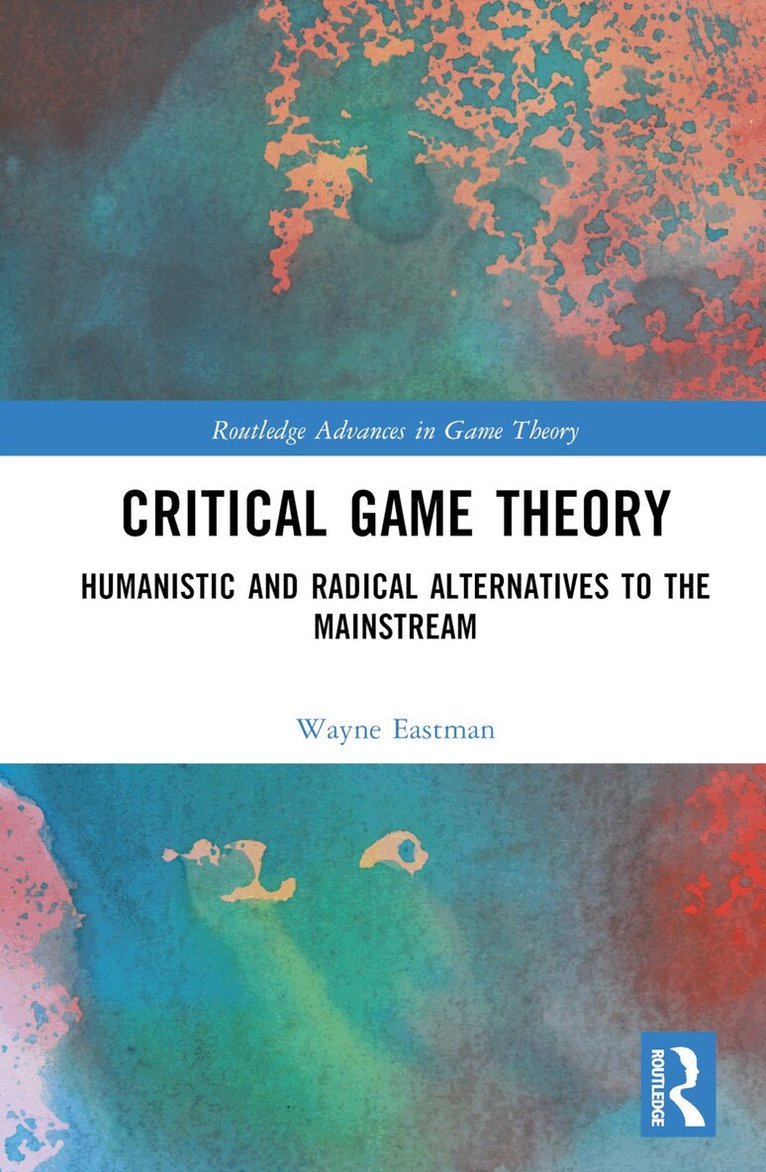
The models in mainstream game theory generally assume that actors act according to a single, consistent utility function. Empirical studies, common sense, and humanistic wisdom all suggest that that assumption is too simple. This book starts with an assumption that actors are controlled by diverse, inconsistent forces and demonstrates that introducing this level of complexity allows for the creation of critical game theory models that can help to attain new insights into nature, human nature, human institutions, and human behavior.The book begins with an evolutionary, or Evo, model in which the players have concerns for the other player as well as egoistic interests. Part I analyzes the Prisoner’s Dilemma using a literary, or Lit, model in which the players have entropic, or Entro, masochistic and sadistic drives as well as altruistic and egoistic ones. Part II suggests that the Lit model opens the door to a “where Entro is, let Evo be” critical perspective on politics. Part III considers how core stories in mainstream game theory can be usefully supplemented and deepened by critical models and reflects on possible futures for critical game theory. The discussion of games and subgames includes poems as well as matrices, in pursuit of a mode of presentation that respects the complex, simultaneously humanistic and scientific qualities of critical game theory.The vision of critical game theory advanced in the book will be of significant interest to researchers in an array of theoretical and applied disciplines, including but not limited to literature, psychology, political science, economics, computer science, ethics, business ethics, law, and law and economics.
627 kr
Skickas inom 10-15 vardagar
The models in mainstream game theory generally assume that actors act according to a single, consistent utility function. Empirical studies, common sense, and humanistic wisdom all suggest that that assumption is too simple. This book starts with an assumption that actors are controlled by diverse, inconsistent forces and demonstrates that introducing this level of complexity allows for the creation of critical game theory models that can help to attain new insights into nature, human nature, human institutions, and human behavior.The book begins with an evolutionary, or Evo, model in which the players have concerns for the other player as well as egoistic interests. Part I analyzes the Prisoner’s Dilemma using a literary, or Lit, model in which the players have entropic, or Entro, masochistic and sadistic drives as well as altruistic and egoistic ones. Part II suggests that the Lit model opens the door to a “where Entro is, let Evo be” critical perspective on politics. Part III considers how core stories in mainstream game theory can be usefully supplemented and deepened by critical models and reflects on possible futures for critical game theory. The discussion of games and subgames includes poems as well as matrices, in pursuit of a mode of presentation that respects the complex, simultaneously humanistic and scientific qualities of critical game theory.The vision of critical game theory advanced in the book will be of significant interest to researchers in an array of theoretical and applied disciplines, including but not limited to literature, psychology, political science, economics, computer science, ethics, business ethics, law, and law and economics.
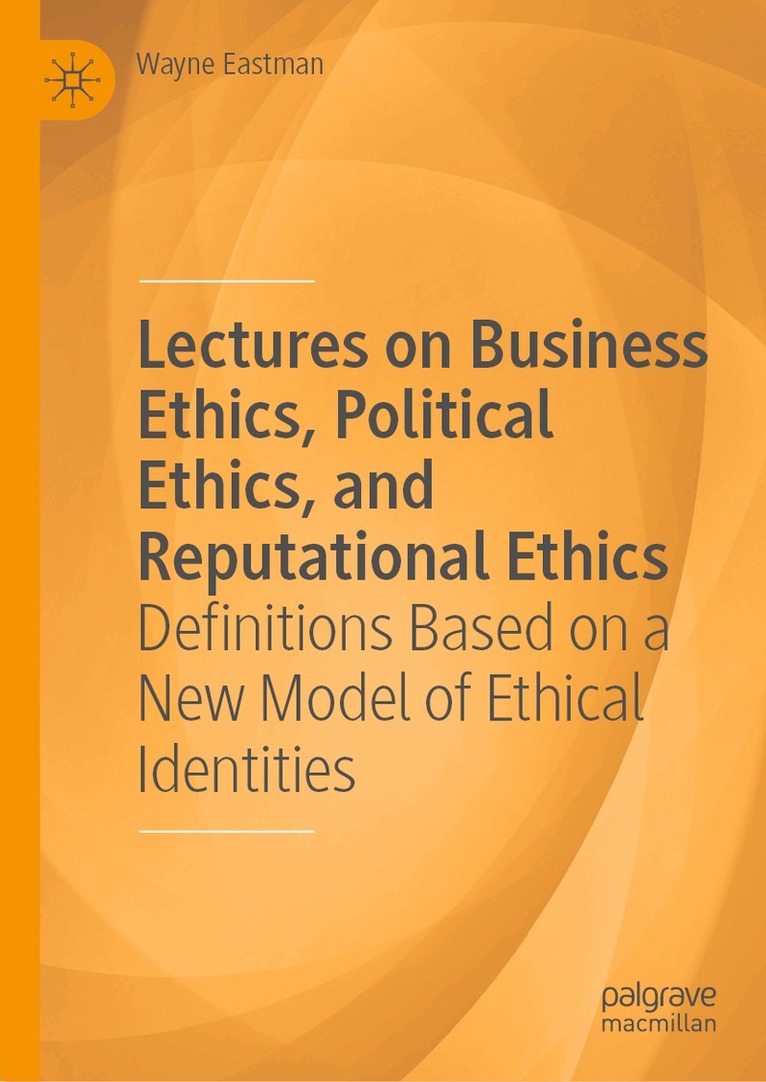
Lectures on Business Ethics, Political Ethics, and Reputational Ethics
Definitions Based on a New Model of Ethical Identities
Inbunden, Engelska, 2026
1 632 kr
Skickas inom 10-15 vardagar
The book presents a definition of business ethics as a method of examining whether an action or inaction is permissible for at least one of four key ethical identities: 1) rule-oriented conservative capitalist; 2) creativity-oriented liberal capitalist; 3) rule-oriented conservative manager or employee; 4) creativity-oriented liberal manager or employee. If so, the action is permissible, subject to two further requirements: 1) that the action-permitting identity has been communicated to the other relevant party or parties; and 2) that the action-permitting identity is in a relationship of integrity to the actor’s character. The book is written in the form of lectures to students. Along with pedagogical material, it contains poems, some of which consider the ethicality or non-ethicality of actions or inactions by the author. The poems and prose apply the author’s four identities approach as well as Joseph Heath’s market failures approach (MFA) to political ethics, cultural ethics, and reputational ethics. The book concludes by considering the relationship between business ethics and idealistic ethics. Given its broad scope and ambitious arguments, the book will be of interest not only to business ethics academics but also to scholars in management, law, philosophy, political science, and other disciplines. .