Wayne Fife – författare
Visar alla böcker från författaren Wayne Fife. Handla med fri frakt och snabb leverans.
6 produkter
6 produkter
Inbunden, Engelska, 2020
603 kr
Skickas inom 10-15 vardagar
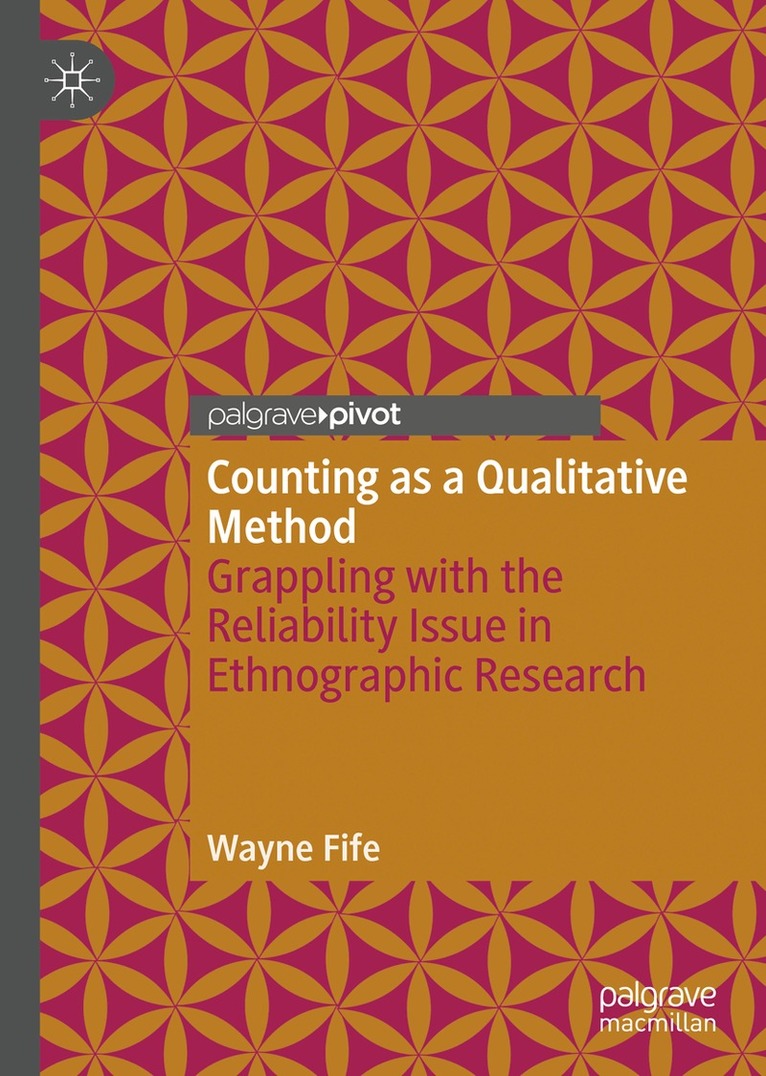
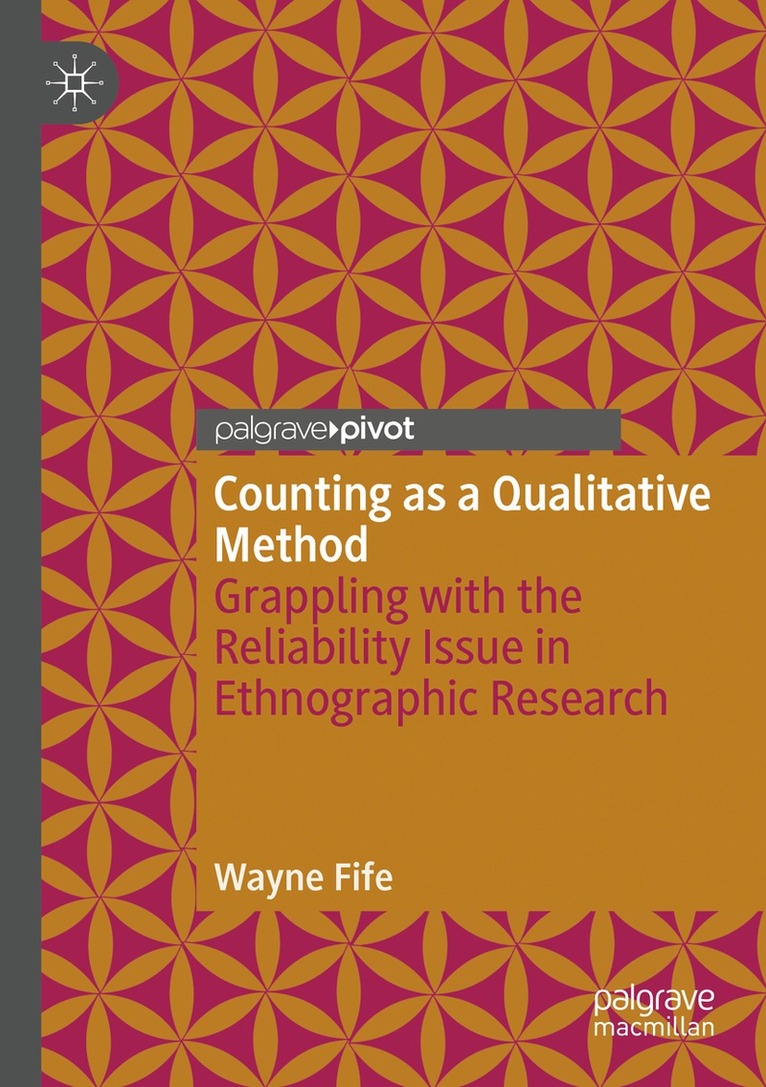
This book aims to explore counting as an often-overlooked research tool for qualitative projects. Building off of a research method invented by the author in 1986 called counting schedules, this volume provides instruction on how to use counting not only to enhance fieldwork results, but also as a form of analysis for extant field notes, interview results, self-reporting diaries or essays, primary archival material, secondary historical texts, government sources, and other documents and narratives, including fictional work. The author buttresses his discussion of counting schedules with extensive examples from previous fieldwork and research experiences, drawing on three decades of anthropological experience in Canada and the Pacific Islands. Counting as a Qualitative Method provides ethnographic researchers with the answer to the number-one question asked by qualitative and non-qualitative researchers alike: How can a qualitative researcher know his or her results are reliable?
E-bok
Engelska, 2020764 kr
Läs direkt efter köp
This book aims to explore counting as an often-overlooked research tool for qualitative projects. Building off of a research method invented by the author in 1986 called counting schedules, this volume provides instruction on how to use counting not only to enhance fieldwork results, but also as a form of analysis for extant field notes, interview results, self-reporting diaries or essays, primary archival material, secondary historical texts, government sources, and other documents and narratives, including fictional work. The author buttresses his discussion of counting schedules with extensive examples from previous fieldwork and research experiences, drawing on three decades of anthropological experience in Canada and the Pacific Islands. Counting as a Qualitative Method provides ethnographic researchers with the answer to the number-one question asked by qualitative and non-qualitative researchers alike: How can a qualitative researcher know his or her results are reliable?
Häftad, Engelska, 2021
603 kr
Skickas inom 10-15 vardagar
This book aims to explore counting as an often-overlooked research tool for qualitative projects. Building off of a research method invented by the author in 1986 called counting schedules, this volume provides instruction on how to use counting not only to enhance fieldwork results, but also as a form of analysis for extant field notes, interview results, self-reporting diaries or essays, primary archival material, secondary historical texts, government sources, and other documents and narratives, including fictional work. The author buttresses his discussion of counting schedules with extensive examples from previous fieldwork and research experiences, drawing on three decades of anthropological experience in Canada and the Pacific Islands. Counting as a Qualitative Method provides ethnographic researchers with the answer to the number-one question asked by qualitative and non-qualitative researchers alike: How can a qualitative researcher know his or her results are reliable?
Inbunden, Engelska, 2022
1 432 kr
Skickas inom 10-15 vardagar
In this work, the author contends that we should create a comparative framework for the study of imaginary worlds in the social sciences. Making use of extended examples from both science fiction and fantasy fiction, as well as the living movement of steampunk, the reader is invited to an argument about how best to define imaginary worlds and approach them as social locations for qualitative research. It is suggested in this volume that increasing economic and existential forms of alienation fuel the contemporary surge of participation in imaginary worlds (from gaming worlds to young adult novels) and impel a search for more humane forms of social and cultural organization. Suggestions are made about the usefulness of imaginary worlds to social scientists as places for both testing out theoretical formulations and as tools for teaching in our classrooms.
E-bok
Engelska, 20221 848 kr
Läs direkt efter köp
In this work, the author contends that we should create a comparative framework for the study of imaginary worlds in the social sciences. Making use of extended examples from both science fiction and fantasy fiction, as well as the living movement of steampunk, the reader is invited to an argument about how best to define imaginary worlds and approach them as social locations for qualitative research. It is suggested in this volume that increasing economic and existential forms of alienation fuel the contemporary surge of participation in imaginary worlds (from gaming worlds to young adult novels) and impel a search for more humane forms of social and cultural organization. Suggestions are made about the usefulness of imaginary worlds to social scientists as places for both testing out theoretical formulations and as tools for teaching in our classrooms.
Häftad, Engelska, 2023
1 432 kr
Skickas inom 10-15 vardagar
In this work, the author contends that we should create a comparative framework for the study of imaginary worlds in the social sciences. Making use of extended examples from both science fiction and fantasy fiction, as well as the living movement of steampunk, the reader is invited to an argument about how best to define imaginary worlds and approach them as social locations for qualitative research. It is suggested in this volume that increasing economic and existential forms of alienation fuel the contemporary surge of participation in imaginary worlds (from gaming worlds to young adult novels) and impel a search for more humane forms of social and cultural organization. Suggestions are made about the usefulness of imaginary worlds to social scientists as places for both testing out theoretical formulations and as tools for teaching in our classrooms.