Wayne Wolf – författare
Visar alla böcker från författaren Wayne Wolf. Handla med fri frakt och snabb leverans.
14 produkter
14 produkter
E-bok
PDF, Engelska, 2010973 kr
Läs direkt efter köp
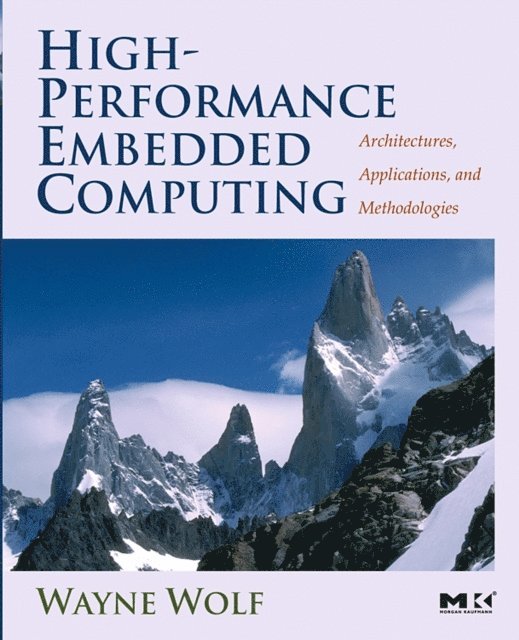
Over the past several years, embedded systems have emerged as an integral though unseen part of many consumer, industrial, and military devices. The explosive growth of these systems has resulted in embedded computing becoming an increasingly important discipline. The need for designers of high-performance, application-specific computing systems has never been greater, and many universities and colleges in the US and worldwide are now developing advanced courses to help prepare their students for careers in embedded computing.High-Performance Embedded Computing: Architectures, Applications, and Methodologies is the first book designed to address the needs of advanced students and industry professionals. Focusing on the unique complexities of embedded system design, the book provides a detailed look at advanced topics in the field, including multiprocessors, VLIW and superscalar architectures, and power consumption. Fundamental challenges in embedded computing are described, together with design methodologies and models of computation. HPEC provides an in-depth and advanced treatment of all the components of embedded systems, with discussions of the current developments in the field and numerous examples of real-world applications.- Covers advanced topics in embedded computing, including multiprocessors, VLIW and superscalar architectures, and power consumption- Provides in-depth coverage of networks, reconfigurable systems, hardware-software co-design, security, and program analysis- Includes examples of many real-world embedded computing applications (cell phones, printers, digital video) and architectures (the Freescale Starcore, TI OMAP multiprocessor, the TI C5000 and C6000 series, and others)
E-bok
PDF, Engelska, 2004707 kr
Läs direkt efter köp
Modern system-on-chip (SoC) design shows a clear trend toward integration of multiple processor cores on a single chip. Designing a multiprocessor system-on-chip (MPSOC) requires an understanding of the various design styles and techniques used in the multiprocessor. Understanding the application area of the MPSOC is also critical to making proper tradeoffs and design decisions.Multiprocessor Systems-on-Chips covers both design techniques and applications for MPSOCs. Design topics include multiprocessor architectures, processors, operating systems, compilers, methodologies, and synthesis algorithms, and application areas covered include telecommunications and multimedia. The majority of the chapters were collected from presentations made at the International Workshop on Application-Specific Multi-Processor SoC held over the past two years. The workshop assembled internationally recognized speakers on the range of topics relevant to MPSOCs. After having refined their material at the workshop, the speakers are now writing chapters and the editors are fashioning them into a unified book by making connections between chapters and developing common terminology.*Examines several different architectures and the constraints imposed on them *Discusses scheduling, real-time operating systems, and compilers *Analyzes design trade-off and decisions in telecommunications and multimedia applications
E-bok
PDF, Engelska, 20011 132 kr
Läs direkt efter köp
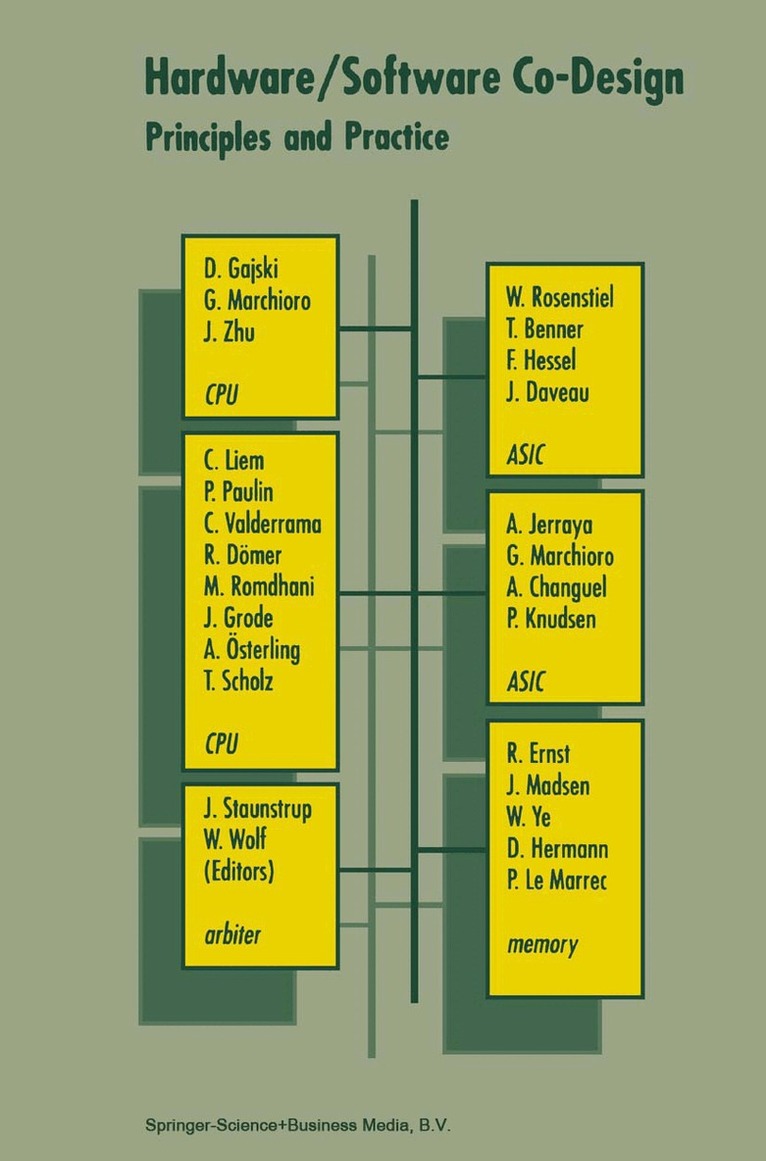
Embedded system designers are constantly looking for new tools and techniques to help satisfy the exploding demand for consumer information appliances and specialized industrial products. One critical barrier to the timely release of embedded system products is integrating the design of the hardware and software systems. Hardware/software co-design is a set of methodologies and techniques specifically created to support the concurrent design of both systems, effectively reducing multiple iterations and major redesigns. In addition to its critical role in the development of embedded systems, many experts believe that co-design will be a key design methodology for Systems-on-a-Chip. Readings in Hardware/Software Co-Design presents the papers that have shaped the hardware/software co-design field since its inception in the early 90s. Field experts -- Giovanni De Micheli, Rolf Ernst, and Wayne Wolf -- introduce sections of the book, and provide context for the paper that follow. This collection provides professionals, researchers and graduate students with a single reference source for this critical aspect of computing design.* Over 50 peer-reviewed papers written from leading researchers and designers in the field* Selected, edited, and introduced by three of the fields'' most eminent researchers and educators* Accompanied by an annually updated companion Web site with links and references to recently published papers, providing a forum for the editors to comment on how recent work continues or breaks with previous work in the field
Inbunden, Engelska, 1997
1 664 kr
Skickas inom 10-15 vardagar
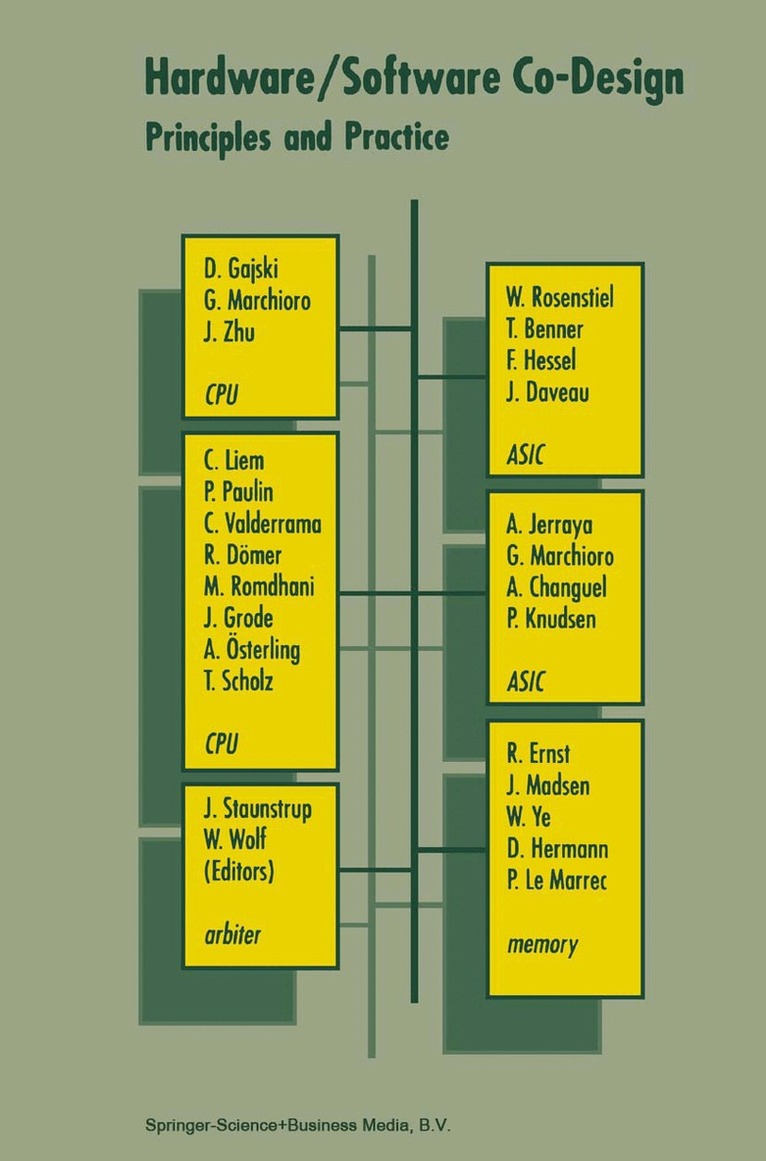
Introduction to Hardware-Software Co-Design presents a number of issues of fundamental importance for the design of integrated hardware software products such as embedded, communication, and multimedia systems. This book is a comprehensive introduction to the fundamentals of hardware/software co-design. Co-design is still a new field but one which has substantially matured over the past few years. This book, written by leading international experts, covers all the major topics including: fundamental issues in co-design; hardware/software co-synthesis algorithms; prototyping and emulation; target architectures; compiler techniques; specification and verification; system-level specification. Special chapters describe in detail several leading-edge co-design systems including Cosyma, LYCOS, and Cosmos. Introduction to Hardware-Software Co-Design contains sufficient material for use by teachers and students in an advanced course of hardware/software co-design. It also contains extensive explanation of the fundamental concepts of the subject and the necessary background to bring practitioners up-to-date on this increasingly important topic.
Inbunden, Engelska, 1991
2 152 kr
Skickas inom 10-15 vardagar
The time has come for high-level synthesis. When research into synthesizing hardware from abstract, program-like de scriptions started in the early 1970' s, there was no automated path from the register transfer design produced by high-level synthesis to a complete hardware imple mentation. As a result, it was very difficult to measure the effectiveness of high level synthesis methods; it was also hard to justify to users the need to automate architecture design when low-level design had to be completed manually. Today's more mature CAD techniques help close the gap between an automat ically synthesized design and a manufacturable design. Market pressures encour age designers to make use of any and all automated tools. Layout synthesis, logic synthesis, and specialized datapath generators make it feasible to quickly imple ment a register-transfer design in silicon,leaving designers more time to consider architectural improvements. As IC design becomes more automated, customers are increasing their demands; today's leading edge designers using logic synthesis systems are training themselves to be tomorrow's consumers of high-level synthe sis systems. The need for very fast turnaround, a competitive fabrication market WhlCh makes small-quantity ASIC manufacturing possible, and the ever growing co:n plexity of the systems being designed, all make higher-level design automaton inevitable.
Inbunden, Engelska, 1996
1 080 kr
Skickas inom 10-15 vardagar
Embedded computer systems use both off-the-shelf microprocessors and application-specific integrated circuits (ASICs) to implement specialized system functions. Examples include the electronic systems inside laser printers, cellular phones, microwave ovens, and an automobile anti-lock brake controller. Embedded computing is unique because it is a co-design problem - the hardware engine and application software architecture must be designed simultaneously. Hardware-Software Co-Synthesis of Distributed Embedded Systems proposes new techniques such as fixed-point iterations, phase adjustment, and separation analysis to efficiently estimate tight bounds on the delay required for a set of multi-rate processes preemptively scheduled on a real-time reactive distributed system. Based on the delay bounds, a gradient-search co-synthesis algorithm with new techniques such as sensitivity analysis, priority prediction, and idle- processing elements elimination are developed to select the number and types of processing elements in a distributed engine, and determine the allocation and scheduling of processes to processing elements. New communication modeling is also presented to analyze communication delay under interaction of computation and communication, allocate interprocessor communication links, and schedule communication. Hardware-Software Co-Synthesis of Distributed Embedded Systems is the first book to describe techniques for the design of distributed embedded systems, which have arbitrary hardware and software topologies. The book will be of interest to: academic researchers for personal libraries and advanced-topics courses in co-design as well as industrial designers who are building high-performance, real-time embedded systems with multiple processors.
Häftad, Engelska, 2025
298 kr
Skickas inom 5-8 vardagar
Häftad, Engelska, 2010
1 620 kr
Skickas inom 10-15 vardagar
Introduction to Hardware-Software Co-Design presents a number of issues of fundamental importance for the design of integrated hardware software products such as embedded, communication, and multimedia systems. This book is a comprehensive introduction to the fundamentals of hardware/software co-design. Co-design is still a new field but one which has substantially matured over the past few years. This book, written by leading international experts, covers all the major topics including: fundamental issues in co-design; hardware/software co-synthesis algorithms; prototyping and emulation; target architectures; compiler techniques; specification and verification; system-level specification. Special chapters describe in detail several leading-edge co-design systems including Cosyma, LYCOS, and Cosmos. Introduction to Hardware-Software Co-Design contains sufficient material for use by teachers and students in an advanced course of hardware/software co-design. It also contains extensive explanation of the fundamental concepts of the subject and the necessary background to bring practitioners up-to-date on this increasingly important topic.
Häftad, Engelska, 2010
1 082 kr
Skickas inom 10-15 vardagar
Embedded computer systems use both off-the-shelf microprocessors and application-specific integrated circuits (ASICs) to implement specialized system functions. Examples include the electronic systems inside laser printers, cellular phones, microwave ovens, and an automobile anti-lock brake controller. Embedded computing is unique because it is a co-design problem - the hardware engine and application software architecture must be designed simultaneously. Hardware-Software Co-Synthesis of Distributed Embedded Systems proposes new techniques such as fixed-point iterations, phase adjustment, and separation analysis to efficiently estimate tight bounds on the delay required for a set of multi-rate processes preemptively scheduled on a real-time reactive distributed system. Based on the delay bounds, a gradient-search co-synthesis algorithm with new techniques such as sensitivity analysis, priority prediction, and idle- processing elements elimination are developed to select the number and types of processing elements in a distributed engine, and determine the allocation and scheduling of processes to processing elements. New communication modeling is also presented to analyze communication delay under interaction of computation and communication, allocate interprocessor communication links, and schedule communication. Hardware-Software Co-Synthesis of Distributed Embedded Systems is the first book to describe techniques for the design of distributed embedded systems, which have arbitrary hardware and software topologies. The book will be of interest to: academic researchers for personal libraries and advanced-topics courses in co-design as well as industrial designers who are building high-performance, real-time embedded systems with multiple processors.
Häftad, Engelska, 2012
2 158 kr
Skickas inom 10-15 vardagar
The time has come for high-level synthesis. When research into synthesizing hardware from abstract, program-like de scriptions started in the early 1970' s, there was no automated path from the register transfer design produced by high-level synthesis to a complete hardware imple mentation. As a result, it was very difficult to measure the effectiveness of high level synthesis methods; it was also hard to justify to users the need to automate architecture design when low-level design had to be completed manually. Today's more mature CAD techniques help close the gap between an automat ically synthesized design and a manufacturable design. Market pressures encour age designers to make use of any and all automated tools. Layout synthesis, logic synthesis, and specialized datapath generators make it feasible to quickly imple ment a register-transfer design in silicon,leaving designers more time to consider architectural improvements. As IC design becomes more automated, customers are increasing their demands; today's leading edge designers using logic synthesis systems are training themselves to be tomorrow's consumers of high-level synthe sis systems. The need for very fast turnaround, a competitive fabrication market WhlCh makes small-quantity ASIC manufacturing possible, and the ever growing co:n plexity of the systems being designed, all make higher-level design automaton inevitable.
E-bok
PDF, Engelska, 20122 840 kr
Läs direkt efter köp
The time has come for high-level synthesis. When research into synthesizing hardware from abstract, program-like de scriptions started in the early 1970'' s, there was no automated path from the register transfer design produced by high-level synthesis to a complete hardware imple mentation. As a result, it was very difficult to measure the effectiveness of high level synthesis methods; it was also hard to justify to users the need to automate architecture design when low-level design had to be completed manually. Today''s more mature CAD techniques help close the gap between an automat ically synthesized design and a manufacturable design. Market pressures encour age designers to make use of any and all automated tools. Layout synthesis, logic synthesis, and specialized datapath generators make it feasible to quickly imple ment a register-transfer design in silicon,leaving designers more time to consider architectural improvements. As IC design becomes more automated, customers are increasing their demands; today''s leading edge designers using logic synthesis systems are training themselves to be tomorrow''s consumers of high-level synthe sis systems. The need for very fast turnaround, a competitive fabrication market WhlCh makes small-quantity ASIC manufacturing possible, and the ever growing co:n plexity of the systems being designed, all make higher-level design automaton inevitable.
E-bok
PDF, Engelska, 20132 049 kr
Läs direkt efter köp
Introduction to Hardware-Software Co-Design presents a number of issues of fundamental importance for the design of integrated hardware software products such as embedded, communication, and multimedia systems. This book is a comprehensive introduction to the fundamentals of hardware/software co-design. Co-design is still a new field but one which has substantially matured over the past few years. This book, written by leading international experts, covers all the major topics including: fundamental issues in co-design; hardware/software co-synthesis algorithms; prototyping and emulation; target architectures; compiler techniques; specification and verification; system-level specification. Special chapters describe in detail several leading-edge co-design systems including Cosyma, LYCOS, and Cosmos. Introduction to Hardware-Software Co-Design contains sufficient material for use by teachers and students in an advanced course of hardware/software co-design. It also contains extensive explanation of the fundamental concepts of the subject and the necessary background to bring practitioners up-to-date on this increasingly important topic.
E-bok
PDF, Engelska, 20131 367 kr
Läs direkt efter köp
Embedded computer systems use both off-the-shelf microprocessors and application-specific integrated circuits (ASICs) to implement specialized system functions. Examples include the electronic systems inside laser printers, cellular phones, microwave ovens, and an automobile anti-lock brake controller. Embedded computing is unique because it is a co-design problem - the hardware engine and application software architecture must be designed simultaneously. Hardware-Software Co-Synthesis of Distributed Embedded Systems proposes new techniques such as fixed-point iterations, phase adjustment, and separation analysis to efficiently estimate tight bounds on the delay required for a set of multi-rate processes preemptively scheduled on a real-time reactive distributed system. Based on the delay bounds, a gradient-search co-synthesis algorithm with new techniques such as sensitivity analysis, priority prediction, and idle- processing elements elimination are developed to select the number and types of processing elements in a distributed engine, and determine the allocation and scheduling of processes to processing elements. New communication modeling is also presented to analyze communication delay under interaction of computation and communication, allocate interprocessor communication links, and schedule communication. Hardware-Software Co-Synthesis of Distributed Embedded Systems is the first book to describe techniques for the design of distributed embedded systems, which have arbitrary hardware and software topologies. The book will be of interest to: academic researchers for personal libraries and advanced-topics courses in co-design as well as industrial designers who are building high-performance, real-time embedded systems with multiple processors.
E-bok
Engelska22 kr
Läs direkt efter köp