
Wei-Wei Zhang – författare
Visar alla böcker från författaren Wei-Wei Zhang. Handla med fri frakt och snabb leverans.
4 produkter
4 produkter
Inbunden, Engelska, 1996
3 404 kr
Skickas inom 10-15 vardagar
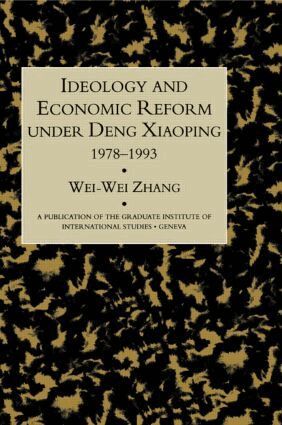
First published in 1996. Is ideology still relevant in post-Mao China? Deng Xiaoping's wide-ranging economic reforms have led to declarations that ideology in China is merely a cynical sham or already dead, but a closer look at China seems to suggest a constant conflict of different ideologies associated with the profound transformation of the Chinese society since 1978. This study is an attempt to explore the interactions between major ideological currents and economic reforms.
E-bok
PDF, Engelska, 2013784 kr
Läs direkt efter köp
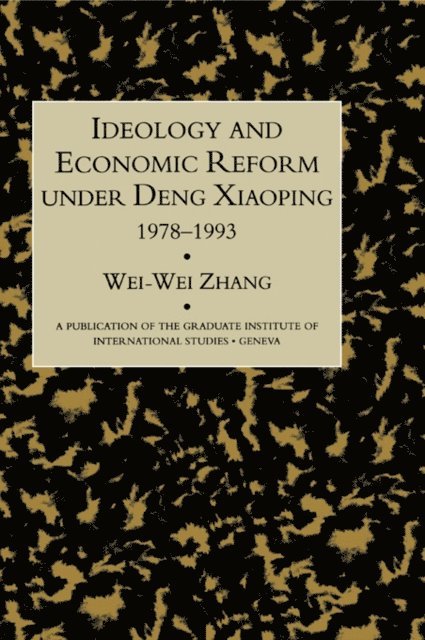
First published in 1996. Is ideology still relevant in post-Mao China? Deng Xiaoping''s wide-ranging economic reforms have led to declarations that ideology in China is merely a cynical sham or already dead, but a closer look at China seems to suggest a constant conflict of different ideologies associated with the profound transformation of the Chinese society since 1978. This study is an attempt to explore the interactions between major ideological currents and economic reforms.
E-bok
Engelska, 2013784 kr
Läs direkt efter köp
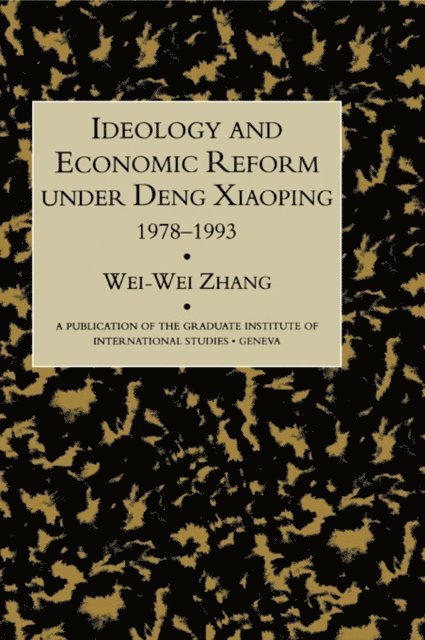
First published in 1996. Is ideology still relevant in post-Mao China? Deng Xiaoping''s wide-ranging economic reforms have led to declarations that ideology in China is merely a cynical sham or already dead, but a closer look at China seems to suggest a constant conflict of different ideologies associated with the profound transformation of the Chinese society since 1978. This study is an attempt to explore the interactions between major ideological currents and economic reforms.
Häftad, Engelska, 2016
695 kr
Skickas inom 10-15 vardagar
First published in 1996. Is ideology still relevant in post-Mao China? Deng Xiaoping's wide-ranging economic reforms have led to declarations that ideology in China is merely a cynical sham or already dead, but a closer look at China seems to suggest a constant conflict of different ideologies associated with the profound transformation of the Chinese society since 1978. This study is an attempt to explore the interactions between major ideological currents and economic reforms.