
Weijun Xu – författare
Visar alla böcker från författaren Weijun Xu. Handla med fri frakt och snabb leverans.
2 produkter
2 produkter
Inbunden, Engelska, 2025
1 409 kr
Skickas inom 5-8 vardagar
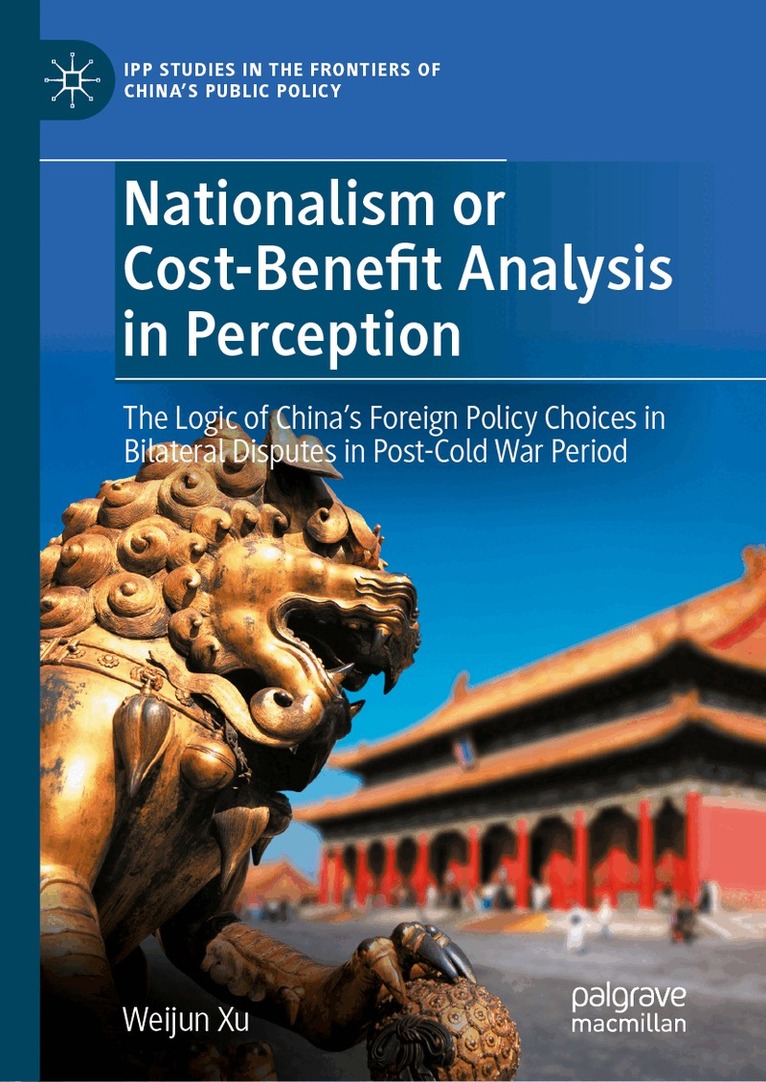
This book explores the changes in the degree of toughness of China’s foreign policy choices in bilateral international disputes over the period from 1992 to 2022. Chinese popular nationalism, due to its considerable social mobilization capacity, may have the potential to influence the Chinese government's foreign policy choices through a bottom-up approach, especially in the context of the Chinese government's increasing reliance on nationalism for its regime legitimacy. The author establishes an analytical framework for China’s foreign policy choices in bilateral disputes, emphasising the influence of three factors: China’s perception of the importance of the bilateral relations, its perception of the priority of the interests involved in the dispute, and its perception of the severity of the dispute. Through a series of case studies, the author demonstrates that the influence of Chinese popular nationalism on government policy is limited. This book offers fascinating insights for policymakers, journalists and scholars.
E-bok
Engelska, 20251 672 kr
Läs direkt efter köp
This book explores the changes in the degree of toughness of China’s foreign policy choices in bilateral international disputes over the period from 1992 to 2022. Chinese popular nationalism, due to its considerable social mobilization capacity, may have the potential to influence the Chinese government's foreign policy choices through a bottom-up approach, especially in the context of the Chinese government's increasing reliance on nationalism for its regime legitimacy. The author establishes an analytical framework for China’s foreign policy choices in bilateral disputes, emphasising the influence of three factors: China’s perception of the importance of the bilateral relations, its perception of the priority of the interests involved in the dispute, and its perception of the severity of the dispute. Through a series of case studies, the author demonstrates that the influence of Chinese popular nationalism on government policy is limited. This book offers fascinating insights for policymakers, journalists and scholars.