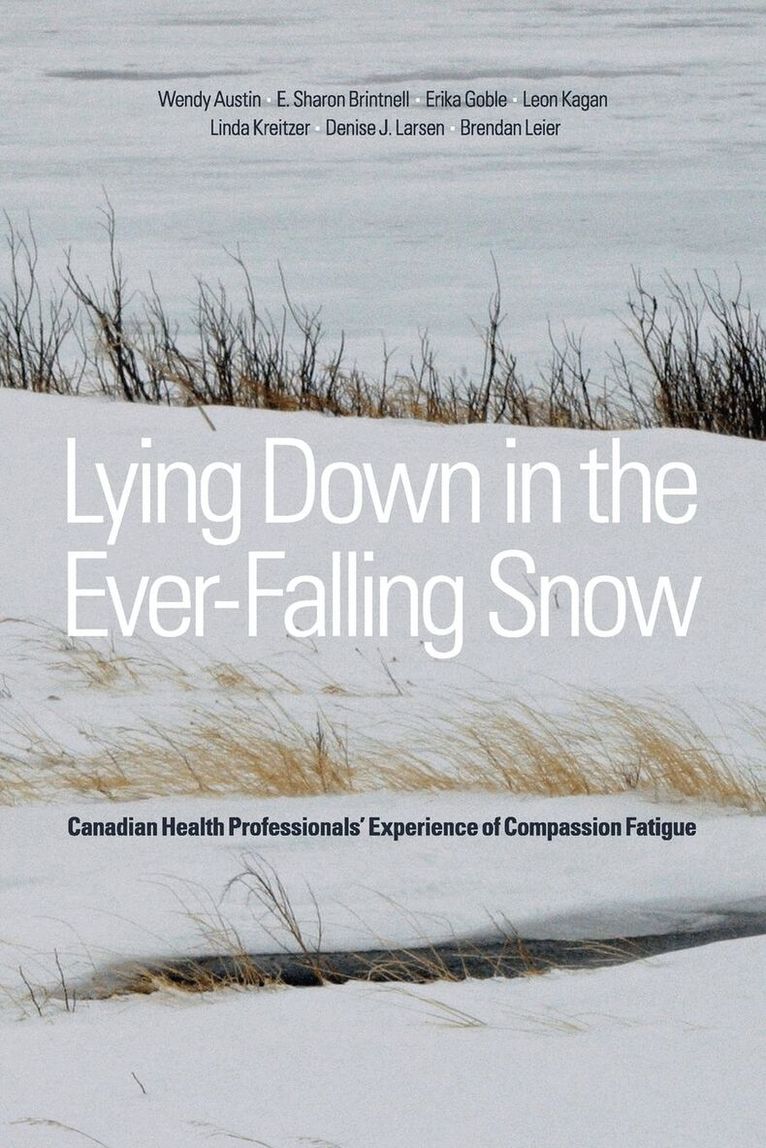
First used to describe the weariness the public felt toward media portrayals of societal crises, the term compassion fatigue has been taken up by health professionals to name - along with burnout, vicarious traumatization, compassion stress, and secondary traumatic stress - the condition of caregivers who become ""too tired to care."" Compassion, long seen as the foundation of ethical caring, is increasingly understood as a threat to the well-being of those who offer it.Through the lens of hermeneutic phenomenology, the authors present an insider's perspective on compassion fatigue, its effects on the body, on the experience of time and space, and on personal and professional relationships. Accounts of health professionals, alongside examinations of poetry, images, movies, and literature, are used to explore the notions of compassion, hope, and hopelessness as they inform the meaning of caring work. The authors frame their exposé of compassion fatigue with the very Canadian metaphor of ""lying down in the snow."" If suffering is imagined as ever-falling snow, then the need for training and resources for safe journeying in ""winter country"" becomes apparent. Recognizing the phenomenon of compassion fatigue reveals the role that health services education and the moral habitability of our healthcare environments play in supporting professionals' ability to act compassionately and to endure.
What is the adolescent's experience of amorous love? In seeking an answer to this question, Wendy Austin gathered descriptions from individuals who were in love as teenagers, explored literary texts, movies, and songs, and reflected on personal experience. To understand the influences that shape her own pre-understandings of love and that of her society, Austin examined the psychological research, reviewed the explanatory theories of scholars on love and revisited the great love stories that have survived across time to reveal four major descriptive themes – awakening, falling, possessing, and becoming. Adolescence has been called a time of rebirth; in considering the sentimental education of adolescents, Wendy Austin considers ways in which adults may attend this rebirth in a helpful way.
First used to describe the weariness the public felt toward media portrayals of societal crises, the term compassion fatigue has been taken up by health professionals to name - along with burnout, vicarious traumatization, compassion stress, and secondary traumatic stress - the condition of caregivers who become ""too tired to care."" Compassion, long seen as the foundation of ethical caring, is increasingly understood as a threat to the well-being of those who offer it.Through the lens of hermeneutic phenomenology, the authors present an insider's perspective on compassion fatigue, its effects on the body, on the experience of time and space, and on personal and professional relationships. Accounts of health professionals, alongside examinations of poetry, images, movies, and literature, are used to explore the notions of compassion, hope, and hopelessness as they inform the meaning of caring work. The authors frame their exposé of compassion fatigue with the very Canadian metaphor of ""lying down in the snow."" If suffering is imagined as ever-falling snow, then the need for training and resources for safe journeying in ""winter country"" becomes apparent. Recognizing the phenomenon of compassion fatigue reveals the role that health services education and the moral habitability of our healthcare environments play in supporting professionals' ability to act compassionately and to endure.
What is the adolescent's experience of amorous love? In seeking an answer to this question, Wendy Austin gathered descriptions from individuals who were in love as teenagers, explored literary texts, movies, and songs, and reflected on personal experience. To understand the influences that shape her own pre-understandings of love and that of her society, Austin examined the psychological research, reviewed the explanatory theories of scholars on love and revisited the great love stories that have survived across time to reveal four major descriptive themes – awakening, falling, possessing, and becoming. Adolescence has been called a time of rebirth; in considering the sentimental education of adolescents, Wendy Austin considers ways in which adults may attend this rebirth in a helpful way.