Wendy S. Grolnick - Böcker
Visar alla böcker från författaren Wendy S. Grolnick. Handla med fri frakt och snabb leverans.
6 produkter
6 produkter
2 044 kr
Skickas inom 10-15 vardagar
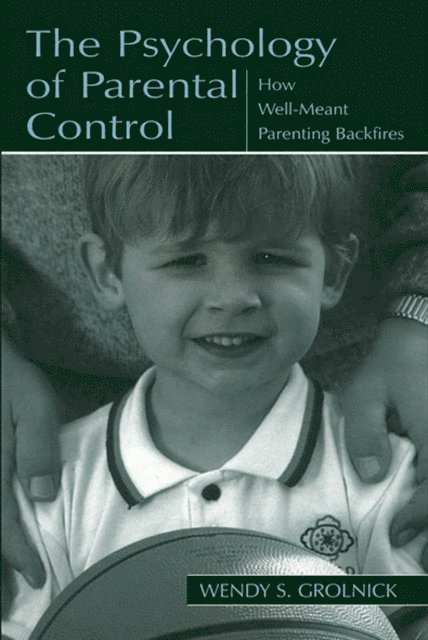
What is parental control? Is it positive or negative for children? What makes parents controlling with their children, even when they value supporting children's autonomy? Are there alternatives to control and how might we apply them in important domains of children's lives, such as school and sports? This book addresses these and other questions about the meaning and predictors of parental control, as well as its consequences for children's adjustment and well-being. While the topic of parental control is not new, there has been controversy about the concept, with some researchers and clinicians weighing in on the side of control and others against it. This book argues that part of the controversy stems from different uses of the term, with some investigators focusing more on parents being in control and others on controlling children. Using a definition of control as "pressure for children to think, feel, or behave in specific ways," the author explores research on parental control, arguing that there is more consensus than previously thought. Using this research base, the author provides evidence that parental control can be subtle and can lurk within many "positive" parenting approaches; parental control undermines the very behaviors we wish to inculcate in our children; providing autonomy support--the opposite of control--is a challenge, even when parents are committed to doing so. With controversy in the literature about parental control and attention in the media on the ways in which parents step over the control line (e.g., screaming on the soccer sidelines, pressuring children in academics), this book is especially timely. It provides an empathic view of how easily parents can become trapped in controlling styles by emphasizing performance and hooking their own self-esteem on children's performance. Examples of how this can happen in academic, sporting, and peer situations with their emphasis on competition and hierarchy are provided, as well as strategies for parenting in highly involved but autonomy supportive ways. A highly readable yet research-based treatment of the topic of parental control, this book: *explores the controversial topic of parental control; addresses controversy about the positive and negative effects of parental control; and disentangles various parenting concepts, such as involvement, structure, and control; *illustrates how control can be overt, such as in the use of corporal punishment or covert, as in the use of controlling praise; *provides evidence that control may produce compliance in children preventing them from initiating and taking responsibility for their own behavior; *explores why parents are controlling with their children, including environmental and economic stresses and strains, characteristics of children that "pull" for control, and factors in parents' own psychologies that lead them to be "hooked" on children's performance; and *provides examples of control in the areas of academics and sports--the hierarchical and competitive nature of these domains is seen as contributing to parents' tendencies to become controlling in these areas.
559 kr
Skickas inom 10-15 vardagar
What is parental control? Is it positive or negative for children? What makes parents controlling with their children, even when they value supporting children's autonomy? Are there alternatives to control and how might we apply them in important domains of children's lives, such as school and sports? This book addresses these and other questions about the meaning and predictors of parental control, as well as its consequences for children's adjustment and well-being. While the topic of parental control is not new, there has been controversy about the concept, with some researchers and clinicians weighing in on the side of control and others against it. This book argues that part of the controversy stems from different uses of the term, with some investigators focusing more on parents being in control and others on controlling children. Using a definition of control as "pressure for children to think, feel, or behave in specific ways," the author explores research on parental control, arguing that there is more consensus than previously thought. Using this research base, the author provides evidence that parental control can be subtle and can lurk within many "positive" parenting approaches; parental control undermines the very behaviors we wish to inculcate in our children; providing autonomy support--the opposite of control--is a challenge, even when parents are committed to doing so. With controversy in the literature about parental control and attention in the media on the ways in which parents step over the control line (e.g., screaming on the soccer sidelines, pressuring children in academics), this book is especially timely. It provides an empathic view of how easily parents can become trapped in controlling styles by emphasizing performance and hooking their own self-esteem on children's performance. Examples of how this can happen in academic, sporting, and peer situations with their emphasis on competition and hierarchy are provided, as well as strategies for parenting in highly involved but autonomy supportive ways. A highly readable yet research-based treatment of the topic of parental control, this book: *explores the controversial topic of parental control; addresses controversy about the positive and negative effects of parental control; and disentangles various parenting concepts, such as involvement, structure, and control; *illustrates how control can be overt, such as in the use of corporal punishment or covert, as in the use of controlling praise; *provides evidence that control may produce compliance in children preventing them from initiating and taking responsibility for their own behavior; *explores why parents are controlling with their children, including environmental and economic stresses and strains, characteristics of children that "pull" for control, and factors in parents' own psychologies that lead them to be "hooked" on children's performance; and *provides examples of control in the areas of academics and sports--the hierarchical and competitive nature of these domains is seen as contributing to parents' tendencies to become controlling in these areas.
1 781 kr
Skickas inom 10-15 vardagar
This book assembles 11 of the leading thinkers and researchers in the field of family psychology to create a compendium summarizing both what psychology researchers have learned about the family and where the field should be going next. It evolved after the volume's contributors met with other distinguished family scholars to discuss family influences on child development and to ponder how this knowledge could be used to benefit families and children. This volume includes approaches to the family that feature multiple levels and topics of focal interest to benefit anyone interested in the family. Central topics include mothering, fathering, marriages, family group processes, sibling relations, and families as systems. In addition, three senior authors offer road maps to detect, and suggest (a) challenges in research on parenting, (b) marital and family dynamics, and (c) family systems in the years ahead. In keeping with the theme of how research affects the lives of families outside the university lab settings, this volume includes a chapter on the interface between family research and law. This book closes with a "big picture" analysis and critique of what is known and not known. Psychologists, anthropologists, sociologists, and public policymakers interested in the family should especially find this volume of interest.
676 kr
Skickas inom 10-15 vardagar
This book assembles 11 of the leading thinkers and researchers in the field of family psychology to create a compendium summarizing both what psychology researchers have learned about the family and where the field should be going next. It evolved after the volume's contributors met with other distinguished family scholars to discuss family influences on child development and to ponder how this knowledge could be used to benefit families and children. This volume includes approaches to the family that feature multiple levels and topics of focal interest to benefit anyone interested in the family. Central topics include mothering, fathering, marriages, family group processes, sibling relations, and families as systems. In addition, three senior authors offer road maps to detect, and suggest (a) challenges in research on parenting, (b) marital and family dynamics, and (c) family systems in the years ahead. In keeping with the theme of how research affects the lives of families outside the university lab settings, this volume includes a chapter on the interface between family research and law. This book closes with a "big picture" analysis and critique of what is known and not known. Psychologists, anthropologists, sociologists, and public policymakers interested in the family should especially find this volume of interest.
Motivation Myth Busters
Science-Based Strategies to Boost Motivation in Yourself and Others
Häftad, Engelska, 2024
219 kr
Skickas inom 7-10 vardagar
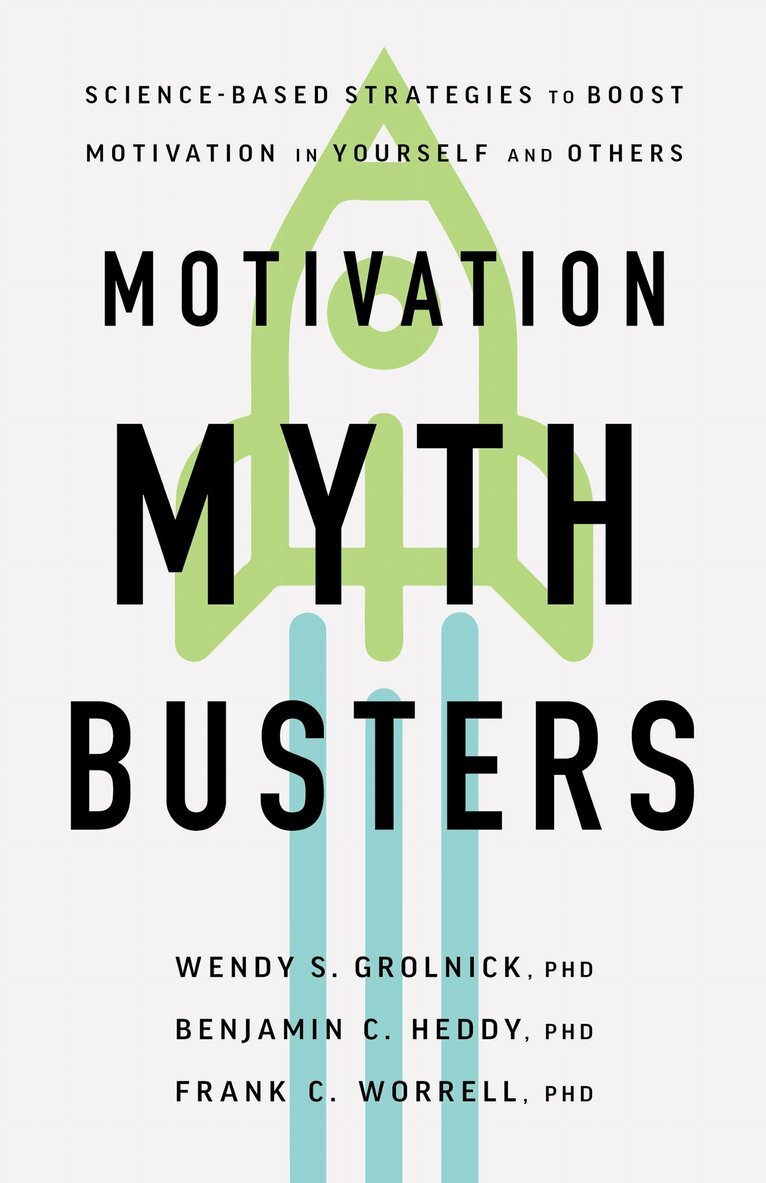
What does science tell us about motivation? This book challenges common myths about motivation and offers readers strategies for successfully motivating themselves and others.Many unscientific and inaccurate ideas about motivation persist because they seem so logical, simple, or appealing. For example, we may say that someone is amp ldquo unmotivated amp rdquo and assume that this is just part of their personality, whereas in reality everyone is motivated and it amp rsquo s more likely that their inaction is related to their interests or to their environment.This book reveals the scientific truth about motivation. Readers will learn to identify and debunk ten persistent myths about motivation-for example, that visualizing success leads to success, that competition increases motivation for everyone, and that rewards are the best way to enhance motivation-and replace those myths with accurate knowledge that will help them take positive steps toward their goals. Each chapter uses cutting-edge psychological research and theory to offer scientifically supported strategies for boosting motivation in a variety of contexts including school, work, health, and parenting.
Pressured Parents, Stressed-out Kids
Dealing With Competition While Raising a Successful Child
Häftad, Engelska, 2008
208 kr
Skickas inom 7-10 vardagar
It begins harmlessly. Parents chatting on the playground compare their babies' first milestones: "Has Erin started talking? Addy's already using five-word sentences!" Inevitably, Erin's mom and dad feel anxious. Later, as report cards, standardized tests, tryouts, playoffs, auditions and social cliques fill their child's world, parents' anxiety intensifies. The older kids get, the more competition they face, whether in sports, academics or the arts. Hovering in the background is the race for admission to a top-tier college. To help panicky parents deal with the torrential emotions stirred up by our competitive society, and to give them scientific knowledge about their children's growing years, leading child researcher Wendy Grolnick and educational and parenting journalist Kathy Seal offer this illuminating and accessible guide to channeling competitive anxiety into positive parenting. While evolution has given parents a genetic predisposition toward this protective anxiety whenever their children face today's heightened competition, the authors guide parents to avoid pushing and pressuring, turning their fear instead into calm guidance. Distilling the results of thirty years of research in child psychology, the authors focus on three essential feelings—autonomy, competence, and connectedness—which parents can foster in their children to maximize the child's chances of success and minimize family conflict. They explain that granting kids autonomy lets them feel that they can solve their own problems and are responsible for their own actions. At the same time, providing structure gives kids the guidelines, information, limits, and consequences that they need to act in the world, instilling them with a feeling of competence. Finally, support from adults in the form of time and other resources provides children with a necessary feeling of connection and helps them internalize the ideas and values of their caring parents. Reassuring and empathic, Grolnick and Seal show parents how to avoid the burn-out—in both parents and children—that afflicts so many in our highly competitive society, while raising children who thrive and excel.