Wenkai He - Böcker
Visar alla böcker från författaren Wenkai He. Handla med fri frakt och snabb leverans.
3 produkter
3 produkter
663 kr
Skickas inom 10-15 vardagar
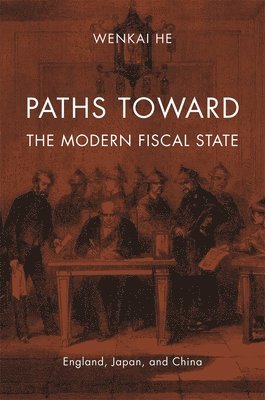
The rise of modern public finance revolutionized political economy. As governments learned to invest tax revenue in the long-term financial resources of the market, they vastly increased their administrative power and gained the ability to use fiscal, monetary, and financial policy to manage their economies. But why did the modern fiscal state emerge in some places and not in others? In approaching this question, Wenkai He compares the paths of three different nations—England, Japan, and China—to discover why some governments developed the tools and institutions of modern public finance, while others, facing similar circumstances, failed to do so.Focusing on three key periods of institutional development—the decades after the English Civil Wars, the Meiji Restoration, and the Taiping Rebellion—He demonstrates how each event precipitated a collapse of the existing institutions of public finance. Facing urgent calls for revenue, each government searched for new ways to make up the shortfall. These experiments took varied forms, from new methods of taxation to new credit arrangements. Yet, while England and Japan learned from their successes and failures how to deploy the tools of modern public finance and equipped themselves to become world powers, China did not. He’s comparative historical analysis isolates the nature of the credit crisis confronting each state as the crucial factor in determining its specific trajectory. This perceptive and persuasive explanation for China’s failure at a critical moment in its history illuminates one of the most important but least understood transformations of the modern world.
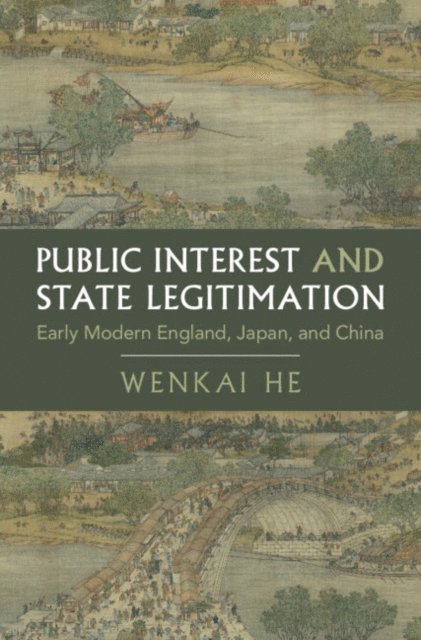
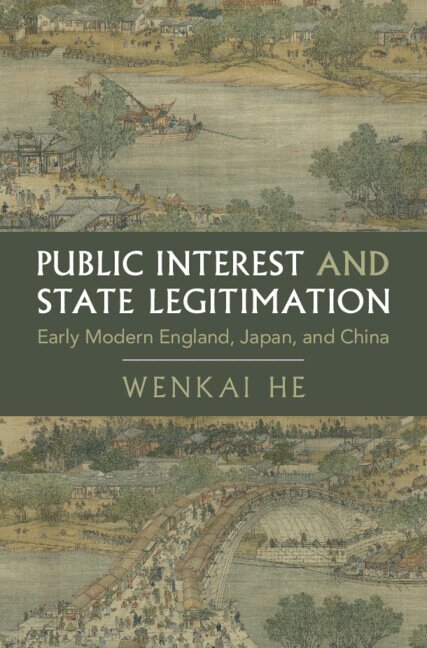
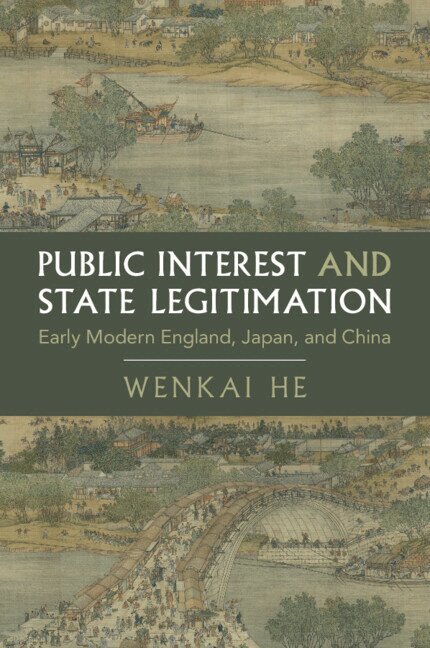
Public Interest and State Legitimation
Early Modern England, Japan, and China
Inbunden, Engelska, 2023
1 092 kr
Skickas inom 7-10 vardagar
How were state formation and early modern politics shaped by the state's proclaimed obligation to domestic welfare? Drawing on a wide range of historical scholarship and primary sources, this book demonstrates that a public interest-based discourse of state legitimation was common to early modern England, Japan, and China. This normative platform served as a shared basis on which state and society could negotiate and collaborate over how to attain good governance through providing public goods such as famine relief and infrastructural facilities. The terms of state legitimacy opened a limited yet significant political space for the ruled. Through petitioning and protests, subordinates could demand that the state fulfil its publicly proclaimed duty and redress welfare grievances. Conflicts among diverse dimensions of public interest mobilized cross-regional and cross-sectoral collective petitions; justified by the same norms of state legitimacy, these petitions called for fundamental political reforms and transformed the nature of politics.
344 kr
Skickas inom 7-10 vardagar
How were state formation and early modern politics shaped by the state's proclaimed obligation to domestic welfare? Drawing on a wide range of historical scholarship and primary sources, this book demonstrates that a public interest-based discourse of state legitimation was common to early modern England, Japan, and China. This normative platform served as a shared basis on which state and society could negotiate and collaborate over how to attain good governance through providing public goods such as famine relief and infrastructural facilities. The terms of state legitimacy opened a limited yet significant political space for the ruled. Through petitioning and protests, subordinates could demand that the state fulfil its publicly proclaimed duty and redress welfare grievances. Conflicts among diverse dimensions of public interest mobilized cross-regional and cross-sectoral collective petitions; justified by the same norms of state legitimacy, these petitions called for fundamental political reforms and transformed the nature of politics.