Werner Ende – författare
Visar alla böcker från författaren Werner Ende. Handla med fri frakt och snabb leverans.
2 produkter
2 produkter
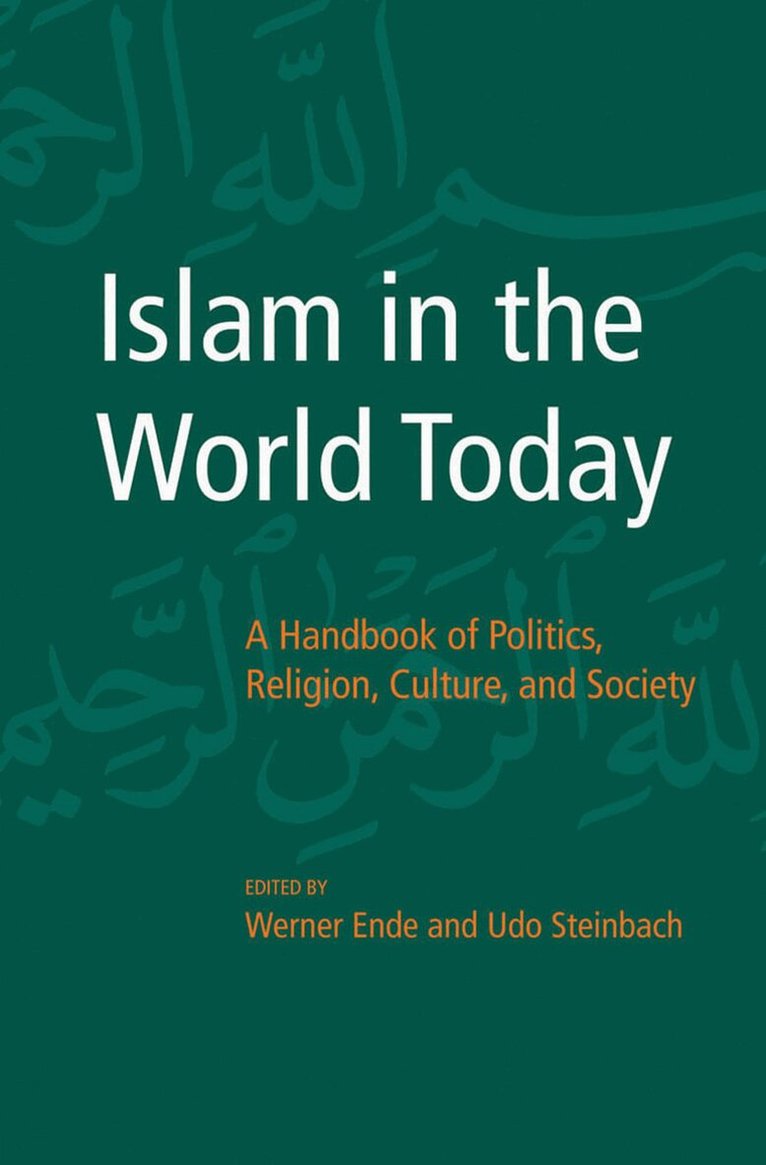
Inbunden, Engelska, 2010
1 205 kr
Skickas inom 5-8 vardagar
Considered the most authoritative single-volume reference work on Islam in the contemporary world, the German-language Der Islam in der Gegenwart, currently in its fifth edition, offers a wealth of authoritative information on the religious, political, social, and cultural life of Islamic nations and of Islamic immigrant communities elsewhere. Now, Cornell University Press is making this invaluable resource accessible to English-language readers. More current than the latest German edition on which it is based, Islam in the World Today covers a comprehensive array of topics in concise essays by some of the world's leading experts on Islam, including:• the history of Islam from the earliest years through the twentieth century, with particular attention to Sunni and Shi'i Islam and Islamic revival movements during the last three centuries;• data on the advance of Islam along with current population statistics;• Muslim ideas on modern economics, on social order, and on attempts to modernize Islamic law (shari'a) and apply it in contemporary Muslim societies;• Islam in diaspora, especially the situation in Europe and America;• secularism, democracy, and human rights; and• women in IslamTwenty-four essays are each devoted to a specific Muslim country or a country with significant Muslim minorities, spanning Asia, Africa, the Middle East, and the former Soviet Union. Additional essays illuminate Islamic culture, exploring local traditions; the languages and dialects of Muslim peoples; and art, architecture, and literature. Detailed bibliographies and indexes ensure the book's usefulness as a reference work.
E-bok
PDF, Engelska, 20213 420 kr
Läs direkt efter köp
This volume - grown out of an international conference at Freiburg University in 1999 - deals with various aspects of Shiite Islam since the 18th century. It is divided into two major parts, the first of which is dedicated to traditional institutions of theology and learning and their transformation in modern times. The second part treats internal debates and the activities of Shiite dissidents, showing that Shiism is far from being uniform. Ideological and political developments in the 20th century and especially the Islamic Revolution in Iran have shaped the image of modern Shiism more than any other tendencies and are therefore also discussed in greater detail in Parts three and four.This book reflects the state of the art in this field of Islamic studies, its 21 contributions covering three centuries and a vast geographical range.