Werner Oechslin – författare
Visar alla böcker från författaren . Handla med fri frakt och snabb leverans.
5 produkter
5 produkter
Inbunden, Engelska, 2022
552 kr
Skickas inom 3-6 vardagar
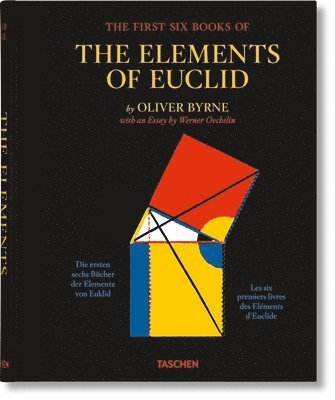
Nearly a century before Mondrian made geometrical red, yellow, and blue lines famous, 19th-century mathematician Oliver Byrne employed the color scheme for his 1847 edition of Euclid’s mathematical and geometric treatise Elements. Byrne’s idea was to use color to make learning easier and “diffuse permanent knowledge.” The result has been described as one of the oddest and most beautiful books of the 19th century. The facsimile of Byrne’s seminal publication is now available in a beautiful new edition. A masterwork of art and science, it is as remarkable in the boldness of its red, yellow, and blue figures and diagrams as it is in the mathematical precision of its theories. In the simplicity of forms and colors, the pages anticipate the vigor of De Stijl and Bauhaus design. In making complex information at once accessible and aesthetically engaging, this work is a forerunner to the information graphics that today define much of our data consumption.
Inbunden, Engelska, 2002
1 378 kr
Skickas inom 7-10 vardagar
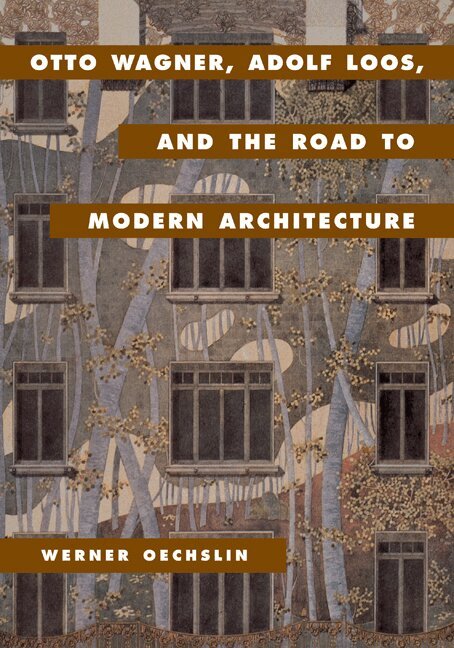
Contemporary architectural theory emphasizes the importance of 'tectonics', the term used to articulate the relationship between construction, structure and architectural expression. Despite the term's currency, little consideration has been given to its origins or historical significance. In this 2002 study, Werner Oechslin examines the attempts by early modern theoreticians of architecture to grapple with the relationship between appearance and essence, which is crucial to the discourse of tectonics. Referring to the writings of Joseph Lux, Karl Bötticher, and Adolf Loos, Oechslin follows this development from theories of a classical architecture without columnar orders to a Modern architecture upholding the 'truth'of its own architectural expression. Oechslin locates the culmination of this discourse in the work of Adolf Loos and in Le Corbusier's frequent references to Ancient Greece as the precedent of Modern architecture's honesty. This volume includes an anthology of primary texts by several theorists published in English.
Häftad, Tyska, 2012
593 kr
Skickas inom 10-15 vardagar
Inbunden, Engelska, 2026
304 kr
Kommande
Nearly a century before Mondrian made geometrical red, yellow, and blue lines famous, 19th-century mathematician Oliver Byrne employed the color scheme for his 1847 edition of Euclid’s mathematical and geometric treatise Elements. Byrne’s idea was to use color to make learning easier and “diffuse permanent knowledge.” The result has been described as one of the oddest and most beautiful books of the 19th century.The facsimile of Byrne’s vivid publication is now available as part of TASCHEN’s 45 series. A masterwork of art and science, it is as beautiful in the boldness of its red, yellow, and blue figures and diagrams as it is in the mathematical precision of its theories. In the simplicity of forms and colors, the pages anticipate the vigor of De Stijl and Bauhaus design. In making complex information at once accessible and aesthetically engaging, this work is a forerunner to the information graphics that today define much of our data consumption.
E-bok
PDF, Tyska, 2016384 kr
Läs direkt efter köp
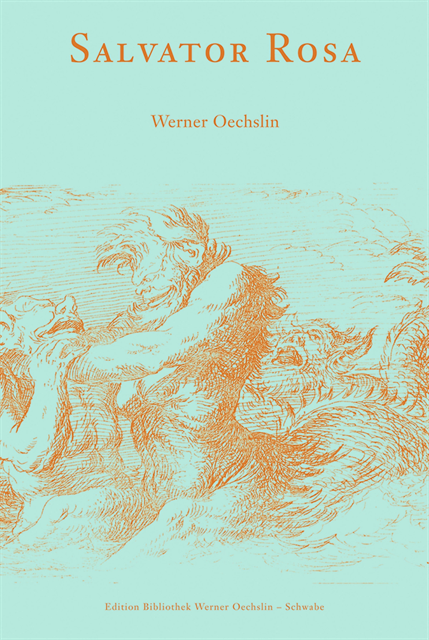
Salvator Rosa ist der selbsternannte "Pictor Succensor", der vom "furor poeticus" angefeuerte, seiner Kunst und seinem Künstlertum allein verpflichtete Maler, der alles für Freiheit gibt und ''kynischen'' Idealen entsprechend äusseren Reichtum und den Tod verachtet. Er ist gebildet und fordert ausdrücklich, dass der Künstler über Bildung verfüge: "Bisogna, che i Pittori siano eruditi […]." Er schreibt Satyren, in denen er seine hohen Ansprüche formuliert, Missstände anklagt und selbst Raphael und Michelangelo von Kritik und Sarkasmus nicht ausnimmt.Für viele ist er ein "bello spirito", gesellig und beliebt, und ein "amico vero", anderswo wird er – wegen seines allzu selbstbewussten Auftretens – angefeindet und gemieden. Er ist als Landschaftsmaler erfolgreich und wird später in England in einem Atemzug mit Claude Lorrain und Gaspard Dughet genannt und gefeiert und als "especially English property" reklamiert. Für Lady Morgan steht Rosa kämpfend an vorderster Front "pencil in hand and revolver in belt". Er bürgt für "moral dignity", für andere, so für Füssli, verkörpert er "wildness" – im Kontrast zu Poussins "classic regularity". Rosa selbst kämpft Zeit seines Lebens um Anerkennung als Maler heroischer, grosser Themen: "E sempre vanno paesi el marinelle e sempre cosuccie, e io son pittore di cose grandi di figure eroiche."Salvator Rosa strebt nach einem "dominio del maggior sapere" und steht Tommaso Campanellas naturphilosophischen Vorstellungen nahe. In exzentrischen "concetti" verliert er sich nicht, sondern folgt Danielo Bartolis "Stile Serio, e severo". Er malt Philosophenbilder und findet sich in Meditation und bei Diogenes wieder. Vordergründig eine romantische Vorstellung, doch Rosa sucht und forscht tiefer – ein Leben ''zwischen Schlange und Nachtigall'' ("tra il serpe, e il rosignuolo"), gelebt in Neapel, Rom, Florenz und wieder in Rom.