Wessel Reijers - Böcker
Visar alla böcker från författaren Wessel Reijers. Handla med fri frakt och snabb leverans.
6 produkter
6 produkter
183 kr
Skickas inom 3-6 vardagar
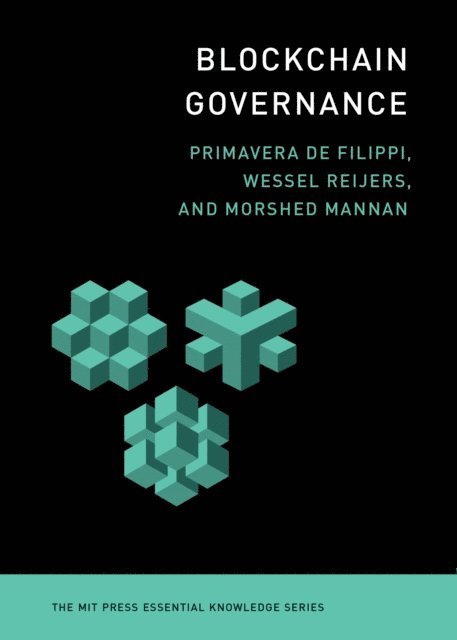
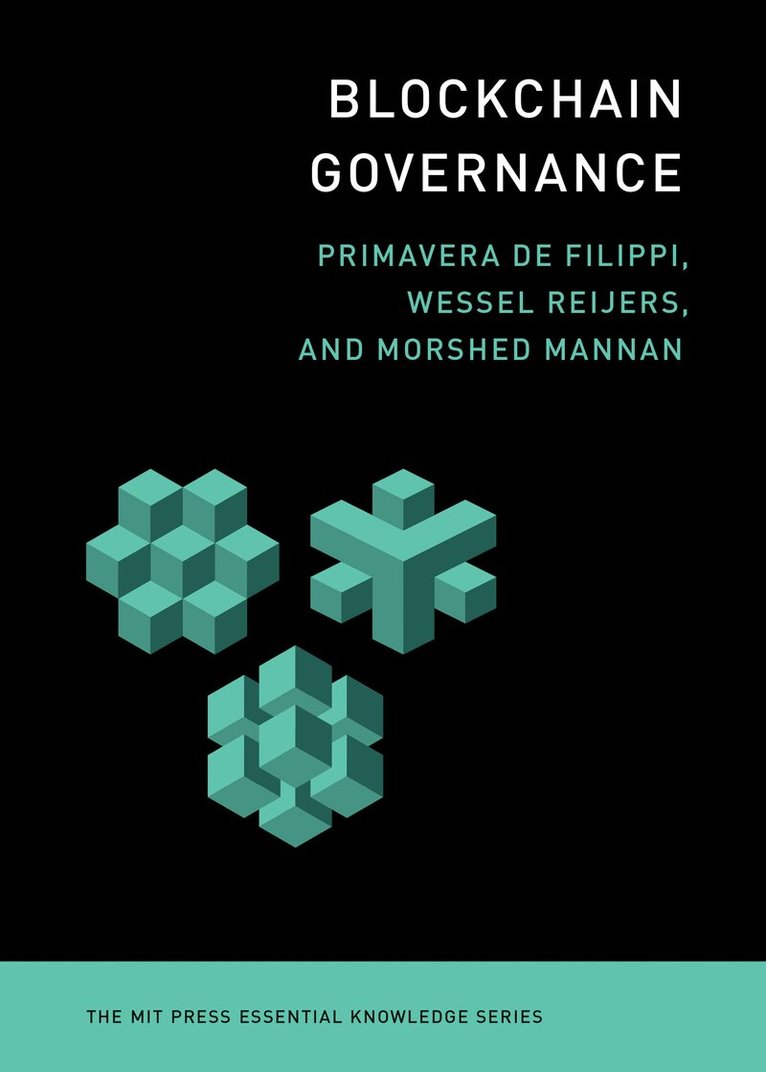
An engaging and comprehensive exploration of how fundamental ideas in political and legal thought shape the governance of blockchain communities, and are, in turn, shaped by blockchain technology. How can digital cash truly be 'trustless'? What does it mean that blockchain offers a new paradigm of the 'rule of code'? How are decisions made when a blockchain system faces an emergency, and who gets to make those decisions? In Blockchain Governance, Primavera De Filippi, Wessel Reijers, and Morshed Mannan offer answers to these questions and more, in an accessible, critical overview of legal and political issues related to blockchain technology, now the foundation of a multi-billion-dollar industry. Moving beyond the hype, they show how blockchain offers fertile ground for experimentation with radically new ways to govern people and institutions. Blockchain-based systems, like Bitcoin, Ethereum, Tezos, and countless others, offer new ways of organizing digital cash, 'smart' contracts to execute transactions, non-fungible tokens (NFTs) to collect art, and decentralized autonomous organizations (DAOs) to coordinate humans and machines. What these applications have in common is that they govern the behavior of people and artificial agents through distributed systems. Drawing from their extensive experience in researching blockchain technologies and communities, the authors discuss the origins of Bitcoin in cypher-anarchism and extropianism, spectacular events like the million-dollar theft of the DAO Attack, and the hostile takeover of the Steem platform. While engaging with political and legal thinkers such as Hobbes, Kelsen, and the Ostroms, these narratives explore how blockchain governance problematizes fundamental concepts such as rule of law, sovereignty, legality, legitimacy, and polycentric governance.
Interpreting Technology
Ricoeur on Questions Concerning Ethics and Philosophy of Technology
Inbunden, Engelska, 2021
1 572 kr
Skickas inom 10-15 vardagar
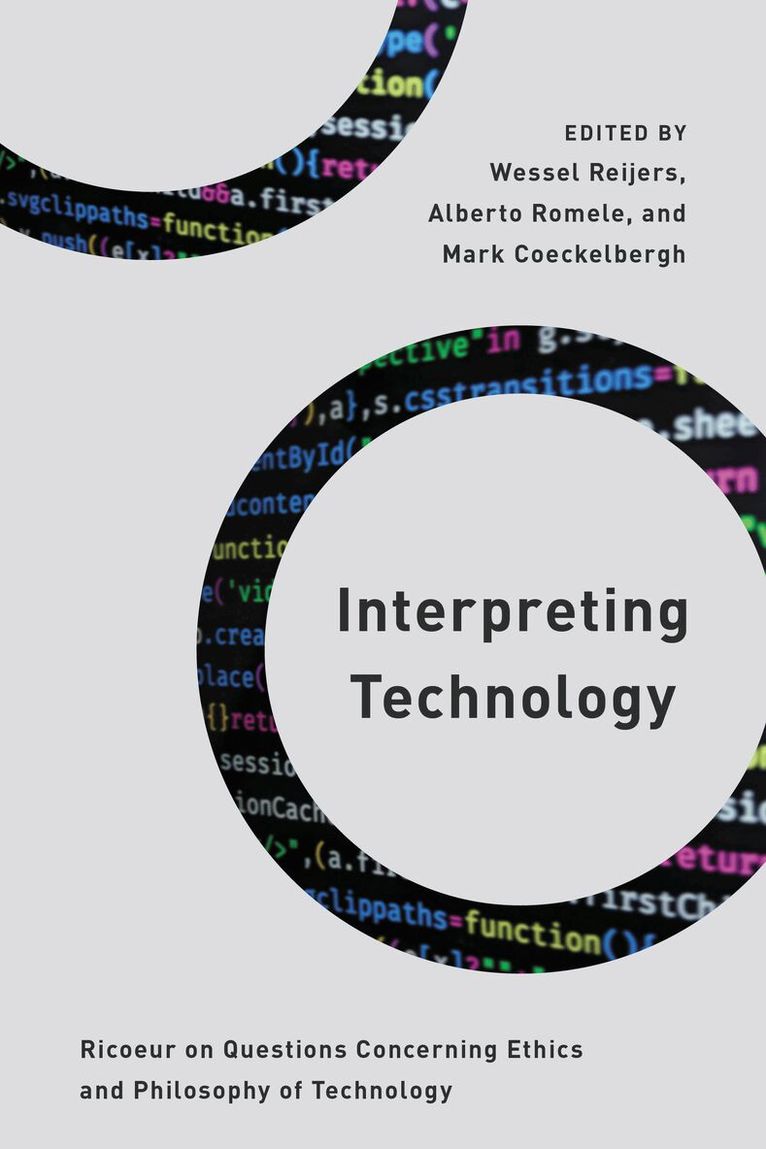
Paul Ricœur has been one of the most influential and intellectually challenging philosophers of the last century, and his work has contributed to a vast array of fields: studies of language, of history, of ethics and politics. However, he has up until recently only had a minor impact on the philosophy of technology. Interpreting Technology aims to put Ricœur’s work at the centre of contemporary philosophical thinking concerning technology. It investigates his project of critical hermeneutics for rethinking established theories of technology, the growing ethical and political impacts of technologies on the modern lifeworld, and ways of analysing global sociotechnical systems such as the Internet. Ricœur’s philosophy allows us to approach questions such as: how could narrative theory enhance our understanding of technological mediation? How can our technical practices be informed by the ethical aim of living the good life, with and for others, in just institutions? And how does the emerging global media landscape shape our sense of self, and our understanding of history? These questions are more timely than ever, considering the enormous impact technologies have on daily life in the 21st century: on how we shape ourselves with health apps, how we engage with one-another through social media, and how we act politically through digital platforms.
Interpreting Technology
Ricoeur on Questions Concerning Ethics and Philosophy of Technology
Häftad, Engelska, 2023
488 kr
Skickas inom 10-15 vardagar
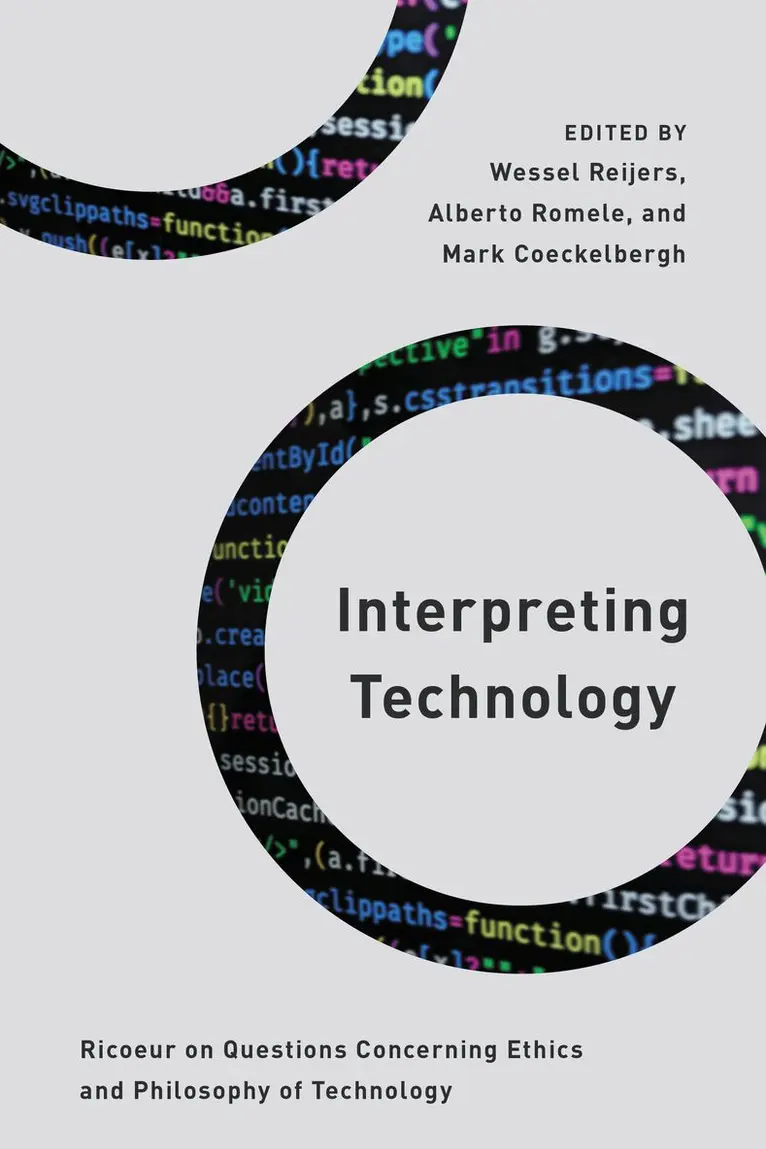
Paul Ricœur has been one of the most influential and intellectually challenging philosophers of the last century, and his work has contributed to a vast array of fields: studies of language, of history, of ethics and politics. However, he has up until recently only had a minor impact on the philosophy of technology. Interpreting Technology aims to put Ricœur’s work at the centre of contemporary philosophical thinking concerning technology. It investigates his project of critical hermeneutics for rethinking established theories of technology, the growing ethical and political impacts of technologies on the modern lifeworld, and ways of analysing global sociotechnical systems such as the Internet. Ricœur’s philosophy allows us to approach questions such as: how could narrative theory enhance our understanding of technological mediation? How can our technical practices be informed by the ethical aim of living the good life, with and for others, in just institutions? And how does the emerging global media landscape shape our sense of self, and our understanding of history? These questions are more timely than ever, considering the enormous impact technologies have on daily life in the 21st century: on how we shape ourselves with health apps, how we engage with one-another through social media, and how we act politically through digital platforms.
1 276 kr
Skickas inom 10-15 vardagar
This book proposes that technologies, similar to texts, novels and movies, ‘tell stories’ and thereby configure our lifeworld in the Digital Age. The impact of technologies on our lived experience is ever increasing: innovations in robotics challenge the nature of work, emerging biotechnologies impact our sense of self, and blockchain-based smart contracts profoundly transform interpersonal relations. In their exploration of the significance of these technologies, Reijers and Coeckelbergh build on the philosophical hermeneutics of Paul Ricouer to construct a new, narrative approach to the philosophy and ethics of technology.The authors take the reader on a journey: from a discussion of the philosophy of praxis, via a hermeneutic notion of technical practice that draws on MacIntyre, Heidegger and Ricoeur, through the virtue ethics of Vallor, and Ricoeur’s ethical aim, to the eventual construction of a practice method which can guide ethics in research and innovation. In itscreation of a compelling hermeneutic ethics of technology, the book offers a concrete framework for practitioners to incorporate ethics in everyday technical practice.
1 276 kr
Skickas inom 10-15 vardagar
This book proposes that technologies, similar to texts, novels and movies, ‘tell stories’ and thereby configure our lifeworld in the Digital Age. The impact of technologies on our lived experience is ever increasing: innovations in robotics challenge the nature of work, emerging biotechnologies impact our sense of self, and blockchain-based smart contracts profoundly transform interpersonal relations. In their exploration of the significance of these technologies, Reijers and Coeckelbergh build on the philosophical hermeneutics of Paul Ricouer to construct a new, narrative approach to the philosophy and ethics of technology.The authors take the reader on a journey: from a discussion of the philosophy of praxis, via a hermeneutic notion of technical practice that draws on MacIntyre, Heidegger and Ricoeur, through the virtue ethics of Vallor, and Ricoeur’s ethical aim, to the eventual construction of a practice method which can guide ethics in research and innovation. In itscreation of a compelling hermeneutic ethics of technology, the book offers a concrete framework for practitioners to incorporate ethics in everyday technical practice.
588 kr
Skickas inom 7-10 vardagar
Introduction to Ethics of Emerging Technologies offers a set of lecture and seminar course materials for teaching ethics of emerging technologies. It covers the field in a comprehensive and accessible manner, emphasizing storytelling and examples, practical approaches and tools, and interactive assignments. The book addresses historical and current discourses, both academic and practical, related to the ethics of emerging technologies. This includes a basic introduction to normative ethics and applied ethics of technology, an accessible entry point to theories of technology and normativity, particular technological themes (engineering ethics, ethics of AI, and ethics of biotechnologies), as well as societal contexts in which emerging technologies play a pivotal role (citizenship, sustainability, and global inequality).This book is a must-read for science and engineering students who want to engage with the ethical impacts of their future work and research; for philosophy students who want to know more about emerging technologies; for researchers and educators interested in developing technology ethics curricula; and for general readers interested in the topic.