Weston M. Stacey – författare
Visar alla böcker från författaren . Handla med fri frakt och snabb leverans.
10 produkter
10 produkter
Inbunden, Engelska, 2018
1 876 kr
Skickas
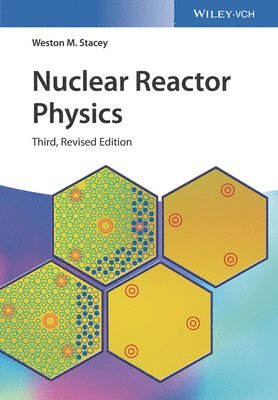
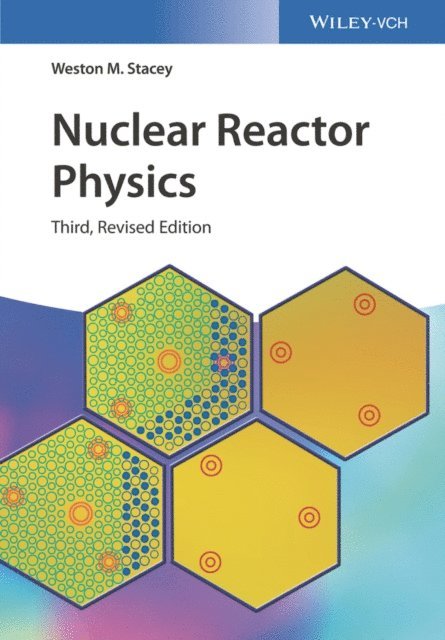
The third, revised edition of this popular textbook and reference, which has been translated into Russian and Chinese, expands the comprehensive and balanced coverage of nuclear reactor physics to include recent advances in understanding of this topic.The first part of the book covers basic reactor physics, including, but not limited to nuclear reaction data, neutron diffusion theory, reactor criticality and dynamics, neutron energy distribution, fuel burnup, reactor types and reactor safety.The second part then deals with such physically and mathematically more advanced topics as neutron transport theory, neutron slowing down, resonance absorption, neutron thermalization, perturbation and variational methods, homogenization, nodal and synthesis methods, and space-time neutron dynamics.For ease of reference, the detailed appendices contain nuclear data, useful mathematical formulas, an overview of special functions as well as introductions to matrix algebra and Laplace transforms.With its focus on conveying the in-depth knowledge needed by advanced student and professional nuclear engineers, this text is ideal for use in numerous courses and for self-study by professionals in basic nuclear reactor physics, advanced nuclear reactor physics, neutron transport theory, nuclear reactor dynamics and stability, nuclear reactor fuel cycle physics and other important topics in the field of nuclear reactor physics.
Inbunden, Engelska, 2022
1 599 kr
Skickas inom 3-6 vardagar
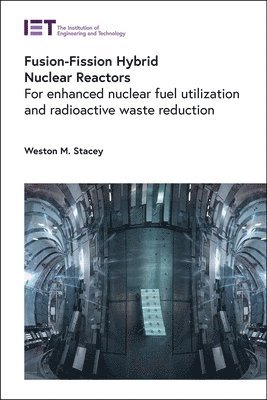
Nuclear energy is contributing to the long-term solution to stave off climate change. However, current nuclear fission technology accesses only about 1-3% of the nuclear energy content of natural uranium, which is inefficient, and also creates a radioactive waste disposal problem.Combining nuclear fission technology with emerging nuclear fusion technology to create a fusion-fission hybrid would yield extra fusion neutrons to 1) convert much more of the uranium into fissionable material, which would increase efficient utilization of the nuclear fuel resource, and 2) significantly reduce (by fission) the most long-lived radioactive nuclear waste.This book describes fusion-fission hybrid physics and technology. The first parts briefly review nuclear fission principles and describe design and safety of nuclear fission reactors; then the fundamentals of nuclear fusion and fusion reactor concepts are described, together with ongoing and future challenges and anticipated developments in this not-yet matured technology. Chapters cover the scientific basis of nuclear fission and the fission fuel cycle, advanced fission reactors, safety aspects, the scientific and technological basis of nuclear fusion power, future improvements expected, and then the fusion-fission hybrid (FFH) breeder and burner reactor concept principles, with illustrative FFH design concepts, safety analyses, and examples of the use of fusion neutrons for helping to achieve burning and breeding fission fuel cycles.This concise work is essential reading for researchers and policy makers in nuclear energy research and engineering, including advanced students.
E-bok
PDF, Engelska, 20072 652 kr
Läs direkt efter köp
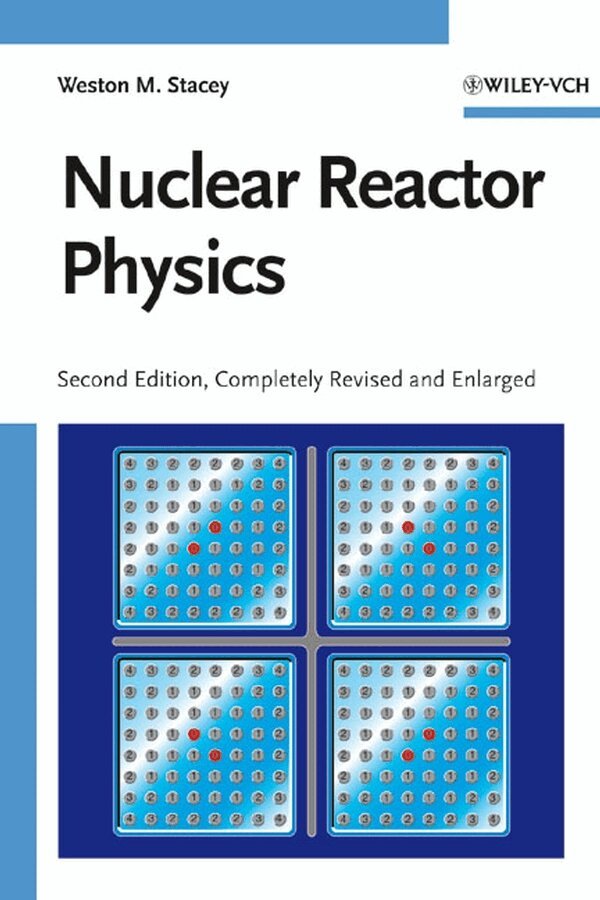
Nuclear reactor physics is the core discipline of nuclear engineering. Nuclear reactors now account for a significant portion of the electrical power generated worldwide, and new power reactors with improved fuel cycles are being developed. At the same time, the past few decades have seen an ever-increasing number of industrial, medical, military, and research applications for nuclear reactors. The second edition of this successful comprehensive textbook and reference on basic and advanced nuclear reactor physics has been completely updated, revised and enlarged to include the latest developments.
E-bok
PDF, Engelska, 20082 314 kr
Läs direkt efter köp
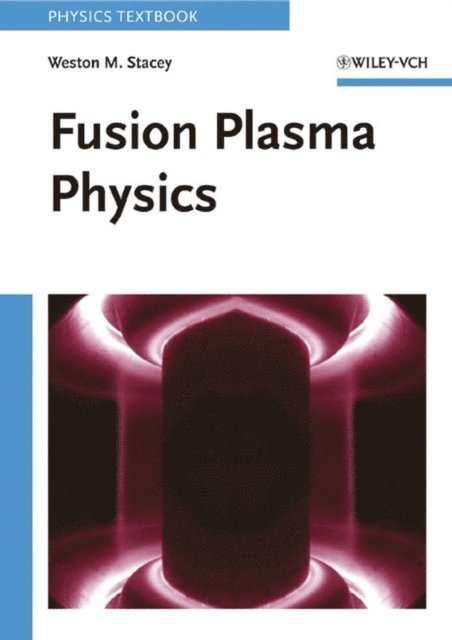
Nuclear fusion has the potential to become the most important energy source of the new century. But still many problems, as e.g. the confinement of the plasma, are not yet solved. Thus they are subject to intense research which drives a rapid evolvement of this field of nuclear physics, and generates the need for an up-to-date textbook for graduate students. This state-of-the-art textbook assembles the material for a modern course, and is aimed at graduate and advanced undergraduate students. It both introduces the fundamental principles and theories of fusion plasma physics, and presents the most recent topics from various sources in a systematic and concise way. Each chapter is rounded off with a set of exercises.
E-bok
PDF, Engelska, 20101 583 kr
Läs direkt efter köp
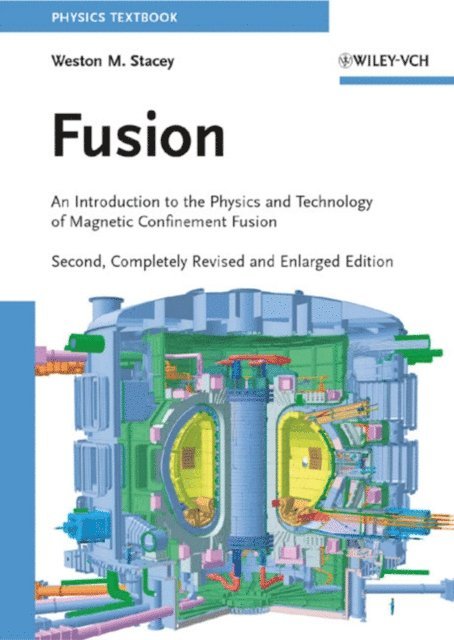
This second edition of a popular textbook is thoroughly revised with around 25% new and updated content. It provides an introduction to both plasma physics and fusion technology at a level that can be understood by advanced undergraduates and graduate students in the physical sciences and related engineering disciplines. As such, the contents cover various plasma confinement concepts, the support technologies needed to confine the plasma, and the designs of ITER as well as future fusion reactors. With end of chapter problems for use in courses.
E-bok
Engelska, 20121 695 kr
Läs direkt efter köp
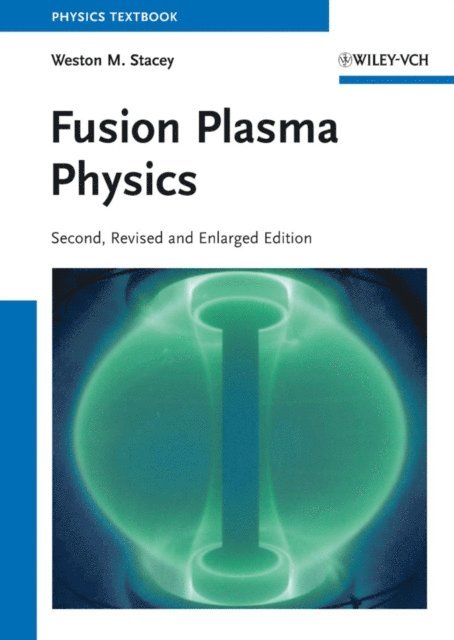
This revised and enlarged second edition of the popular textbook and reference contains comprehensive treatments of both the established foundations of magnetic fusion plasma physics and of the newly developing areas of active research. It concludes with a look ahead to fusion power reactors of the future. The well-established topics of fusion plasma physics -- basic plasma phenomena, Coulomb scattering, drifts of charged particles in magnetic and electric fields, plasma confinement by magnetic fields, kinetic and fluid collective plasma theories, plasma equilibria and flux surface geometry, plasma waves and instabilities, classical and neoclassical transport, plasma-materials interactions, radiation, etc. -- are fully developed from first principles through to the computational models employed in modern plasma physics. The new and emerging topics of fusion plasma physics research -- fluctuation-driven plasma transport and gyrokinetic/gyrofluid computational methodology, the physics of the divertor, neutral atom recycling and transport, impurity ion transport, the physics of the plasma edge (diffusive and non-diffusive transport, MARFEs, ELMs, the L-H transition, thermal-radiative instabilities, shear suppression of transport, velocity spin-up), etc. -- are comprehensively developed and related to the experimental evidence. Operational limits on the performance of future fusion reactors are developed from plasma physics and engineering constraints, and conceptual designs of future fusion power reactors are discussed.
E-bok
PDF, Engelska, 20121 680 kr
Läs direkt efter köp
This revised and enlarged second edition of the popular textbook and reference contains comprehensive treatments of both the established foundations of magnetic fusion plasma physics and of the newly developing areas of active research. It concludes with a look ahead to fusion power reactors of the future. The well-established topics of fusion plasma physics -- basic plasma phenomena, Coulomb scattering, drifts of charged particles in magnetic and electric fields, plasma confinement by magnetic fields, kinetic and fluid collective plasma theories, plasma equilibria and flux surface geometry, plasma waves and instabilities, classical and neoclassical transport, plasma-materials interactions, radiation, etc. -- are fully developed from first principles through to the computational models employed in modern plasma physics. The new and emerging topics of fusion plasma physics research -- fluctuation-driven plasma transport and gyrokinetic/gyrofluid computational methodology, the physics of the divertor, neutral atom recycling and transport, impurity ion transport, the physics of the plasma edge (diffusive and non-diffusive transport, MARFEs, ELMs, the L-H transition, thermal-radiative instabilities, shear suppression of transport, velocity spin-up), etc. -- are comprehensively developed and related to the experimental evidence. Operational limits on the performance of future fusion reactors are developed from plasma physics and engineering constraints, and conceptual designs of future fusion power reactors are discussed.
E-bok
PDF, Engelska, 20182 484 kr
Läs direkt efter köp
The third, revised edition of this popular textbook and reference, which has been translated into Russian and Chinese, expands the comprehensive and balanced coverage of nuclear reactor physics to include recent advances in understanding of this topic. The first part of the book covers basic reactor physics, including, but not limited to nuclear reaction data, neutron diffusion theory, reactor criticality and dynamics, neutron energy distribution, fuel burnup, reactor types and reactor safety. The second part then deals with such physically and mathematically more advanced topics as neutron transport theory, neutron slowing down, resonance absorption, neutron thermalization, perturbation and variational methods, homogenization, nodal and synthesis methods, and space-time neutron dynamics. For ease of reference, the detailed appendices contain nuclear data, useful mathematical formulas, an overview of special functions as well as introductions to matrix algebra and Laplace transforms. With its focus on conveying the in-depth knowledge needed by advanced student and professional nuclear engineers, this text is ideal for use in numerous courses and for self-study by professionals in basic nuclear reactor physics, advanced nuclear reactor physics, neutron transport theory, nuclear reactor dynamics and stability, nuclear reactor fuel cycle physics and other important topics in the field of nuclear reactor physics.
E-bok
Engelska, 20182 397 kr
Läs direkt efter köp
The third, revised edition of this popular textbook and reference, which has been translated into Russian and Chinese, expands the comprehensive and balanced coverage of nuclear reactor physics to include recent advances in understanding of this topic. The first part of the book covers basic reactor physics, including, but not limited to nuclear reaction data, neutron diffusion theory, reactor criticality and dynamics, neutron energy distribution, fuel burnup, reactor types and reactor safety. The second part then deals with such physically and mathematically more advanced topics as neutron transport theory, neutron slowing down, resonance absorption, neutron thermalization, perturbation and variational methods, homogenization, nodal and synthesis methods, and space-time neutron dynamics. For ease of reference, the detailed appendices contain nuclear data, useful mathematical formulas, an overview of special functions as well as introductions to matrix algebra and Laplace transforms. With its focus on conveying the in-depth knowledge needed by advanced student and professional nuclear engineers, this text is ideal for use in numerous courses and for self-study by professionals in basic nuclear reactor physics, advanced nuclear reactor physics, neutron transport theory, nuclear reactor dynamics and stability, nuclear reactor fuel cycle physics and other important topics in the field of nuclear reactor physics.
Häftad, Engelska, 2005
1 392 kr
Tillfälligt slut
Nuclear fusion has the potential to become the most important energy source of the new century. But still many problems, as e.g. the confinement of the plasma, are not yet solved. Thus they are subject to intense research which drives a rapid evolvement of this field of nuclear physics, and generates the need for an up-to-date textbook for graduate students.This state-of-the-art textbook assembles the material for a modern course, and is aimed at graduate and advanced undergraduate students. It both introduces the fundamental principles and theories of fusion plasma physics, and presents the most recent topics from various sources in a systematic and concise way. Each chapter is rounded off with a set of exercises.