
W.F. Vincent – författare
Visar alla böcker från författaren . Handla med fri frakt och snabb leverans.
6 produkter
6 produkter
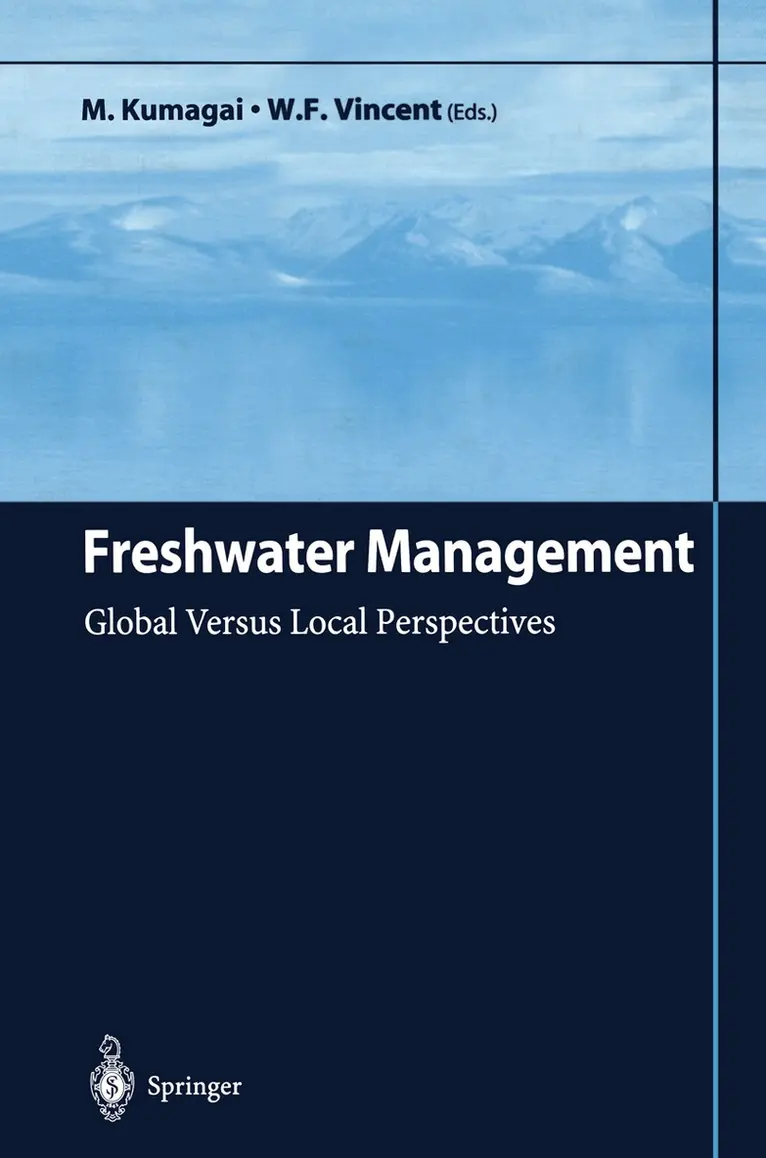
Inbunden, Engelska, 2003
1 077 kr
Skickas inom 10-15 vardagar
The globalization of trade, monetary and fiscal policies, capital markets, and investment patterns is reshaping the world economy and is leading to new financial, commercial, and marketing structures as well as unprecedented economies of scale.
E-bok
PDF, Engelska, 20121 416 kr
Läs direkt efter köp
The globalization of trade, monetary and fiscal policies, capital markets, and investment patterns is reshaping the world economy and is leading to new financial, commercial, and marketing structures as well as unprecedented economies of scale. Simultaneously, national and international awareness and to strengthen. There is consensus among responses to accelerating environmental degradation continue most developed countries that the rapidly evolving new economic order needs to be well integrated with policies to maintain or restore environmental quality. Many challenges remain, however, in evaluating the geo-ecological implications of economic globalization, and in formulating the appropriate management responses. In lakes and rivers, the management of water supply and quality has largely proceeded on the basis of local considerations rather than at the global scale that has been more typical of environmental management of the atmosphere and ocean. It is increasingly apparent, however, that high-quality water resources are now in critically short supply not only because of local problems such as over-irrigation and eutrophication, but also as a result of larger-scale climate effects on the hydrosphere. This magnitude of impact will increasingly require the integrated monitoring and management of water resources on a planetary scale, with world criteria for environmental assessment, restoration, and conservation strategies. The increasing extent of world trade in potable freshwater heightens the urgency for establishing international approaches, criteria, and regulations.
Häftad, Engelska, 2012
1 077 kr
Skickas inom 10-15 vardagar
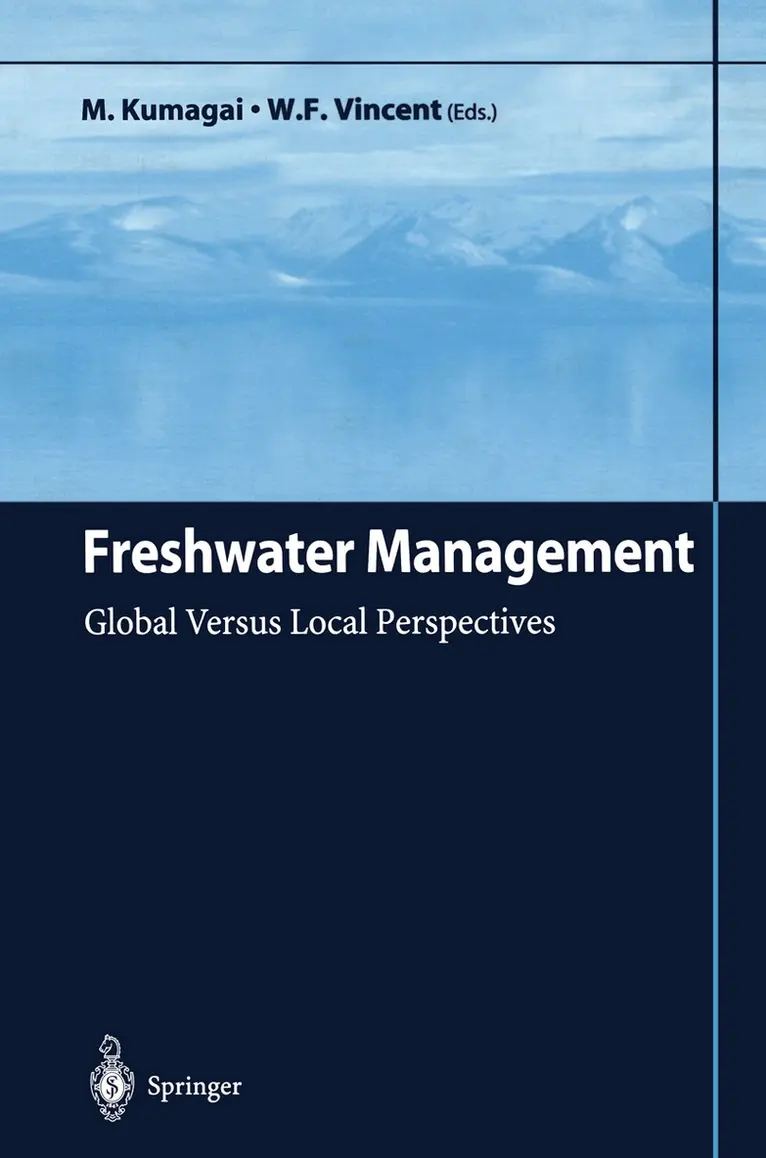
The globalization of trade, monetary and fiscal policies, capital markets, and investment patterns is reshaping the world economy and is leading to new financial, commercial, and marketing structures as well as unprecedented economies of scale. Simultaneously, national and international awareness and to strengthen. There is consensus among responses to accelerating environmental degradation continue most developed countries that the rapidly evolving new economic order needs to be well integrated with policies to maintain or restore environmental quality. Many challenges remain, however, in evaluating the geo-ecological implications of economic globalization, and in formulating the appropriate management responses. In lakes and rivers, the management of water supply and quality has largely proceeded on the basis of local considerations rather than at the global scale that has been more typical of environmental management of the atmosphere and ocean. It is increasingly apparent, however, that high-quality water resources are now in critically short supply not only because of local problems such as over-irrigation and eutrophication, but also as a result of larger-scale climate effects on the hydrosphere. This magnitude of impact will increasingly require the integrated monitoring and management of water resources on a planetary scale, with world criteria for environmental assessment, restoration, and conservation strategies. The increasing extent of world trade in potable freshwater heightens the urgency for establishing international approaches, criteria, and regulations.
Inbunden, Engelska, 1989
2 146 kr
Skickas inom 10-15 vardagar
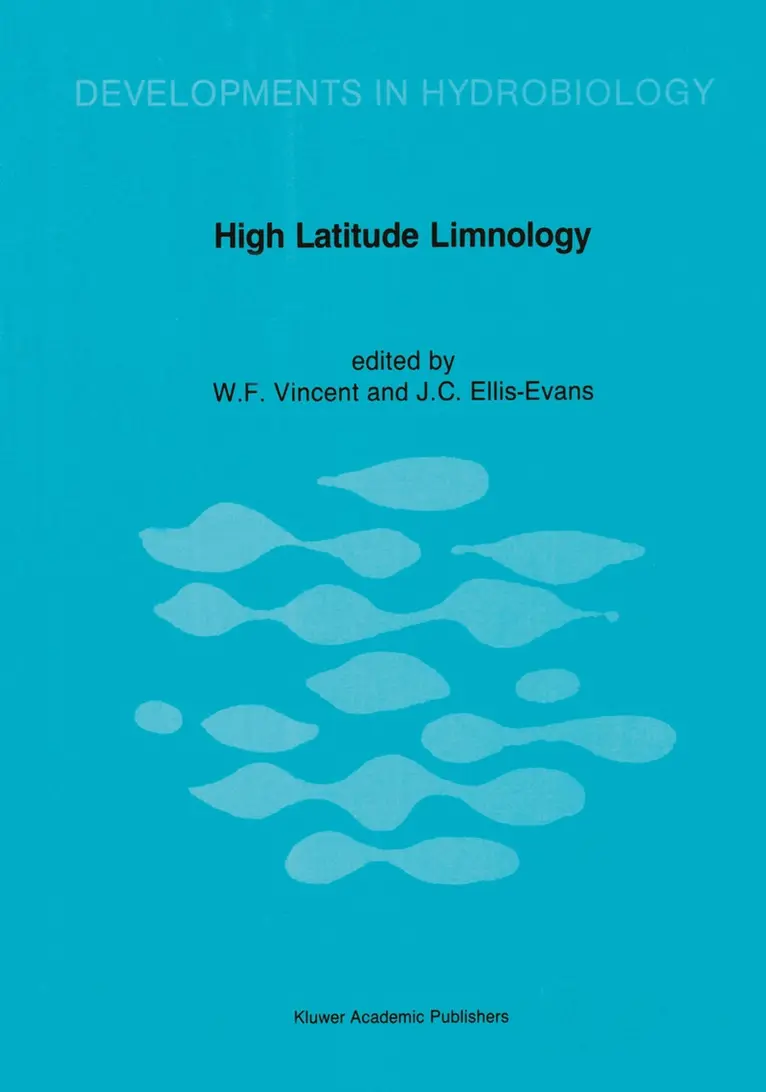
This volume is derived from a symposium on High Latitude Limnology held during the 23rd Congress of the Societas Internationalis Limnologiae in Hamilton, New Zealand. The symposium stemmed from our belief that an exchange of views between limnologists working in the north and south polar zones would be timely and productive. Over the last decade there has been a major increase in the limnological research effort in Antarctica with the expansion of science programmes there by many nations from both the northern and southern hemispheres. Freshwater research has also continued to develop in the Arctic, stimulated by the need for basic information to assess environmental impacts of the oil industry, mining, urbanisation and other human activities. By bringing together aquatic investigators from both poles we hope to draw attention to the distinctive features that high latitude systems hold in common, and to the marked contrasts between and within each zone. The dominant impression from the assemblage of papers presented here is one of great limnological diversity.The studies include clear, turbid and brown water rivers in the sub Arctic (LaPerriere, Van Nieuwenhuyse & Anderson); chlorophyte dominated streams in the maritime Antarctic (Hawes); streams on the antarctic continent lined with thick cyanobacterial mats (Howard-Williams & Vincent); meromictic waters in the Arctic (Ouellet, Dickman, Bisson & Page) and Antarctic (e. g.
E-bok
PDF, Engelska, 20122 840 kr
Läs direkt efter köp
Häftad, Engelska, 2011
2 146 kr
Skickas inom 10-15 vardagar
This volume is derived from a symposium on High Latitude Limnology held during the 23rd Congress of the Societas Internationalis Limnologiae in Hamilton, New Zealand. The symposium stemmed from our belief that an exchange of views between limnologists working in the north and south polar zones would be timely and productive. Over the last decade there has been a major increase in the limnological research effort in Antarctica with the expansion of science programmes there by many nations from both the northern and southern hemispheres. Freshwater research has also continued to develop in the Arctic, stimulated by the need for basic information to assess environmental impacts of the oil industry, mining, urbanisation and other human activities. By bringing together aquatic investigators from both poles we hope to draw attention to the distinctive features that high latitude systems hold in common, and to the marked contrasts between and within each zone. The dominant impression from the assemblage of papers presented here is one of great limnological diversity.The studies include clear, turbid and brown water rivers in the sub Arctic (LaPerriere, Van Nieuwenhuyse & Anderson); chlorophyte dominated streams in the maritime Antarctic (Hawes); streams on the antarctic continent lined with thick cyanobacterial mats (Howard-Williams & Vincent); meromictic waters in the Arctic (Ouellet, Dickman, Bisson & Page) and Antarctic (e. g.