926 kr
Skickas inom 3-6 vardagar
926 kr
Skickas inom 3-6 vardagar
936 kr
Skickas inom 3-6 vardagar
1 012 kr
Läs direkt efter köp
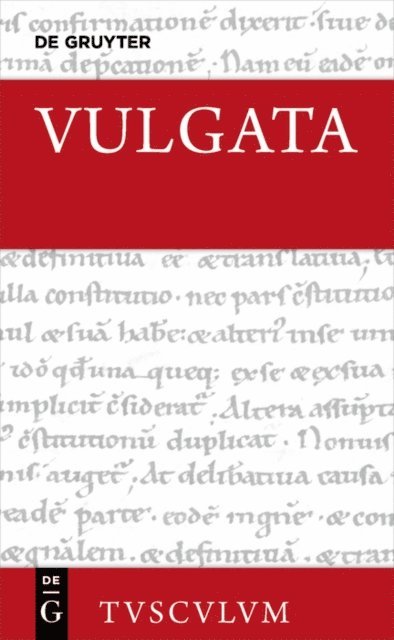
This is the first bilingual edition of the complete Vulgate with a German translation. The Vulgate is the most widely used Latin translation of the Bible since late antiquity. It was produced by Jerome around 380-400 and can be regarded as the central work of European intellectual and theological history. As it deviates from the original biblical texts in decisive parts, it offers an important insight into the Christian theology of late antiquity, the Middle Ages and the early modern period. For centuries, the Roman Catholic Church regarded Jerome''s Latin translation as the authoritative version of Holy Scripture and used it as its source.
The original Latin text of the Vulgate follows the now authoritative 5th edition by Robert Weber and Roger Gryson. The German translation is a completely new work by a team of renowned classical philologists and theologians, supported by an interdisciplinary theological-philological advisory board. The Vulgate Association based in Chur, Switzerland, was responsible for coordinating and selecting the translators and the advisory board.
The aim of the translation project is to work out Jerome''s language and interpretation of the Bible independently of the theological translation tradition with all its deviations from the original Hebrew and Greek texts. The result is a translation that fulfils the highest scholarly standards and is a standard work both in its own right and as a reference work.
1 012 kr
Läs direkt efter köp
This is the first bilingual edition of the complete Vulgate with a German translation. The Vulgate is the most widely used Latin translation of the Bible since late antiquity. It was produced by Jerome around 380-400 and can be regarded as the central work of European intellectual and theological history. As it deviates from the original biblical texts in decisive parts, it offers an important insight into the Christian theology of late antiquity, the Middle Ages and the early modern period. For centuries, the Roman Catholic Church regarded Jerome''s Latin translation as the authoritative version of Holy Scripture and used it as its source.
The original Latin text of the Vulgate follows the now authoritative 5th edition by Robert Weber and Roger Gryson. The German translation is a completely new work by a team of renowned classical philologists and theologians, supported by an interdisciplinary theological-philological advisory board. The Vulgate Association based in Chur, Switzerland, was responsible for coordinating and selecting the translators and the advisory board.
The aim of the translation project is to work out Jerome''s language and interpretation of the Bible independently of the theological translation tradition with all its deviations from the original Hebrew and Greek texts. The result is a translation that fulfils the highest scholarly standards and is a standard work both in its own right and as a reference work.
1 012 kr
Läs direkt efter köp
This is the first bilingual edition of the complete Vulgate with a German translation. The Vulgate is the most widely used Latin translation of the Bible since late antiquity. It was produced by Jerome around 380-400 and can be regarded as the central work of European intellectual and theological history. As it deviates from the original biblical texts in decisive parts, it offers an important insight into the Christian theology of late antiquity, the Middle Ages and the early modern period. For centuries, the Roman Catholic Church regarded Jerome''s Latin translation as the authoritative version of Holy Scripture and used it as its source.
The original Latin text of the Vulgate follows the now authoritative 5th edition by Robert Weber and Roger Gryson. The German translation is a completely new work by a team of renowned classical philologists and theologians, supported by an interdisciplinary theological-philological advisory board. The Vulgate Association based in Chur, Switzerland, was responsible for coordinating and selecting the translators and the advisory board.
The aim of the translation project is to work out Jerome''s language and interpretation of the Bible independently of the theological translation tradition with all its deviations from the original Hebrew and Greek texts. The result is a translation that fulfils the highest scholarly standards and is a standard work both in its own right and as a reference work.
1 004 kr
Läs direkt efter köp
This is the first bilingual edition of the complete Vulgate with a German translation. The Vulgate is the most widely used Latin translation of the Bible since late antiquity. It was produced by Jerome around 380-400 and can be regarded as the central work of European intellectual and theological history. As it deviates from the original biblical texts in decisive parts, it offers an important insight into the Christian theology of late antiquity, the Middle Ages and the early modern period. For centuries, the Roman Catholic Church regarded Jerome''s Latin translation as the authoritative version of Holy Scripture and used it as its source.
The original Latin text of the Vulgate follows the now authoritative 5th edition by Robert Weber and Roger Gryson. The German translation is a completely new work by a team of renowned classical philologists and theologians, supported by an interdisciplinary theological-philological advisory board. The Vulgate Association based in Chur, Switzerland, was responsible for coordinating and selecting the translators and the advisory board.
The aim of the translation project is to work out Jerome''s language and interpretation of the Bible independently of the theological translation tradition with all its deviations from the original Hebrew and Greek texts. The result is a translation that fulfils the highest scholarly standards and is a standard work both in its own right and as a reference work.
1 012 kr
Läs direkt efter köp
This is the first bilingual edition of the complete Vulgate with a German translation. The Vulgate is the most widely used Latin translation of the Bible since late antiquity. It was produced by Jerome around 380-400 and can be regarded as the central work of European intellectual and theological history. As it deviates from the original biblical texts in decisive parts, it offers an important insight into the Christian theology of late antiquity, the Middle Ages and the early modern period. For centuries, the Roman Catholic Church regarded Jerome''s Latin translation as the authoritative version of Holy Scripture and used it as its source.
The original Latin text of the Vulgate follows the now authoritative 5th edition by Robert Weber and Roger Gryson. The German translation is a completely new work by a team of renowned classical philologists and theologians, supported by an interdisciplinary theological-philological advisory board. The Vulgate Association based in Chur, Switzerland, was responsible for coordinating and selecting the translators and the advisory board.
The aim of the translation project is to work out Jerome''s language and interpretation of the Bible independently of the theological translation tradition with all its deviations from the original Hebrew and Greek texts. The result is a translation that fulfils the highest scholarly standards and is a standard work both in its own right and as a reference work.
1 528 kr
Läs direkt efter köp
1 273 kr
Skickas inom 3-6 vardagar
2 586 kr
Skickas inom 5-8 vardagar
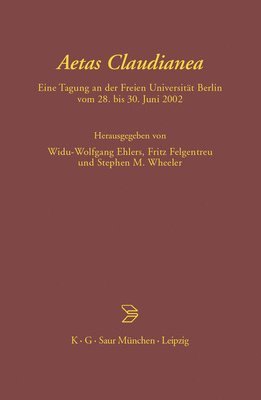
Der spätantike Dichter Claudian erlebt seit über dreißig Jahren eine anhaltende Renaissance des Interesses an seinem Werk. So lässt sich eine gewisse Rehabilitation des Künstlers Claudian konstatieren, seine Stellung innerhalb der Entwicklung der lateinischen Dichtung aber ist dennoch bisher keiner kritischen Würdigung unterzogen worden. Der vorliegende Band präsentiert die Ergebnisse der ersten Claudian-Tagung überhaupt. In neuen Beiträgen von Gelehrten wie Franca Ela Consolino, Manfred Fuhrmann, Siegmar Döpp, Isabella Gualandri, Jacqueline Long und Peter Lebrecht Schmidt, aber auch einer Reihe jüngerer Claudian-Forscher werden das literatur- und geistesgeschichtliche Umfeld, Themen und Motive, Ästhetik, Überlieferung und Rezeption der Werke Claudians behandelt. So entsteht ein Eindruck nicht nur von der Einheit eines Gesamtwerks, in dem politische und mythologische Epik, Epigramme und Elegien einander ergänzen und beleuchten, sondern auch von der Einheit Claudians mit seiner Epoche und von der Einheitlichkeit eines Claudian-Bildes, das durch die Forschung der vergangenen Jahrzehnte an Kontur gewonnen hat.