Wilbur R. Jacobs – författare
Visar alla böcker från författaren Wilbur R. Jacobs. Handla med fri frakt och snabb leverans.
5 produkter
5 produkter
Häftad, Engelska, 2011
285 kr
Skickas inom 10-15 vardagar
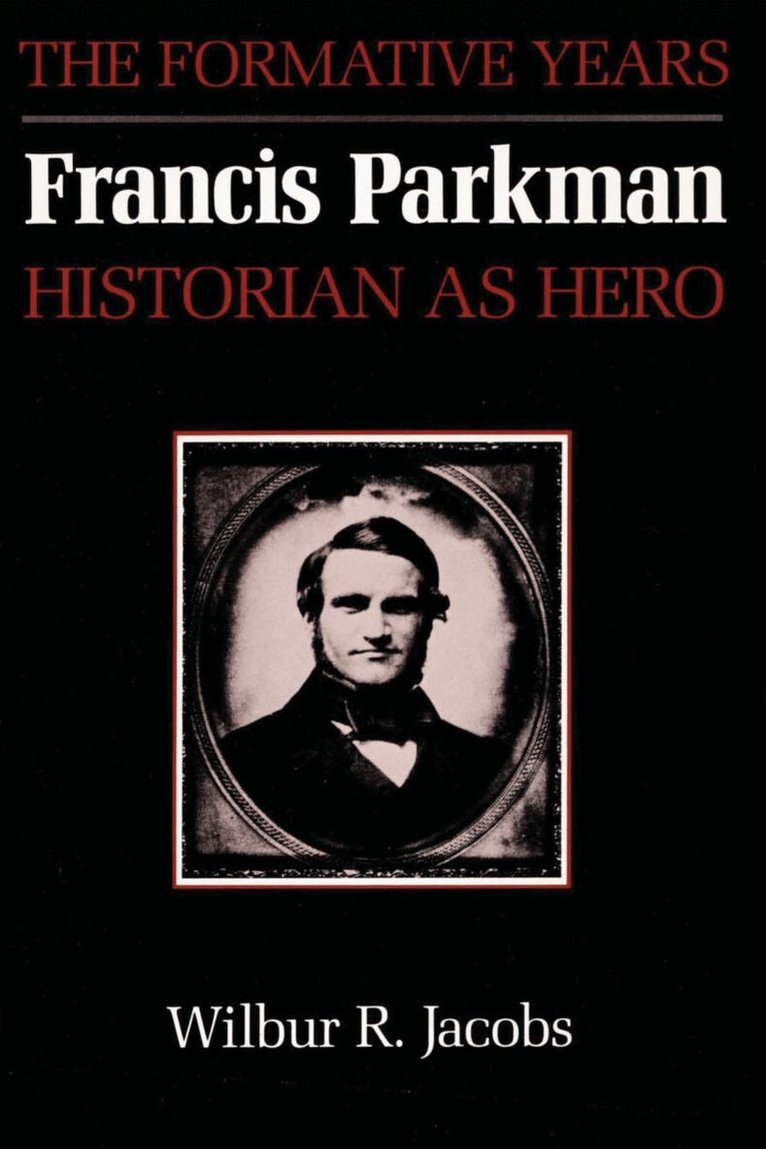
A historian who lived the kind of history he wrote, Francis Parkman is a major-and controversial-figure in American historiography. His narrative style, while popular with readers wanting a "good story," has raised many questions with professional historians. Was Parkman writing history or historical fiction? Did he color historical figures with his own heroic self-image? Was his objectivity compromised by his "unbending, conservative, Brahmin" values? These are some of the many issues that Wilbur Jacobs treats in this thought-provoking study.Jacobs carefully considers the "apprenticeship" of Francis Parkman, first spent in facing the rigors of the Oregon Trail and later in struggling to write his histories despite a mysterious, frequently incapacitating illness. He shows how these events allowed Parkman to create a heroic self-image, which impelled his desire for fame as a historian and influenced his treatment of both the "noble" and the "savage" characters of his histories.In addition to assessing the influence of Parkman's development and personality on his histories, Jacobs comments on Parkman's relationship to basic social and cultural issues of the nineteenth century. These include the slavery question, Native American issues, expansion of the suffrage to new groups, including women, and anti-Catholicism.
Häftad, Engelska, 2021
419 kr
Skickas inom 10-15 vardagar
Should Frederick Jackson Turner be revered as “the father of western history” or reviled as a misguided advocate of a frontier spirit and rugged individualism that denied cultural diversity and produced widespread environmental destruction? Dividing into campus over the issue, western historians place him everywhere from one end of the spectrum to the other.In this provocative new interpretation of Turner’s life, work, and legacy, Wilbur Jacobs challenges the views of traditionalists and views of traditionalists and revisionists alike. From extensive research in the Turner archives, a nationwide search for additional Turner correspondence, interviews with historians, and a lifetime of collecting Turner anecdotes, Jacobs chronicles Turner’s professional (and sometimes personal) bequest through 100 years of Western historical writing.Jacobs adds his voice to the heated debate by mixing a sophisticated critique of historical writing with stories of professional intrigue—the fights to protect Turner’s legacy, limit access to the Turner archives, and control the Western history Association. He traces the intellectual development of Turner’s frontier theory; explores the intense rivalry between two major Turnerian disciples, Frederick Merk and Ray A. Billington, as they vied for control of Turner’s legacy; and analyzes the efforts of new western historians who seek to erase Turner and Billington from the landscape of what is now called the history of the “West.”Balanced in his assessments, Jacobs treats Turner and his disciples with a sympathetic yet critical eye. He points out Turner’s limitations in dealing with environmental, racial-ethnic, and urban themes as well as the shortcomings of Merk, Billington, and other Turnerians. At the same time, however, Jacobs illuminates the major contributions of their work.Despite their intense differences, Jacobs argues, all western historians remain inextricably linked by Turner’s legacy.
Inbunden, Engelska, 2023
398 kr
Skickas inom 5-8 vardagar
Häftad, Engelska, 2023
284 kr
Skickas inom 5-8 vardagar
E-bok
Engelska, 201945 kr
Läs direkt efter köp
This study of gifts to the Indians is an attempt to illuminate a hitherto almost obscure factor in the Colonial westward movement. These “presents,” comprising such eighteenth-century items as fabrics, hardware, munitions, food, toys, jewelry, clothing, wampum, and liquors, were a potent factor in the complex diplomatic history of Indian politics along the old Northwest frontier. Thousands of pounds sterling were expended both by the French and by the English in observing this old Indian custom that was so necessary to Indian diplomacy. Indeed, the civilizing influence of this concomitant of Western culture reached ahead of the fur trade far into the wilderness to the Mississippi Valley. These so-called presents also served as a measure of compensation for the vast areas of virgin forest that were bought by the English. The French competed with the British in securing the friendship of the powerful Indian confederacies, which, even as late as 1750, held the balance of power in North America. During the years 1748-1763, it became the policy of the colonies bordering the Ohio and Northwest frontiers to “brighten the chain of friendship” by giving presents to such influential “nations” as the members of the Iroquoian confederacy. Moreover, in some cases the Indians became so accustomed to these frequent outlays of free merchandise that they came to be almost completely dependent upon European goods.—Wilbur R. Jacobs