Will Mari – författare
779 kr
Skickas inom 10-15 vardagar
779 kr
Skickas inom 10-15 vardagar
246 kr
Skickas inom 5-8 vardagar
390 kr
Läs direkt efter köp
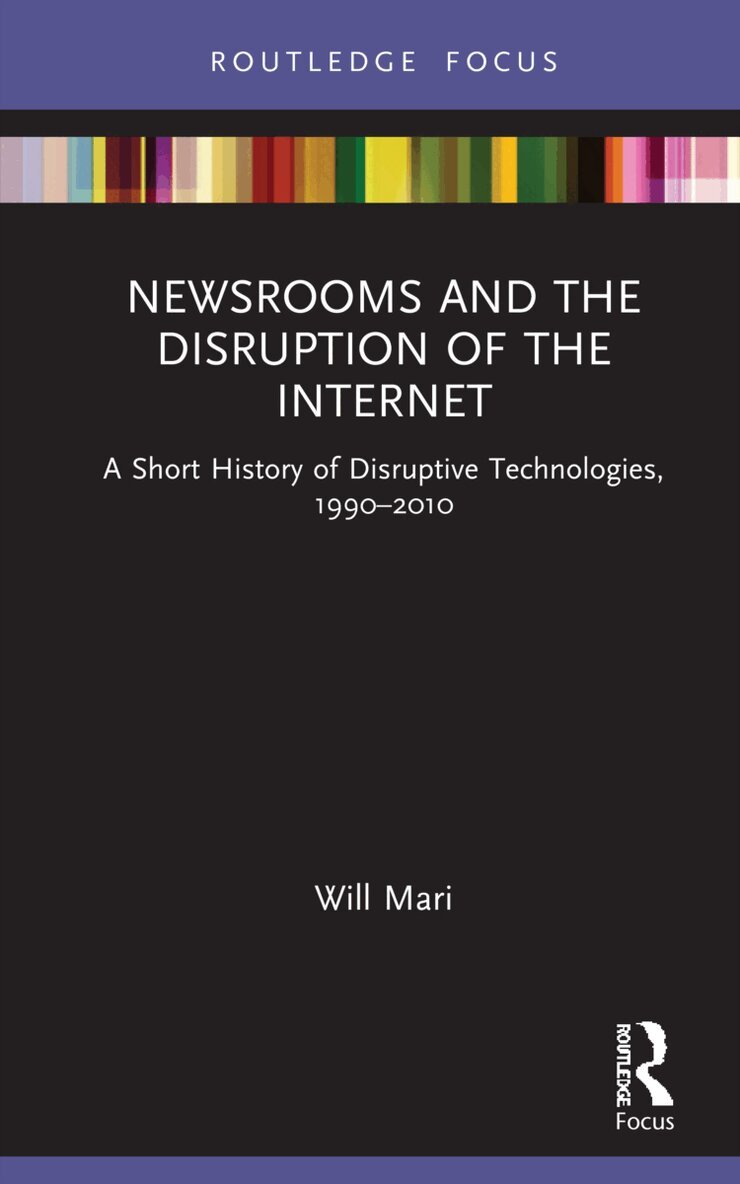
Newsrooms and the Disruption of the Internet is an insightful account of what happened when the internet first arrived in the 1990s and early 2000s in the recently computerized, but still largely unchanged, newspaper industry.
Providing a focused narrative of how the internet disrupted news collection, editing, presentation and dissemination, the book examines the role of the internet from helpful adjunct to extension to, eventually, successor to the traditional print product. Experiments by large national newspaper “brands” and other first-adopters in the 1990s are described, tracing the slow adoption of the internet by chains and large metro papers, followed by the smaller daily and weekly newspapers by the early 2000s. The book describes the changes that arrived as more “Web 2.0” technologies become prevalent and as social media shifted the news-media landscape in the mid-to-late 2000s, ultimately changing how most people in the West consumed and thought of “the news.”
This book is intended for academics and researchers in the fields of journalism studies, history of technology, and media studies, especially those interested in transitions from analog to digital technology, and the initial adoption of the commercial internet.
404 kr
Läs direkt efter köp
Newsrooms and the Disruption of the Internet is an insightful account of what happened when the internet first arrived in the 1990s and early 2000s in the recently computerized, but still largely unchanged, newspaper industry.
Providing a focused narrative of how the internet disrupted news collection, editing, presentation and dissemination, the book examines the role of the internet from helpful adjunct to extension to, eventually, successor to the traditional print product. Experiments by large national newspaper “brands” and other first-adopters in the 1990s are described, tracing the slow adoption of the internet by chains and large metro papers, followed by the smaller daily and weekly newspapers by the early 2000s. The book describes the changes that arrived as more “Web 2.0” technologies become prevalent and as social media shifted the news-media landscape in the mid-to-late 2000s, ultimately changing how most people in the West consumed and thought of “the news.”
This book is intended for academics and researchers in the fields of journalism studies, history of technology, and media studies, especially those interested in transitions from analog to digital technology, and the initial adoption of the commercial internet.
344 kr
Skickas inom 10-15 vardagar
344 kr
Skickas inom 10-15 vardagar
404 kr
Läs direkt efter köp
A Short History of Disruptive Journalism Technologies provides a swift analysis of the computerization of the newsroom, from the mid-1960s through to the early 1990s. It focuses on how word processing and a number of related affordances, including mobile-reporting tools, impacted the daily work routines of American news workers.
The narrative opens with the development of mainframes and their attendant use as databases in large, daily newspapers, It moves on to the "minicomputer" era and explores initial news-worker experiences with computers for editing and publication. Following this, the book examines the microprocessor era, and the rise of "smart" terminals, "microcomputers," and off-the-shelf hardware/software, along with the increasing use of computers in smaller news organizations. Mari then turns to the use of pre-internet networks, wire-services and bulletin boards deployed for user interaction. He looks at the integration of decentralized computer networks in newsrooms, with a mix of content-management systems and PCs, and the increasing use of pagers and cellphones for news-gathering, including the shift from "portable" to mobile conceptualizations for these technologies.
A Short History of Disruptive Journalism Technologies is an illuminating survey for students and instructors of journalism studies. It represents an important acknowledgement of the impact of pre-internet technological disruptions which led to the even more disruptive internet- and related computing technologies in the latter 1990s and through the present.
404 kr
Läs direkt efter köp
A Short History of Disruptive Journalism Technologies provides a swift analysis of the computerization of the newsroom, from the mid-1960s through to the early 1990s. It focuses on how word processing and a number of related affordances, including mobile-reporting tools, impacted the daily work routines of American news workers.
The narrative opens with the development of mainframes and their attendant use as databases in large, daily newspapers, It moves on to the "minicomputer" era and explores initial news-worker experiences with computers for editing and publication. Following this, the book examines the microprocessor era, and the rise of "smart" terminals, "microcomputers," and off-the-shelf hardware/software, along with the increasing use of computers in smaller news organizations. Mari then turns to the use of pre-internet networks, wire-services and bulletin boards deployed for user interaction. He looks at the integration of decentralized computer networks in newsrooms, with a mix of content-management systems and PCs, and the increasing use of pagers and cellphones for news-gathering, including the shift from "portable" to mobile conceptualizations for these technologies.
A Short History of Disruptive Journalism Technologies is an illuminating survey for students and instructors of journalism studies. It represents an important acknowledgement of the impact of pre-internet technological disruptions which led to the even more disruptive internet- and related computing technologies in the latter 1990s and through the present.
1 681 kr
Skickas inom 10-15 vardagar
1 977 kr
Läs direkt efter köp