Willem Molle – författare
2 676 kr
Skickas inom 10-15 vardagar
695 kr
Skickas inom 10-15 vardagar
20 042 kr
Skickas inom 5-8 vardagar
2 676 kr
Skickas inom 10-15 vardagar
1 018 kr
Skickas inom 10-15 vardagar
2 322 kr
Skickas inom 10-15 vardagar
803 kr
Skickas inom 10-15 vardagar
2 184 kr
Skickas inom 10-15 vardagar
836 kr
Skickas inom 10-15 vardagar
934 kr
Skickas inom 10-15 vardagar
1 211 kr
Läs direkt efter köp
The only comprehensive text available for advanced study and professional reference, this book brings much needed clarity to both the theoretical and practical aspects of EU intervention.
Integrating both theoretical and practical research in a clear and accessible structure, covering economic, social and territorial issues European Cohesion Policy provides a systematic view of the various stages of the whole policy cycle, looking in detail at:
the evolution of the problems the design of the policy system the implementation in practice the evaluation of effects .
An authoritative analysis of the problems and debates involved, European Cohesion Policy is essential reading for students, policy makers, development workers and researchers working in all aspects of European policy.
1 211 kr
Läs direkt efter köp
The only comprehensive text available for advanced study and professional reference, this book brings much needed clarity to both the theoretical and practical aspects of EU intervention.
Integrating both theoretical and practical research in a clear and accessible structure, covering economic, social and territorial issues European Cohesion Policy provides a systematic view of the various stages of the whole policy cycle, looking in detail at:
the evolution of the problems the design of the policy system the implementation in practice the evaluation of effects .
An authoritative analysis of the problems and debates involved, European Cohesion Policy is essential reading for students, policy makers, development workers and researchers working in all aspects of European policy.
824 kr
Läs direkt efter köp
992 kr
Läs direkt efter köp
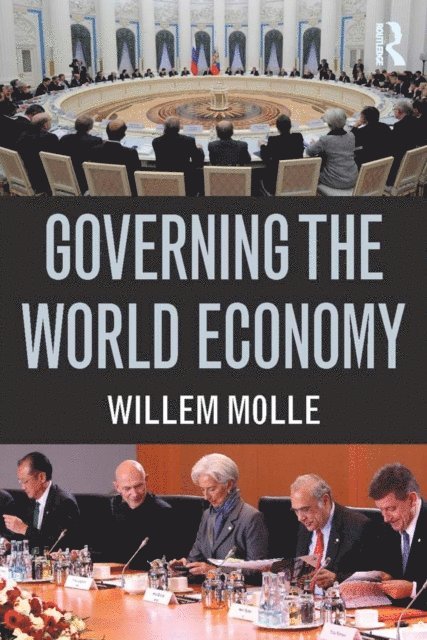
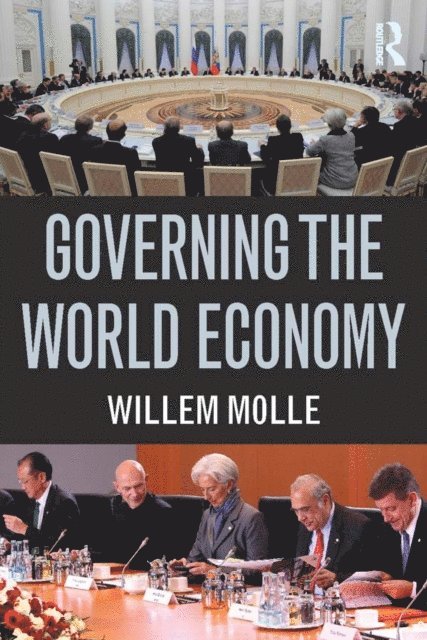
The major problems the world faces have increased since the turn of the millennium. Recurrent storms on the financial markets have ravaged many countries, poverty is still widespread, notwithstanding decades of massive development aid, the environment remains in acute jeopardy and the major world institutions have often reached an impasse in attempting to combat these difficulties.
The issues ask for rapid and consistent action by policy makers but the interests of international organizations, such as the WTO, World Bank and Kyoto protocol, have become too diversified to come to multilateral agreements setting uniform rules and asking for strict compliance with these rules.
Alternative solutions are sought and development in the future is likely to be characterized by fuzzy and complex interactions between flexible groups of actors seeking agreements on the solutions for the most pressing new problems. Progress will become rather unpredictable and will depend on time, place and subject specific cases as well as convergence of interests.
This need not be only negative. Flexible solutions have the advantage that they can be easily adapted in case the conditions change. In this new book, the follow up to his Global Economic Institutions, Willem Molle maps out the unfolding of this process.
992 kr
Läs direkt efter köp
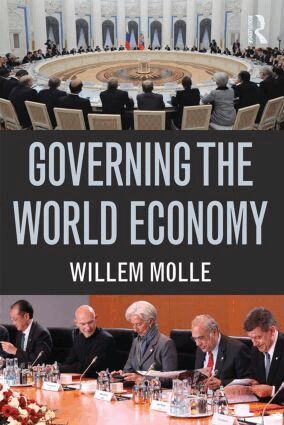
The major problems the world faces have increased since the turn of the millennium. Recurrent storms on the financial markets have ravaged many countries, poverty is still widespread, notwithstanding decades of massive development aid, the environment remains in acute jeopardy and the major world institutions have often reached an impasse in attempting to combat these difficulties.
The issues ask for rapid and consistent action by policy makers but the interests of international organizations, such as the WTO, World Bank and Kyoto protocol, have become too diversified to come to multilateral agreements setting uniform rules and asking for strict compliance with these rules.
Alternative solutions are sought and development in the future is likely to be characterized by fuzzy and complex interactions between flexible groups of actors seeking agreements on the solutions for the most pressing new problems. Progress will become rather unpredictable and will depend on time, place and subject specific cases as well as convergence of interests.
This need not be only negative. Flexible solutions have the advantage that they can be easily adapted in case the conditions change. In this new book, the follow up to his Global Economic Institutions, Willem Molle maps out the unfolding of this process.
925 kr
Läs direkt efter köp
In the course of its development the EU has had to deal with an expanding policy agenda, covering ever more subjects and an increased diversity of instruments. It has also had to deal with an increased number of member states and an extended range of partners (regional authorities, non governmental organisations). These developments have greatly increased the risk of inconsistencies between the various policies pursued and between the various levels of competence for the same policy. Inconsistent policies are less effective than they ought to be. So, they imply a welfare loss.
The EU has tried to cope with the challenge of consistency by adapting its governance. Traditionally it uses mainly the regulatory method. The effectiveness of this method has recently come into question. So alternative methods are now favoured. One is the financial method; which implies more expenditure via the EU budget. The other is coordination. The application of both methods has certain advantages and disadvantages. The problem for policy makers is then to determine the choice between the modes first and the optimal level of budgetary and coordination efforts next. Notwithstanding its obvious policy relevance the problem has got little attention from academia.
This book sets out to contribute to a solution by following two approaches. The first is a systematisation of the theoretical and conceptual underpinnings of the financial and coordination methods. The second is an empirical investigation into a range of European policy processes, implying to different degrees budgetary outlays and coordination.
925 kr
Läs direkt efter köp
In the course of its development the EU has had to deal with an expanding policy agenda, covering ever more subjects and an increased diversity of instruments. It has also had to deal with an increased number of member states and an extended range of partners (regional authorities, non governmental organisations). These developments have greatly increased the risk of inconsistencies between the various policies pursued and between the various levels of competence for the same policy. Inconsistent policies are less effective than they ought to be. So, they imply a welfare loss.
The EU has tried to cope with the challenge of consistency by adapting its governance. Traditionally it uses mainly the regulatory method. The effectiveness of this method has recently come into question. So alternative methods are now favoured. One is the financial method; which implies more expenditure via the EU budget. The other is coordination. The application of both methods has certain advantages and disadvantages. The problem for policy makers is then to determine the choice between the modes first and the optimal level of budgetary and coordination efforts next. Notwithstanding its obvious policy relevance the problem has got little attention from academia.
This book sets out to contribute to a solution by following two approaches. The first is a systematisation of the theoretical and conceptual underpinnings of the financial and coordination methods. The second is an empirical investigation into a range of European policy processes, implying to different degrees budgetary outlays and coordination.
2 746 kr
Skickas inom 10-15 vardagar
948 kr
Skickas inom 10-15 vardagar
1 127 kr
Läs direkt efter köp
To combat economic disparity and low growth, the European Union has established an integrated policy system that pursues increased cohesion and smart, sustainable, and inclusive growth. This integrated approach is realized through thousands of development projects and takes up more than a third of the total budget of the European Union. Despite its significance, the policy is subject to many misunderstandings and there is a lot of controversy surrounding its effectiveness.
Cohesion and Growth seeks to bring clarity to these issues. It presents both the theoretical and practical aspects of EU intervention, a critical contribution to the understanding of the anatomy of the problems and the way to apply effective solutions to them, and a systematic view of the issues at each of the subsequent stages of the whole policy cycle.
Offering an authoritative analysis of the problems and debates involved, this book is essential reading for students, policy makers, project promoters and researchers concerned with this key area of European policy making.
1 127 kr
Läs direkt efter köp
To combat economic disparity and low growth, the European Union has established an integrated policy system that pursues increased cohesion and smart, sustainable, and inclusive growth. This integrated approach is realized through thousands of development projects and takes up more than a third of the total budget of the European Union. Despite its significance, the policy is subject to many misunderstandings and there is a lot of controversy surrounding its effectiveness.
Cohesion and Growth seeks to bring clarity to these issues. It presents both the theoretical and practical aspects of EU intervention, a critical contribution to the understanding of the anatomy of the problems and the way to apply effective solutions to them, and a systematic view of the issues at each of the subsequent stages of the whole policy cycle.
Offering an authoritative analysis of the problems and debates involved, this book is essential reading for students, policy makers, project promoters and researchers concerned with this key area of European policy making.
1 110 kr
Läs direkt efter köp
1 110 kr
Läs direkt efter köp
1 953 kr
Skickas inom 5-8 vardagar
445 kr
Läs direkt efter köp
Focusing on the interplay between three key players - knowledge organisations, firms and the public sector - this insightful volume will be invaluable to a wide-ranging audience including researchers, practitioners and students of science and technology, business and management, public policy and European studies.
2 173 kr
Tillfälligt slut
1 789 kr
Tillfälligt slut