William A. Galston - Böcker
Visar alla böcker från författaren William A. Galston. Handla med fri frakt och snabb leverans.
13 produkter
13 produkter
290 kr
Skickas inom 7-10 vardagar
A renowned political theorist offers a road map to the dark forces that threaten democracy “Politics is different now because something awful has been unleashed. William A. Galston defines this awful thing in his fantastic new book, Anger, Fear, Domination.”—David Brooks, New York Times Liberalism orients itself around the idea of self-interest tempered by reason, with the addition of civically useful emotions such as patriotism, self-sacrifice, and empathy. But the politics dominating much of the world shows that these ideals are not enough. William A. Galston argues that the defense of liberal democracy requires understanding the dark forces whose impact on political life liberal democratic institutions seek to mute: the emotions of fear, humiliation, anger, resentment, and hatred, and the drive to dominate. In hard or threatening times, it is these dark passions that most reliably persuade people and move them to action—whether voting or violence. Throughout the democratic world, these institutional defenses are now being tested by a new generation of demagogues. With a keen awareness of the stakes, Galston explains why countering this dangerous development requires not only more responsive public policies but persuasive rhetoric and a realistic conception of political psychology—one that is free of the illusion that reason or affirmative sentiments such as empathy, solidarity, and love can reliably dominate public affairs.
225 kr
Kommande
A renowned political theorist offers a road map to the dark forces that threaten democracy “Politics is different now because something awful has been unleashed. William A. Galston defines this awful thing in his fantastic new book, Anger, Fear, Domination.”—David Brooks, New York Times Liberalism orients itself around the idea of self-interest tempered by reason, with the addition of civically useful emotions such as patriotism, self-sacrifice, and empathy. But the politics dominating much of the world shows that these ideals are not enough. William A. Galston argues that the defense of liberal democracy requires understanding the dark forces whose impact on political life liberal democratic institutions seek to mute: the emotions of fear, humiliation, anger, resentment, and hatred, and the drive to dominate. In hard or threatening times, it is these dark passions that most reliably persuade people and move them to action—whether voting or violence. Throughout the democratic world, these institutional defenses are now being tested by a new generation of demagogues. With a keen awareness of the stakes, Galston explains why countering this dangerous development requires not only more responsive public policies but persuasive rhetoric and a realistic conception of political psychology—one that is free of the illusion that reason or affirmative sentiments such as empathy, solidarity, and love can reliably dominate public affairs.
Liberal Pluralism
The Implications of Value Pluralism for Political Theory and Practice
Häftad, Engelska, 2002
397 kr
Skickas inom 7-10 vardagar
William Galston is a distinguished political philosopher whose work is informed by the experience of having also served from 1993-5 as President Clinton's Deputy Assistant for Domestic Policy. He is thus able to speak with an authority unique amongst political theorists about the implications of advancing certain moral and political values in practice. The foundational argument of this 2002 book is that liberalism is compatible with the value pluralism first espoused by Isaiah Berlin. William Galston defends a version of value pluralism - liberal pluralism - and argues, against the contentions of John Gray and others, that it undergirds a kind of liberal politics that gives weight to the ability of individuals and groups to live their lives in accordance with their deepest beliefs about what gives meaning and purpose to life.
360 kr
Skickas inom 7-10 vardagar
This multi-authored book explores the ways that many influential ethical traditions - secular and religious, Western and non-Western - wrestle with the moral dimensions of poverty and the needs of the poor. These traditions include Buddhism, Christianity, Confucianism, Hinduism, Islam, and Judaism, among the religious perspectives; classical liberalism, feminism, liberal-egalitarianism, and Marxism, among the secular; and natural law, which might be claimed by both. The basic questions addressed by each of these traditions are linked to several overarching themes: what poverty is, the particular vulnerabilities of high-risk groups, responsibility for the occurrence of poverty, preferred remedies, how responsibility for its alleviation is distributed, and priorities in the delivery of assistance. This volume features an introduction to the types, scope, and causes of poverty in the modern world and concludes with Michael Walzer's broadly conceived commentary, which provides a direct comparison of the presented views and makes suggestions for further study and policy.
888 kr
Skickas inom 7-10 vardagar
This book is a major contribution to the current theory of liberalism by an eminent political theorist. It challenges the views of such theorists as Rawls, Dworkin, and Ackerman who believe that the essence of liberalism is that it should remain neutral concerning different ways of life and individual conceptions of what is good or valuable. Professor Galston argues that the modern liberal state is committed to a distinctive conception of the human good, and to that end has developed characteristic institutions and practices - representative governments, diverse societies, market economies, and zones of private action - in the pursuit of specific public purposes that give unity to the liberal state. These purposes guide liberal public policy, shape liberal justice, require the practice of liberal virtues, and rest on a liberal public culture. Consequently the diversity characteristic of liberal societies is limited by their institutional, personal, and cultural preconditions.
435 kr
Skickas inom 7-10 vardagar
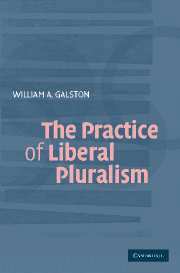
The Practice of Liberal Pluralism defends a theory, liberal pluralism, which is based on three core concepts - value pluralism, political pluralism, and expressive liberty - and explores the implications of this theory for politics. Liberal pluralism helps clarify some of the complexities of real-world political action and points toward a distinctive conception of public philosophy and public policy. It leads to a vision of a good society in which political institutions are active in a delimited sphere and in which, within broad limits, families, civil associations, and faith communities may organize and conduct themselves in ways that are not congruent with principles that govern the public sphere. The final section of the book defends liberal pluralism against attacks that it is internally incoherent or that it denies, without justification, key theological premises. Written in a nontechnical style, this book should appeal to professionals in philosophy, political science, law, and policy making.
1 034 kr
Skickas inom 7-10 vardagar
This multi-authored book explores the ways that many influential ethical traditions - secular and religious, Western and non-Western - wrestle with the moral dimensions of poverty and the needs of the poor. These traditions include Buddhism, Christianity, Confucianism, Hinduism, Islam, and Judaism, among the religious perspectives; classical liberalism, feminism, liberal-egalitarianism, and Marxism, among the secular; and natural law, which might be claimed by both. The basic questions addressed by each of these traditions are linked to several overarching themes: what poverty is, the particular vulnerabilities of high-risk groups, responsibility for the occurrence of poverty, preferred remedies, how responsibility for its alleviation is distributed, and priorities in the delivery of assistance. This volume features an introduction to the types, scope, and causes of poverty in the modern world and concludes with Michael Walzer's broadly conceived commentary, which provides a direct comparison of the presented views and makes suggestions for further study and policy.
Liberal Pluralism
The Implications of Value Pluralism for Political Theory and Practice
Inbunden, Engelska, 2002
1 034 kr
Skickas inom 7-10 vardagar
William Galston is a distinguished political philosopher whose work is informed by the experience of having also served from 1993-5 as President Clinton's Deputy Assistant for Domestic Policy. He is thus able to speak with an authority unique amongst political theorists about the implications of advancing certain moral and political values in practice. The foundational argument of this 2002 book is that liberalism is compatible with the value pluralism first espoused by Isaiah Berlin. William Galston defends a version of value pluralism - liberal pluralism - and argues, against the contentions of John Gray and others, that it undergirds a kind of liberal politics that gives weight to the ability of individuals and groups to live their lives in accordance with their deepest beliefs about what gives meaning and purpose to life.
995 kr
Skickas inom 7-10 vardagar
The Practice of Liberal Pluralism defends a theory, liberal pluralism, which is based on three core concepts - value pluralism, political pluralism, and expressive liberty - and explores the implications of this theory for politics. Liberal pluralism helps clarify some of the complexities of real-world political action and points toward a distinctive conception of public philosophy and public policy. It leads to a vision of a good society in which political institutions are active in a delimited sphere and in which, within broad limits, families, civil associations, and faith communities may organize and conduct themselves in ways that are not congruent with principles that govern the public sphere. The final section of the book defends liberal pluralism against attacks that it is internally incoherent or that it denies, without justification, key theological premises. Written in a nontechnical style, this book should appeal to professionals in philosophy, political science, law, and policy making.
1 476 kr
Skickas inom 10-15 vardagar
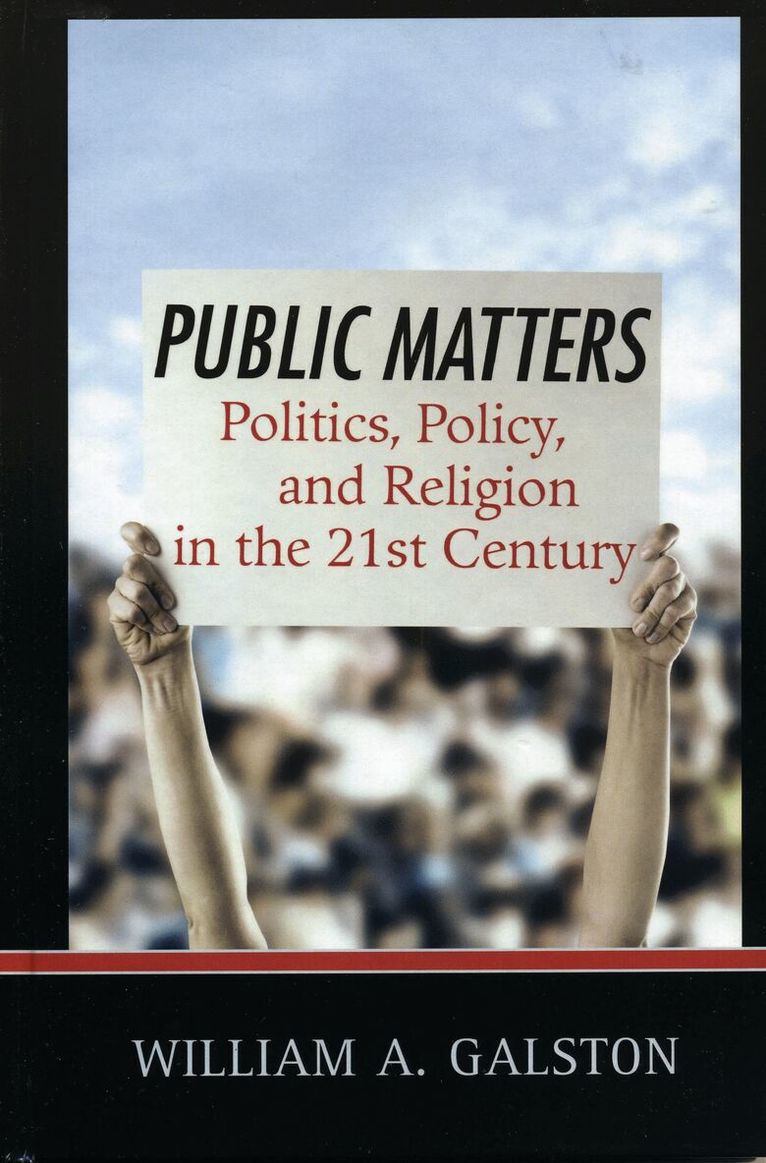
After preparing to lead a quiet life as a teacher and scholar of political theory, William Galston has spent the past quarter century crossing the boundaries between academia and public life, including a two-year stint as Deputy Assistant for Domestic Policy under President Clinton. Reflecting these boundary-crossings, Public Matters contains a selection of Galston's essays on politics, policy, and religion. Each is viewed through the prisms of history, theory, and ethical concerns. The essays on politics tell the story of Galston's efforts to help redirect the Democratic Party so that it speaks more clearly to the concerns of 21st century Americans. The essays in the policy section reflect the range of issues with which Galston has grappled as a political activist and public official. Finally, the essays on religion try to come to grips with the challenges that religion, taken seriously (as it should be) poses for the governance of constitutional democracies.
528 kr
Skickas inom 10-15 vardagar
After preparing to lead a quiet life as a teacher and scholar of political theory, William Galston has spent the past quarter century crossing the boundaries between academia and public life, including a two-year stint as Deputy Assistant for Domestic Policy under President Clinton. Reflecting these boundary-crossings, Public Matters contains a selection of Galston's essays on politics, policy, and religion. Each is viewed through the prisms of history, theory, and ethical concerns. The essays on politics tell the story of Galston's efforts to help redirect the Democratic Party so that it speaks more clearly to the concerns of 21st century Americans. The essays in the policy section reflect the range of issues with which Galston has grappled as a political activist and public official. Finally, the essays on religion try to come to grips with the challenges that religion, taken seriously (as it should be) poses for the governance of constitutional democracies.
367 kr
Skickas inom 10-15 vardagar
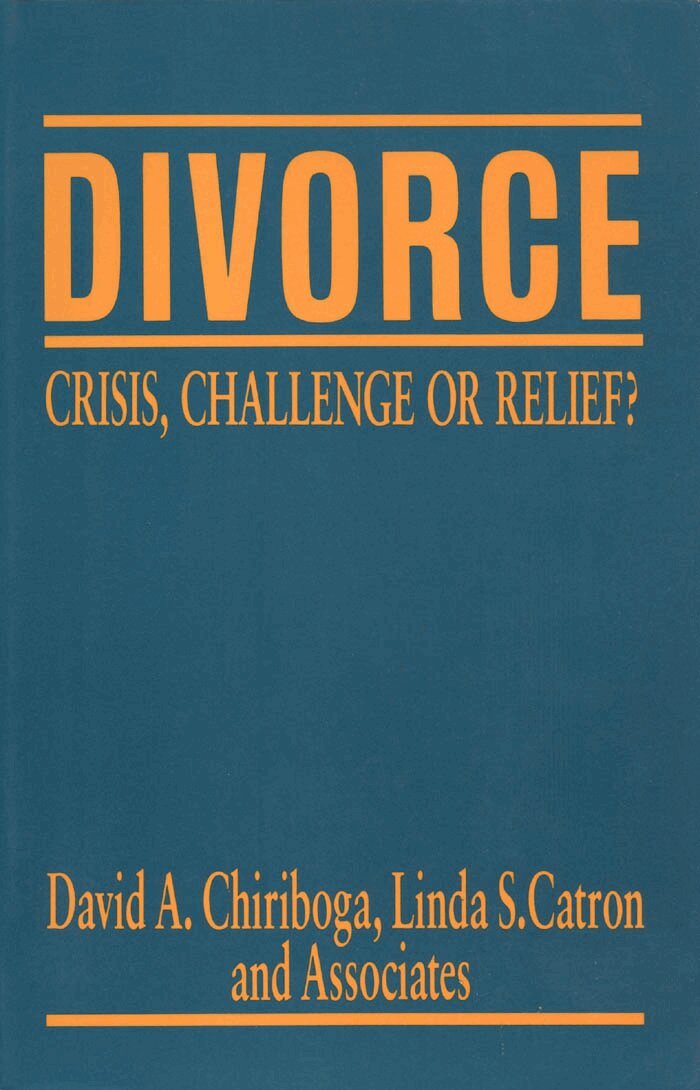
Not since William Goode's Women in Divorce in the 1950's have we had such a comprehensive study of adjustment to divorce. This longitudinal work views divorce as a transition process which may have positive or negative outcomes over time. In addition to statistical analysis, the book includes very interesting case studies to demonstrate the dynamic events occurring as individuals refashion their lives after the breakup of their marriages. Researchers on divorce and the interested public will find this book very valuable for years to come."Colleen L. Johnson, Ph.D.ProfessorMedical Anthropology, University of California, San FranciscoWe are witnessing a steady increase in the overall number of older adults who are divorced, yet the majority of divorce research has concerned itself with persons in the younger adult years. This unique, groundbreaking book addresses the critical need for information on the impact of divorce on individuals in all age groups, and pays special attention to age as a factor in the effects of divorce on both men and women.Written by an interdisciplinary team of social and behavioral scientists, Divorce: Crisis, Challenge or Relief? provides the invaluable results gained from their life span study of divorced adults. Divorce is the product of hundreds of interviews containing a host of very specific questions conducted with divorced adults between the ages of 20 and 79, both just after their divorce and again several years later.
742 kr
Skickas inom 10-15 vardagar
Taking the long view of conflicts between truth and political powerWhat role does truth play in government? In context of recent political discourse around the globeand especially in the United Statesit is easy to believe that truth, in the form of indisputable facts, is a matter of debate.But it's also important to remember that since ancient times, every religious and philosophical tradition has wrestled with this question. In this volume, scholars representing ten traditionsWestern and Eastern, religious and secularaddress the nature of truth and its role in government. Among the questions they address: When is deception permissible, or even a good thing? What remedies are necessary and useful when governments fail in their responsibilities to be truthful?The authors consider the relationship between truth and governance in democracies, but also in non-democratic regimes. Although democracy is distinctive in requiring truth as a fundamental basis for governing, non-democratic forms of government also cannot do without truth entirely. If ministers cannot give candid advice to rulers, the government's policies are likely to proceed on false premises and therefore fail. If rulers do not speak truthfully to their people, trust will erode.Each author in this book addresses a common set of issues: the nature of truth; the morality of truth-telling; the nature of government, which shapes each tradition's understanding of the relationship between governance and truth; the legitimacy and limits of regulating speech; and remedies when truth becomes divorced from governance.Truth and Governance will open readers' eyes to the variety of possible approaches to the relationship between truth and governance. Readers will find views they thought self-evident challenged and will come away with a greater understanding of the importance of truth and truth-telling, and of how to counter deliberate deception.