William A. Goddard III – författare
Visar alla böcker från författaren William A. Goddard III. Handla med fri frakt och snabb leverans.
6 produkter
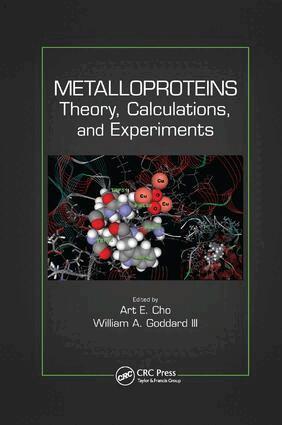
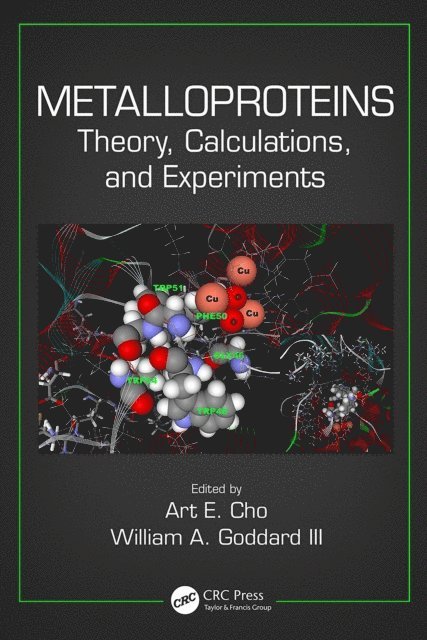
Metalloproteins
Theory, Calculations, and Experiments
Av Art E. Cho, William A. Goddard III
Häftad, 2017
1075 kr
Lägg i varukorg
Numerous essential biological functions involve metalloproteins; therefore, understanding metalloproteins and how to manipulate them is significant in the biological and medical fields. An examination of current research, Metalloproteins: Theory, Calculations, and Experiments explores the interplay …
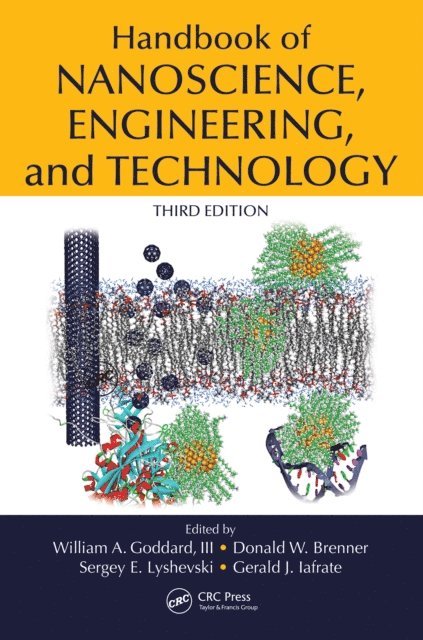
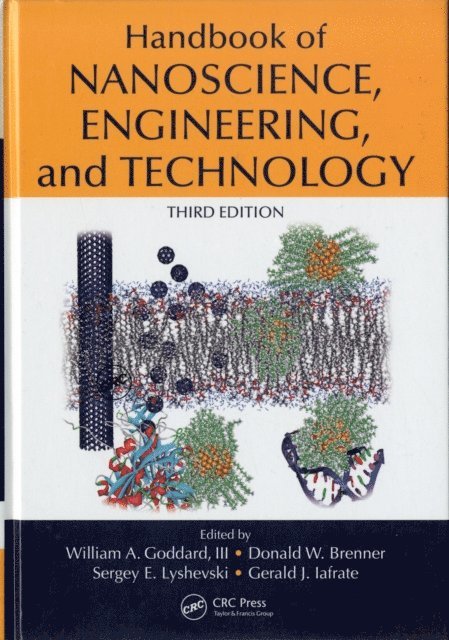
Handbook of Nanoscience, Engineering, and Technology
Av Gerald J Iafrate, Sergey Edward Lyshevski m. fl.
E-bok, 2018
4119 kr
Lägg i varukorg
In his 1959 address, "There is Plenty of Room at the Bottom," Richard P. Feynman speculated about manipulating materials atom by atom and challenged the technical community "to find ways of manipulating and controlling things on a small scale." This visionary challenge has now become a reality, …
Metalloproteins
Theory, Calculations, and Experiments
Av Art E. Cho, William A. Goddard III
Inbunden, 2015
3165 kr
Lägg i varukorg
Numerous essential biological functions involve metalloproteins; therefore, understanding metalloproteins and how to manipulate them is significant in the biological and medical fields. An examination of current research, Metalloproteins: Theory, Calculations, and Experiments explores the interplay …
Handbook of Nanoscience, Engineering, and Technology
Av William A. Goddard III, Donald Brenner m. fl.
Inbunden, 2012
3804 kr
Lägg i varukorg
In his 1959 address, "There is Plenty of Room at the Bottom," Richard P. Feynman speculated about manipulating materials atom by atom and challenged the technical community "to find ways of manipulating and controlling things on a small scale." This visionary challenge has now become a reality, …
Handbook of Nanoscience, Engineering, and Technology
Av Gerald J Iafrate, Sergey Edward Lyshevski m. fl.
E-bok, 2018
4242 kr
Lägg i varukorg
In his 1959 address, "There is Plenty of Room at the Bottom," Richard P. Feynman speculated about manipulating materials atom by atom and challenged the technical community "to find ways of manipulating and controlling things on a small scale." This visionary challenge has now become a reality, …
Metalloproteins
Theory, Calculations, and Experiments
Av William A. Goddard III, Art E. Cho
E-bok, 2015
1089 kr
Tillfälligt slut
Numerous essential biological functions involve metalloproteins; therefore, understanding metalloproteins and how to manipulate them is significant in the biological and medical fields. An examination of current research, Metalloproteins: Theory, Calculations, and Experiments explores the interplay …