William A. Johnson – författare
Visar alla böcker från författaren William A. Johnson. Handla med fri frakt och snabb leverans.
16 produkter
16 produkter
E-bok
Engelska, 2017531 kr
Läs direkt efter köp
Focusing on the period known as the Second Sophistic (an era roughly co-extensive with the second century AD), this Handbook serves the need for a broad and accessible overview. The study of the Second Sophistic is a relative new-comer to the Anglophone field of classics and much of what characterizes it temporally and culturally remains a matter of legitimate contestation. The present handbook offers a diversity of scholarly voices that attempt to define, as much as is possible in a single volume, the state of this rapidly developing field. Included are chapters that offer practical guidance on the wide range of valuable textual materials that survive, many of which are useful or even core to inquiries of particularly current interest (e.g. gender studies, cultural history of the body, sociology of literary culture, history of education and intellectualism, history of religion, political theory, history of medicine, cultural linguistics, intersection of the Classical traditions and early Christianity). The Handbook also contains essays devoted to the work of the most significant intellectuals of the period such as Plutarch, Dio Chrysostom, Lucian, Apuleius, the novelists, the Philostrati and Aelius Aristides. In addition to content and bibliographical guidance, however, this volume is designed to help to situate the textual remains within the period and its society, to describe and circumscribe not simply the literary matter but the literary culture and societal context. For that reason, the Handbook devotes considerable space at the front to various contextual essays, and throughout tries to keep the contextual demands in mind. In its scope and in its pluralism of voices this Handbook thus represents a new approach to the Second Sophistic, one that attempts to integrate Greek literature of the Roman period into the wider world of early imperial Greek, Latin, Jewish, and Christian cultural production, and one that keeps a sharp focus on situating these texts within their socio-cultural context.
Inbunden, Engelska, 2009
1 479 kr
Skickas inom 5-8 vardagar
Classicists have been slow to take advantage of the important advances in the way that literacy is viewed in other disciplines (including in particular cognitive psychology, socio-linguistics, and socio-anthropology). On the other hand, historians of literacy continue to rely on outdated work by classicists (mostly from the 1960's and 1970's) and have little access to the current reexamination of the ancient evidence. This timely volume attempts to formulate new interesting ways of talking about the entire concept of literacy in the ancient world--literacy not in the sense of whether 10% or 30% of people in the ancient world could read or write, but in the sense of text-oriented events embedded in a particular socio-cultural context. The volume is intended as a forum in which selected leading scholars rethink from the ground up how students of classical antiquity might best approach the question of literacy in the past, and how that investigation might materially intersect with changes in the way that literacy is now viewed in other disciplines. The result will give readers new ways of thinking about specific elements of "literacy" in antiquity, such as the nature of personal libraries, or what it means to be a bookseller in antiquity; new constructionist questions, such as what constitutes reading communities and how they fashion themselves; new takes on the public sphere, such as how literacy intersects with commercialism, or with the use of public spaces, or with the construction of civic identity; new essentialist questions, such as what "book" and "reading" signify in antiquity, why literate cultures develop, or why literate cultures matter. The book derives from a conference (a Semple Symposium held in Cincinnati in April 2006) and includes new work from the most outstanding scholars of literacy in antiquity (e.g., Simon Goldhill, Joseph Farrell, Peter White, and Rosalind Thomas).
Häftad, Engelska, 2021
709 kr
Skickas inom 7-10 vardagar
Focusing on the period known as the Second Sophistic (an era roughly co-extensive with the second century AD), this Handbook serves the need for a broad and accessible overview. The study of the Second Sophistic is a relative new-comer to the Anglophone field of classics and much of what characterizes it temporally and culturally remains a matter of legitimate contestation. This Handbook offers a diversity of scholarly voices that attempt to define, as much as is possible in a single volume, the state of this rapidly developing field. Included are chapters that offer practical guidance on the wide range of valuable textual materials that survive, many of which are useful or even core to inquiries of particular current areas of interest, including: gender studies, cultural history of the body, sociology of literary culture, history of education and intellectualism, history of religion, political theory, history of medicine, cultural linguistics, and, intersection of the Classical traditions and early Christianity. The Handbook also contains essays devoted to the work of the most significant intellectuals of the period such as Plutarch, Dio Chrysostom, Lucian, Apuleius, the novelists, the Philostrati and Aelius Aristides. In addition to content and bibliographical guidance, however, this volume is designed to help to situate the textual remains within the period and its society, to describe and circumscribe not simply the literary matter but the literary culture and societal context. For that reason, the Handbook devotes considerable space at the front to various contextual essays, and throughout tries to keep the contextual demands in mind. In its scope and in its pluralism of voices this Handbook thus represents a new approach to the Second Sophistic, one that attempts to integrate Greek literature of the Roman period into the wider world of early imperial Greek, Latin, Jewish, and Christian cultural production, and one that keeps a sharp focus situating these texts within their socio-cultural context.
E-bok
PDF, Engelska, 2009667 kr
Läs direkt efter köp
Classicists have been slow to take advantage of the important advances in the way that literacy is viewed in other disciplines (including in particular cognitive psychology, socio-linguistics, and socio-anthropology). On the other hand, historians of literacy continue to rely on outdated work by classicists (mostly from the 1960''s and 1970''s) and have little access to the current reexamination of the ancient evidence. This timely volume attempts to formulate new interesting ways of talking about the entire concept of literacy in the ancient world--literacy not in the sense of whether 10% or 30% of people in the ancient world could read or write, but in the sense of text-oriented events embedded in a particular socio-cultural context. The volume is intended as a forum in which selected leading scholars rethink from the ground up how students of classical antiquity might best approach the question of literacy in the past, and how that investigation might materially intersect with changes in the way that literacy is now viewed in other disciplines. The result will give readers new ways of thinking about specific elements of "literacy" in antiquity, such as the nature of personal libraries, or what it means to be a bookseller in antiquity; new constructionist questions, such as what constitutes reading communities and how they fashion themselves; new takes on the public sphere, such as how literacy intersects with commercialism, or with the use of public spaces, or with the construction of civic identity; new essentialist questions, such as what "book" and "reading" signify in antiquity, why literate cultures develop, or why literate cultures matter. The book derives from a conference (a Semple Symposium held in Cincinnati in April 2006) and includes new work from the most outstanding scholars of literacy in antiquity (e.g., Simon Goldhill, Joseph Farrell, Peter White, and Rosalind Thomas).
E-bok
PDF, Engelska, 2010667 kr
Läs direkt efter köp
In Readers and Reading Culture in the High Roman Empire, William Johnson examines the system and culture of reading among the elite in second-century Rome. The investigation proceeds in case-study fashion using the principal surviving witnesses, beginning with the communities of Pliny and Tacitus (with a look at Pliny''s teacher, Quintilian) from the time of the emperor Trajan. Johnson then moves on to explore elite reading during the era of the Antonines, including the medical community around Galen, the philological community around Gellius and Fronto (with a look at the curious reading habits of Fronto''s pupil Marcus Aurelius), and the intellectual communities lampooned by the satirist Lucian. Along the way, evidence from the papyri is deployed to help to understand better and more concretely both the mechanics of reading, and the social interactions that surrounded the ancient book. The result is a rich cultural history of individual reading communities that differentiate themselves in interesting ways even while in aggregate showing a coherent reading culture with fascinating similarities and contrasts to the reading culture of today.
Häftad, Engelska, 2011
587 kr
Skickas inom 5-8 vardagar
Recent advances in cognitive psychology, socio-linguistics, and socio-anthropology are revolutionizing our understanding of literacy. However, this research has made only minimal inroads among classicists. In turn, historians of literacy continue to rely on outdated work by classicists (mostly from the 1960's and 1970's) and have little access to the current reexamination of the ancient evidence. This timely volume seeks to formulate interesting new ways of conceiving the entire concept of literacy in the ancient world, as text-oriented events embedded in particular socio-cultural contexts. In the volume, selected leading scholars rethink from the ground up how students of classical antiquity might best approach the question of literacy in the past, and how that investigation might materially intersect with changes in the way that literacy is now viewed in other disciplines. The result will give readers new ways of thinking about specific elements of "literacy" in antiquity, such as the nature of personal libraries, or what it means to be a bookseller in antiquity; new constructionist questions, such as what constitutes reading communities and how they fashion themselves; new takes on the public sphere, such as how literacy intersects with commercialism, or with the use of public spaces, or with the construction of civic identity; new essentialist questions, such as what do "book" and "reading" signify in antiquity, why literate cultures develop, or why literate cultures matter. Containing new work from today's outstanding scholars of literacy in antiquity, Ancient Literacies will be an indispensable collection for all students and scholars of reading cultures in the classical world.
Inbunden, Engelska, 2017
2 190 kr
Skickas inom 5-8 vardagar
Focusing on the period known as the Second Sophistic (an era roughly co-extensive with the second century AD), this Handbook serves the need for a broad and accessible overview. The study of the Second Sophistic is a relative new-comer to the Anglophone field of classics and much of what characterizes it temporally and culturally remains a matter of legitimate contestation. The present Handbook offers a diversity of scholarly voices that attempt to define, as much as is possible in a single volume, the state of this rapidly developing field. Included are chapters that offer practical guidance on the wide range of valuable textual materials that survive, many of which are useful or even core to inquiries of particularly current interest (e.g. gender studies, cultural history of the body, sociology of literary culture, history of education and intellectualism, history of religion, political theory, history of medicine, cultural linguistics, intersection of the Classical traditions and early Christianity). The Handbook also contains essays devoted to the work of the most significant intellectuals of the period such as Plutarch, Dio Chrysostom, Lucian, Apuleius, the novelists, the Philostrati and Aelius Aristides. In addition to content and bibliographical guidance, however, this volume is designed to help to situate the textual remains within the period and its society, to describe and circumscribe not simply the literary matter but the literary culture and societal context. For that reason, the Handbook devotes considerable space at the front to various contextual essays, and throughout tries to keep the contextual demands in mind. In its scope and in its pluralism of voices this Handbook thus represents a new approach to the Second Sophistic, one that attempts to integrate Greek literature of the Roman period into the wider world of early imperial Greek, Latin, Jewish, and Christian cultural production, and one that keeps a sharp focus on situating these texts within their socio-cultural context.
E-bok
PDF, Engelska, 2017536 kr
Läs direkt efter köp
Focusing on the period known as the Second Sophistic (an era roughly co-extensive with the second century AD), this Handbook serves the need for a broad and accessible overview. The study of the Second Sophistic is a relative new-comer to the Anglophone field of classics and much of what characterizes it temporally and culturally remains a matter of legitimate contestation. The present handbook offers a diversity of scholarly voices that attempt to define, as much as is possible in a single volume, the state of this rapidly developing field. Included are chapters that offer practical guidance on the wide range of valuable textual materials that survive, many of which are useful or even core to inquiries of particularly current interest (e.g. gender studies, cultural history of the body, sociology of literary culture, history of education and intellectualism, history of religion, political theory, history of medicine, cultural linguistics, intersection of the Classical traditions and early Christianity). The Handbook also contains essays devoted to the work of the most significant intellectuals of the period such as Plutarch, Dio Chrysostom, Lucian, Apuleius, the novelists, the Philostrati and Aelius Aristides. In addition to content and bibliographical guidance, however, this volume is designed to help to situate the textual remains within the period and its society, to describe and circumscribe not simply the literary matter but the literary culture and societal context. For that reason, the Handbook devotes considerable space at the front to various contextual essays, and throughout tries to keep the contextual demands in mind. In its scope and in its pluralism of voices this Handbook thus represents a new approach to the Second Sophistic, one that attempts to integrate Greek literature of the Roman period into the wider world of early imperial Greek, Latin, Jewish, and Christian cultural production, and one that keeps a sharp focus on situating these texts within their socio-cultural context.
673 kr
Läs direkt efter köp
In Readers and Reading Culture in the High Roman Empire, William Johnson examines the system and culture of reading among the elite in second-century Rome. The investigation proceeds in case-study fashion using the principal surviving witnesses, beginning with the communities of Pliny and Tacitus (with a look at Pliny''s teacher, Quintilian) from the time of the emperor Trajan. Johnson then moves on to explore elite reading during the era of the Antonines, including the medical community around Galen, the philological community around Gellius and Fronto (with a look at the curious reading habits of Fronto''s pupil Marcus Aurelius), and the intellectual communities lampooned by the satirist Lucian. Along the way, evidence from the papyri is deployed to help to understand better and more concretely both the mechanics of reading, and the social interactions that surrounded the ancient book. The result is a rich cultural history of individual reading communities that differentiate themselves in interesting ways even while in aggregate showing a coherent reading culture with fascinating similarities and contrasts to the reading culture of today.
E-bok
Engelska, 2009667 kr
Läs direkt efter köp
Classicists have been slow to take advantage of the important advances in the way that literacy is viewed in other disciplines (including in particular cognitive psychology, socio-linguistics, and socio-anthropology). On the other hand, historians of literacy continue to rely on outdated work by classicists (mostly from the 1960''s and 1970''s) and have little access to the current reexamination of the ancient evidence. This timely volume attempts to formulate new interesting ways of talking about the entire concept of literacy in the ancient world--literacy not in the sense of whether 10% or 30% of people in the ancient world could read or write, but in the sense of text-oriented events embedded in a particular socio-cultural context. The volume is intended as a forum in which selected leading scholars rethink from the ground up how students of classical antiquity might best approach the question of literacy in the past, and how that investigation might materially intersect with changes in the way that literacy is now viewed in other disciplines. The result will give readers new ways of thinking about specific elements of "literacy" in antiquity, such as the nature of personal libraries, or what it means to be a bookseller in antiquity; new constructionist questions, such as what constitutes reading communities and how they fashion themselves; new takes on the public sphere, such as how literacy intersects with commercialism, or with the use of public spaces, or with the construction of civic identity; new essentialist questions, such as what "book" and "reading" signify in antiquity, why literate cultures develop, or why literate cultures matter. The book derives from a conference (a Semple Symposium held in Cincinnati in April 2006) and includes new work from the most outstanding scholars of literacy in antiquity (e.g., Simon Goldhill, Joseph Farrell, Peter White, and Rosalind Thomas).
Häftad, Engelska, 2012
587 kr
Skickas inom 5-8 vardagar
In Readers and Reading Culture in the High Roman Empire, William Johnson examines the system and culture of reading among the elite in second-century Rome. The investigation proceeds in case-study fashion using the principal surviving witnesses, beginning with the communities of Pliny and Tacitus (with a look at Pliny's teacher, Quintilian) from the time of the emperor Trajan. Johnson then moves on to explore elite reading during the era of the Antonines, including the medical community around Galen, the philological community around Gellius and Fronto (with a look at the curious reading habits of Fronto's pupil Marcus Aurelius), and the intellectual communities lampooned by the satirist Lucian. Along the way, evidence from the papyri is deployed to help to understand better and more concretely both the mechanics of reading, and the social interactions that surrounded the ancient book. The result is a rich cultural history of individual reading communities that differentiate themselves in interesting ways even while in aggregate showing a coherent reading culture with fascinating similarities and contrasts to the reading culture of today.
Häftad, Engelska, 2021
166 kr
Skickas inom 5-8 vardagar
Inbunden, Engelska, 2022
386 kr
Skickas inom 5-8 vardagar
Häftad, Engelska, 2022
264 kr
Skickas inom 5-8 vardagar
E-bok
PDF, Engelska, 20041 668 kr
Läs direkt efter köp
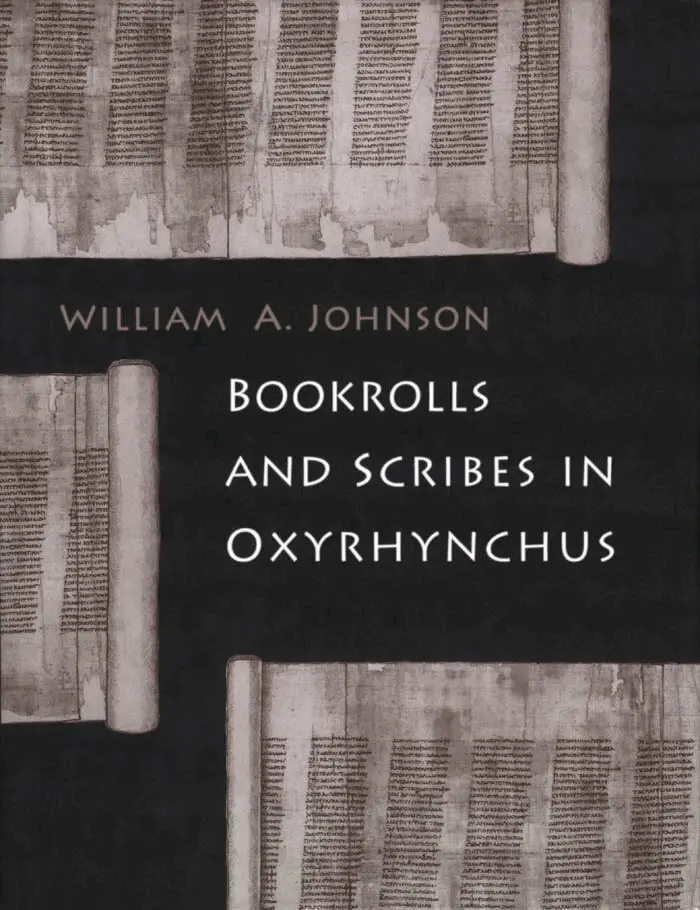
Lying now under the sand 300 kilometres south of the coastal metropolis of Alexandria, the town of Oxyrhynchus rose to prominence under Egypt's Hellenistic and Roman rulers. The 1895 British-led excavation revealed little in the way of buildings and other cultural artefacts, but instead yielded a huge random mass of everyday papyri, piled thirty feet deep, including private letters and shopping lists, government circulars, and copies of ancient literature.The surviving bookrolls - the papyrus rolls with literary texts - have provided a great deal of information on ancient books, ancient readers, and ancient reading. Examining only those texts that survive in full form in medieval manuscripts, William Johnson has analysed over 400 bookrolls to understand the production, use, and aesthetics of the ancient book. His close analysis of formal and conventional features of the bookrolls not only provides detailed information on the bookroll industry - manufacture, design, and format - but also, in turn, suggests some intriguing questions and provisional answers about the ways in which the use and function of the bookroll among ancient readers may differ from modern or medieval practice. Meticulously erudite, this work will be of great importance to all papyrologists, classicists, and literary scholars.
Inbunden, Engelska, 2014
879 kr
Tillfälligt slut