William Andrefsky, Jr - Böcker
Visar alla böcker från författaren William Andrefsky, Jr. Handla med fri frakt och snabb leverans.
5 produkter
5 produkter
746 kr
Skickas inom 7-10 vardagar
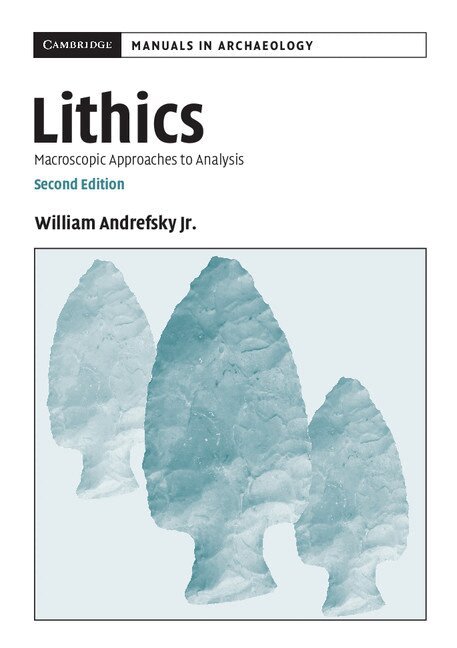
This book is a fully updated and revised edition of William Andrefsky Jr's ground-breaking manual on lithic analysis. Designed for students and professional archaeologists, this highly illustrated book explains the fundamental principles of the measurement, recording and analysis of stone tools and stone tool production debris. Introducing the reader to lithic raw materials, classification, terminology and key concepts, it comprehensively explores methods and techniques, presenting detailed case studies of lithic analysis from around the world. It examines new emerging techniques, such as the advances being made in lithic debitage analysis and lithic tool analysis, and includes a new section on stone tool functional studies. An extensive and expanded glossary makes this book an invaluable reference for archaeologists at all levels.
1 621 kr
Skickas inom 7-10 vardagar
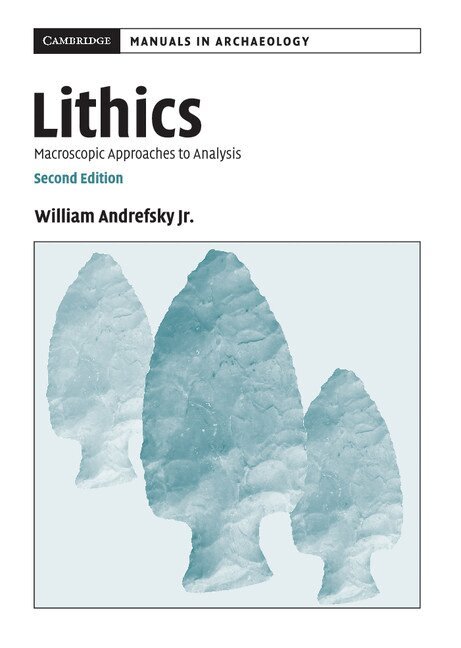
This book is a fully updated and revised edition of William Andrefsky Jr's ground-breaking manual on lithic analysis. Designed for students and professional archaeologists, this highly illustrated book explains the fundamental principles of the measurement, recording and analysis of stone tools and stone tool production debris. Introducing the reader to lithic raw materials, classification, terminology and key concepts, it comprehensively explores methods and techniques, presenting detailed case studies of lithic analysis from around the world. It examines new emerging techniques, such as the advances being made in lithic debitage analysis and lithic tool analysis, and includes a new section on stone tool functional studies. An extensive and expanded glossary makes this book an invaluable reference for archaeologists at all levels.
1 485 kr
Skickas inom 7-10 vardagar
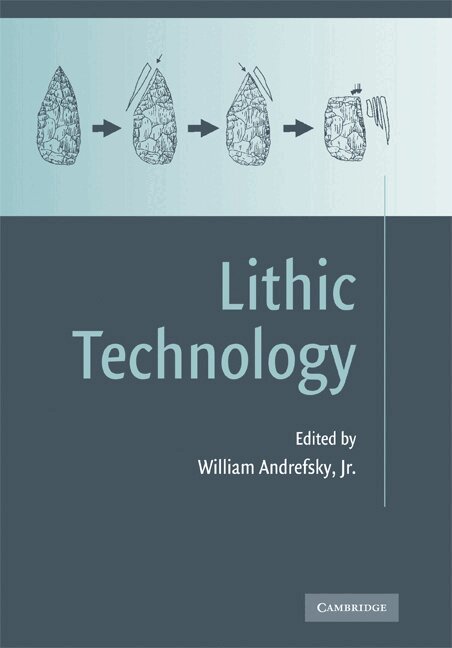
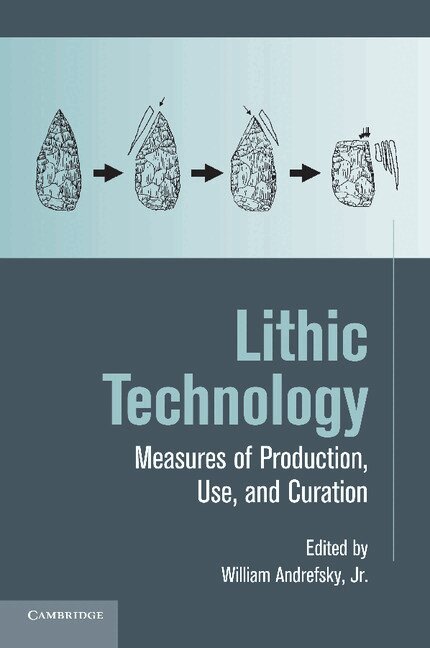
The life history of stone tools is intimately linked to tool production, use and maintenance. These are important processes in the organization of lithic technology, or the manner in which lithic technology is embedded within human organizational strategies of land use and subsistence practices. This volume brings together essays that measure the life history of stone tools relative to retouch values, raw material constraints and evolutionary processes. Collectively, they explore the association of technological organization with facets of tool form such as reduction sequences, tool production effort, artifact curation processes and retouch measurement. Data sets cover a broad geographic and temporal span, including examples from France during the Paleolithic, the Near East during the Neolithic, and other regions such as Mongolia, Australia, and Italy. North American examples are derived from Paleoindian times to historic period aboriginal populations throughout the United States and Canada.
1 282 kr
Skickas inom 7-10 vardagar
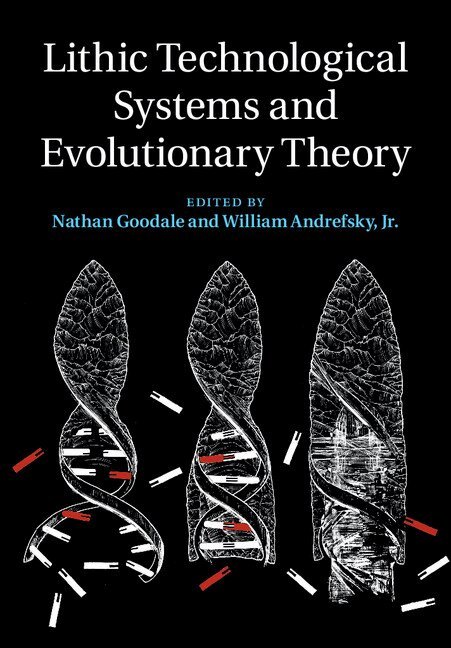
Stone tool analysis relies on a strong background in analytical and methodological techniques. However, lithic technological analysis has not been well integrated with a theoretically informed approach to understanding how humans procured, made, and used stone tools. Evolutionary theory has great potential to fill this gap. This collection of essays brings together several different evolutionary perspectives to demonstrate how lithic technological systems are a by-product of human behavior. The essays cover a range of topics, including human behavioral ecology, cultural transmission, phylogenetic analysis, risk management, macroevolution, dual inheritance theory, cladistics, central place foraging, costly signaling, selection, drift, and various applications of evolutionary ecology.
631 kr
Skickas inom 7-10 vardagar
The life history of stone tools is intimately linked to tool production, use and maintenance. These are important processes in the organization of lithic technology, or the manner in which lithic technology is embedded within human organizational strategies of land use and subsistence practices. This volume brings together essays that measure the life history of stone tools relative to retouch values, raw material constraints and evolutionary processes. Collectively, they explore the association of technological organization with facets of tool form such as reduction sequences, tool production effort, artifact curation processes and retouch measurement. Data sets cover a broad geographic and temporal span, including examples from France during the Paleolithic, the Near East during the Neolithic, and other regions such as Mongolia, Australia, and Italy. North American examples are derived from Paleoindian times to historic period aboriginal populations throughout the United States and Canada.