William Aston – författare
3 000 kr
Skickas inom 10-15 vardagar
1 375 kr
Skickas inom 10-15 vardagar
1 662 kr
Läs direkt efter köp
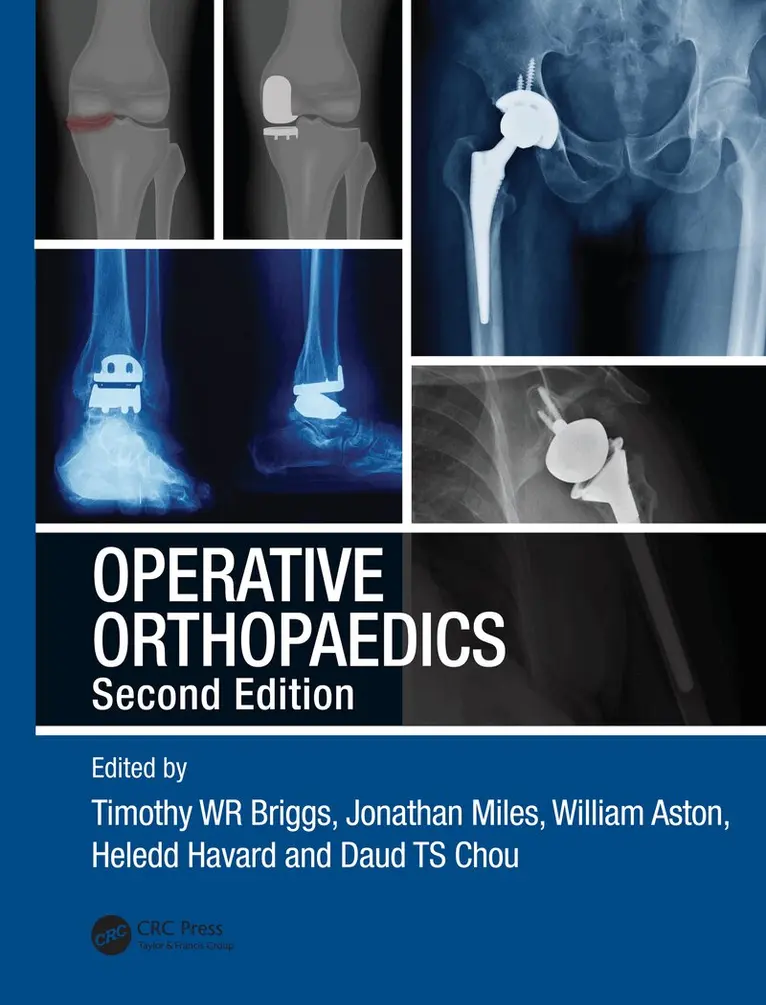
Revised, updated and expanded, Operative Orthopaedics: The Stanmore Guide, Second Edition, is a definitive and comprehensive guide to elective orthopaedic surgery. It is suitable for junior trainees during their various orthopaedic rotations and senior trainees preparing for the Fellowship of the Royal College of Surgeons (FRCS Tr and Orth) examination. With the emphasis on surgical techniques employed, and the reasoning and evidence base behind them, this book is both a practical instruction manual and a revision tool for the examination. The procedures identified by the Specialist Advisory Committee, including areas such as tumour surgery, paediatrics and limb reconstruction, are included. Each chapter follows a simple and consistent format explaining the surgery from preoperative planning and consent, through to approaches, techniques and postoperative care. The chapters also include key references and sample Viva Questions to extend and reinforce learning.
Key Features
New updated surgical techniques
Highly illustrated to help explain surgical concepts easily
Key point boxes to facilitate learning
Recommended references for FRCS (Tr and Orth) examination success
Editors
Timothy WR Briggs MD MBBS (Hons), MCH (Orth), FRCS (Eng), FRCS (Ed), MD (Res)
Royal National Orthopaedic Hospital Trust, Stanmore, United Kingdom
Jonathan Miles MBChB, FRCS (Tr & Orth)
Royal National Orthopaedic Hospital Trust, Stanmore, United Kingdom
William Aston BSc, MBBS, FRCS (Tr & Orth) (Edinb)
Royal National Orthopaedic Hospital Trust, Stanmore, United Kingdom
Heledd Havard BSc, MBBCh, MSc, FRCS (Tr & Orth)
Royal National Orthopaedic Hospital Trust, Stanmore, United Kingdom
Daud Chou MBBS, BSc, MSc, FRCS (Tr & Orth)
Cambridge University Hospitals NHS Foundation Trust, Cambridge, United Kingdom
1 662 kr
Läs direkt efter köp
Revised, updated and expanded, Operative Orthopaedics: The Stanmore Guide, Second Edition, is a definitive and comprehensive guide to elective orthopaedic surgery. It is suitable for junior trainees during their various orthopaedic rotations and senior trainees preparing for the Fellowship of the Royal College of Surgeons (FRCS Tr and Orth) examination. With the emphasis on surgical techniques employed, and the reasoning and evidence base behind them, this book is both a practical instruction manual and a revision tool for the examination. The procedures identified by the Specialist Advisory Committee, including areas such as tumour surgery, paediatrics and limb reconstruction, are included. Each chapter follows a simple and consistent format explaining the surgery from preoperative planning and consent, through to approaches, techniques and postoperative care. The chapters also include key references and sample Viva Questions to extend and reinforce learning.
Key Features
New updated surgical techniques
Highly illustrated to help explain surgical concepts easily
Key point boxes to facilitate learning
Recommended references for FRCS (Tr and Orth) examination success
Editors
Timothy WR Briggs MD MBBS (Hons), MCH (Orth), FRCS (Eng), FRCS (Ed), MD (Res)
Royal National Orthopaedic Hospital Trust, Stanmore, United Kingdom
Jonathan Miles MBChB, FRCS (Tr & Orth)
Royal National Orthopaedic Hospital Trust, Stanmore, United Kingdom
William Aston BSc, MBBS, FRCS (Tr & Orth) (Edinb)
Royal National Orthopaedic Hospital Trust, Stanmore, United Kingdom
Heledd Havard BSc, MBBCh, MSc, FRCS (Tr & Orth)
Royal National Orthopaedic Hospital Trust, Stanmore, United Kingdom
Daud Chou MBBS, BSc, MSc, FRCS (Tr & Orth)
Cambridge University Hospitals NHS Foundation Trust, Cambridge, United Kingdom
111 kr
Läs direkt efter köp
SHINTO: The Ancient Religion of Japan. By William Aston.
Originally Published in 1921.
198 kr
Skickas inom 5-8 vardagar
185 kr
Skickas inom 5-8 vardagar
66 kr
Läs direkt efter köp
Origins.-The Japanese are in the main a continental race. Their language and physical characteristics show conclusively that they come from Northern Asia, and geographical considerations indicate that Korea must have been their point of embarkation. Indeed a desultory emigration from Korea to Japan continued into historical times. When we say Northern Asia we exclude China. The racial affinity of the Japanese to the Chinese, of which we hear so often, really amounts to very little. It is not closer than that which unites the most distantly related members of the Indo-European family of nations. The Japanese themselves have no traditions of their origin, and it is now impossible to say what form of religion was professed by the earliest immigrants. No inference can be drawn from the circumstance that Sun-worship is common to them with many North-Asiatic races. The Sun is, or has been, worshipped almost everywhere. There is distinct evidence of a Korean element in Shinto, but, with the little that we know of the old native religion of that country, anything like a complete comparison is impossible. Some have recognised a resemblance between Shinto and the old state religion of China, and it is true that both consist largely of Nature-worship. But the two cults differ widely. The Japanese do not recognise Tien (Heaven), the chief Nature-deity of the Chinese, nor have they anything to correspond to their Shangti-a more personal ruler of the universe. The Sun is masculine in China, feminine in Japan. The Sun-goddess takes precedence of the Earth-god in Japan, while in China Heaven and Earth rank above the Sun and Moon. Some Chinese traits are to be found in the old Shinto documents, but they are of later origin, and are readily distinguishable from the native element. A few similarities exist between Shinto and the religion of the Ainus of Yezo, a savage race which once occupied the main island of Japan. But it is reasonable to suppose that in this case the less civilised nation has borrowed from its more civilised neighbour and conqueror rather than vice versa. It is significant that the Ainu words for God, prayer, and offering, are taken from the Japanese. If the Malay or Polynesian element, which some have recognised in the Japanese race, has any existence, it has left no trace in religion. Such coincidences as may be noted between Shinto and oceanic religions, myths and practices are attributable to the like action of common causes rather than to inter-communication. The old Shinto owes little to any outside source. It is, on the whole, an independent development of Japanese thought.
150 kr
Skickas inom 5-8 vardagar