William B. Gudykunst - Böcker
3 127 kr
Skickas inom 3-6 vardagar
In examining Asian American ethnicity and communication, William Gudykunst begins by summarizing the cultural characteristics of Asian cultures that affectAsian Americans' communication. Next, he looks at Asian American immigration patterns, ethnic institutions, and family patterns, as well as at how ethnic and cultural identities influence Asian Americans' communication. The author focuses on how communication is similar and different among Chinese Americans, Filipino Americans, Japanese Americans, Korean Americans, and Vietnamese Americans. Where applicable, similarities and differences in communication between Asian Americans and European Americans are also examined. Gudykunst concludes with a discussion of the role of communication in Asian immigrants' acculturation to the United States.
2 271 kr
Skickas inom 3-6 vardagar
In examining Asian American ethnicity and communication, William Gudykunst begins by summarizing the cultural characteristics of Asian cultures that affectAsian Americans' communication. Next, he looks at Asian American immigration patterns, ethnic institutions, and family patterns, as well as at how ethnic and cultural identities influence Asian Americans' communication. The author focuses on how communication is similar and different among Chinese Americans, Filipino Americans, Japanese Americans, Korean Americans, and Vietnamese Americans. Where applicable, similarities and differences in communication between Asian Americans and European Americans are also examined. Gudykunst concludes with a discussion of the role of communication in Asian immigrants' acculturation to the United States.
2 890 kr
Skickas inom 3-6 vardagar
3 789 kr
Skickas inom 3-6 vardagar
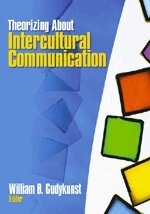
"Each chapter takes on the issue at hand with a considerable degree of rigor that incorporates extensive literature reviews, theoretical backgrounds, and detailed explanations of the development of each theoretical perspective."—Adrian Holliday, Canterbury Christ Church University, North Holmes Campus, UKThere are several approaches to incorporating culture into communication theories. First, culture can be integrated with the communication process in the theories of communication. Second, theories can be designed to describe how communication varies across cultures. And third, theories can be generated to explain communication between people from different cultures. In Theorizing About Intercultural Communication, editor William B. Gudykunst brings together key theories that have shaped and influenced human intercultural communication. Theorizing About Intercultural Communication provides an excellent overview of the major theories currently in use and examines how these theories will also support the foundation for future research in this area. Contributors to this text include individuals who actually developed the theories covered in the book. Each contributor highlights the evolution, development, and application of the theory to provide a thorough and contemporary view of the field.Key Features
First student text on intercultural communication theories with consistent chapter organization, headings, and pedagogy to aid comprehension and allow for theories to be easily compared and contrastedIntercultural communication theories are discussed by those who developed them to provide a firsthand look at how these theories originated An introductory chapter and part overviews highlight the importance of studying and using intercultural communication theoriesEach theory's testing and application is emphasized to demonstrate how the theory can be implementedSeveral new hypotheses on topics such as co-cultural and dialectical concepts are examined, in addition to modifications of long-standing theories, making this the most up-to-date text on intercultural communication theoriesTheorizing About Intercultural Communication is an excellent text for advanced undergraduate and graduate courses on Intercultural Communication, Communication Theory, and Cultural Studies.
3 127 kr
Skickas inom 3-6 vardagar
"Each chapter takes on the issue at hand with a considerable degree of rigor that incorporates extensive literature reviews, theoretical backgrounds, and detailed explanations of the development of each theoretical perspective."—Adrian Holliday, Canterbury Christ Church University, North Holmes Campus, UKThere are several approaches to incorporating culture into communication theories. First, culture can be integrated with the communication process in the theories of communication. Second, theories can be designed to describe how communication varies across cultures. And third, theories can be generated to explain communication between people from different cultures. In Theorizing About Intercultural Communication, editor William B. Gudykunst brings together key theories that have shaped and influenced human intercultural communication. Theorizing About Intercultural Communication provides an excellent overview of the major theories currently in use and examines how these theories will also support the foundation for future research in this area. Contributors to this text include individuals who actually developed the theories covered in the book. Each contributor highlights the evolution, development, and application of the theory to provide a thorough and contemporary view of the field.Key Features
First student text on intercultural communication theories with consistent chapter organization, headings, and pedagogy to aid comprehension and allow for theories to be easily compared and contrastedIntercultural communication theories are discussed by those who developed them to provide a firsthand look at how these theories originated An introductory chapter and part overviews highlight the importance of studying and using intercultural communication theoriesEach theory's testing and application is emphasized to demonstrate how the theory can be implementedSeveral new hypotheses on topics such as co-cultural and dialectical concepts are examined, in addition to modifications of long-standing theories, making this the most up-to-date text on intercultural communication theoriesTheorizing About Intercultural Communication is an excellent text for advanced undergraduate and graduate courses on Intercultural Communication, Communication Theory, and Cultural Studies.
3 466 kr
Skickas inom 3-6 vardagar
Derived from the best-selling Handbook of International and Intercultural Communication, Second Edition, this economically priced paperback version contains only the chapters dealing with cross-cultural and intercultural communication. Cross-Cultural and Intercultural Communication provides an extensive overview of cross-cultural variations in communication and expands upon the Handbook by viewing intercultural communication in terms of intergroup communication.
Intercultural communication is a relatively new area of research in the communication discipline but has made tremendous progress in recent years. The book maintains that understanding cross-cultural communication is a prerequisite to understanding intercultural communication. Part One of the book discusses cross-cultural communication—the comparison of communication across cultures—and Part Two examines intercultural communication—the communication between people from different cultures. Each part begins with an introduction, includes a chapter on theory, and ends with a chapter on issues.
A new foreword by William Gudykunst frames the structure of the text. The book looks at methodological issues that need to be considered in order to conduct cross-cultural research and test theories. The issues examined include making theoretical predictions, designing cross-cultural research, isolating effects to be studied, establishing equivalence, developing derived measures, and establishing the reliability and validity of measures. Gudykunst also reviews 15 intercultural communication theories in five categories including theories focusing on effective outcomes, accommodation or adaptation, identity negotiation, communication networks, and acculturation or adjustment.
Cross-Cultural and Intercultural Communication covers such topics as: language and verbal communication across cultures; nonverbal communication across cultures; cultural influences on the expression and perception of emotions; identity and intergroup communication; communication in intercultural relationships; and adapting to an unfamiliar culture. With contributions from experts in the field, the book provides students with a comprehensive synopsis of the knowledge to date about cross-cultural and intercultural communication.
4 201 kr
Skickas inom 3-6 vardagar
The Fourth Edition of Bridging Differences: Effective Intergroup Communication builds on the strengths of the previous editions and provides state-of-the-art knowledge about intergroup communication. This new edition brings a strong skills-oriented approach to improving communication effectiveness between people from different groups (e.g., cultures, ethnic groups, social classes).
Bridging Differences is based on the assumption that the processes operating when we communicate with people from other groups are the same processes operating when we communicate with people from our own groups. Author William B. Gudykunst has written this book from the perspective of "communicating with strangers" and addresses how factors related to our group memberships (e.g., inaccurate and unfavorable stereotypes of members of other cultures and ethnic groups) can cause us to misinterpret the messages we receive from members of those groups.
New to the Fourth Edition:
Expanded discussions of several topics such as changing intergroup expectations; cultural differences in attribution processes; cultural and ethnic differences in conflict; cultural differences in indirect messages; cultural differences in uncertainty management; empathy; ethnic and cultural identities; face and its relationship to conflict management; intergroup communication effectiveness; intergroup conflict; intergroup biases; negotiating means; perceptual processes; and prejudice New material has been added on civic engagement; community in public life; diversity and community; the content of stereotypes; communication in romantic relationships; cultural differences in effective communication; and theoretical explanations for prejudice Pedagogical features include end-of-chapter study questions, self-assessment questionnaires, open-ended questions to stimulate readers to think about their implicit theories, and written skill exercises to increase students' skill development
Designed for students taking courses in Intercultural Communication or Intergroup Communication, Bridging Differences is also useful for many courses in Cultural Studies, Anthropology, Sociology, and Management.
585 kr
Skickas inom 3-6 vardagar
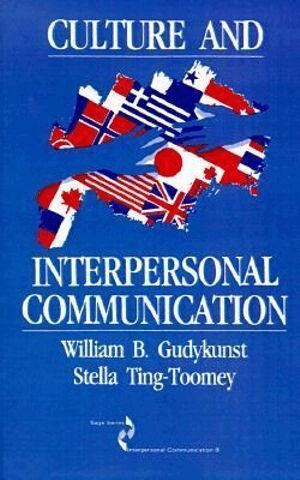
Culture and Interpersonal Communication
1 631 kr
Skickas inom 3-6 vardagar
Theories in Intercultural Communication
2 271 kr
Skickas inom 3-6 vardagar
2 661 kr
Skickas inom 3-6 vardagar
Bridging Japanese/North American Differences
1 714 kr
Skickas inom 3-6 vardagar
1 593 kr
Skickas inom 3-6 vardagar
1 992 kr
Skickas inom 10-15 vardagar
3 050 kr
Skickas inom 10-15 vardagar
685 kr
Skickas inom 10-15 vardagar
441 kr
Skickas inom 10-15 vardagar