William B Irvine - Böcker
Visar alla böcker från författaren William B Irvine. Handla med fri frakt och snabb leverans.
13 produkter
13 produkter
185 kr
Skickas inom 5-8 vardagar
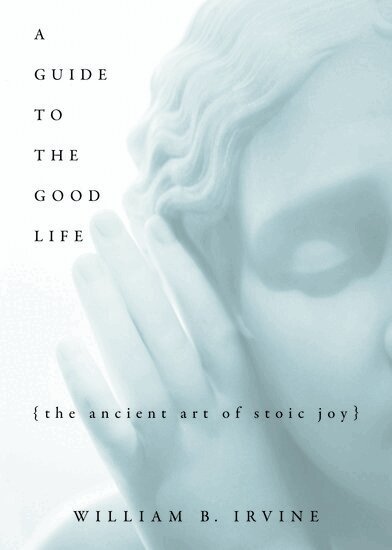
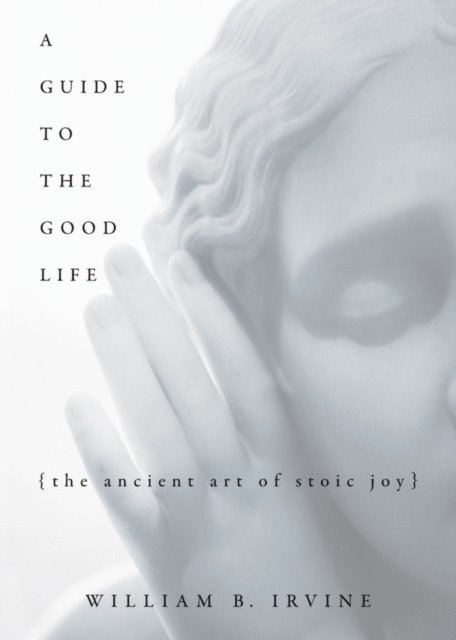
One of the great fears many of us face is that despite all our effort and striving, we will discover at the end that we have wasted our life. In A Guide to the Good Life, William B. Irvine plumbs the wisdom of Stoic philosophy, one of the most popular and successful schools of thought in ancient Rome, and shows how its insight and advice are still remarkably applicable to modern lives.In A Guide to the Good Life, Irvine offers a refreshing presentation of Stoicism, showing how this ancient philosophy can still direct us toward a better life. Using the psychological insights and the practical techniques of the Stoics, Irvine offers a roadmap for anyone seeking to avoid the feelings of chronic dissatisfaction that plague so many of us. Irvine looks at various Stoic techniques for attaining tranquility and shows how to put these techniques to work in our own life. As he does so, he describes his own experiences practicing Stoicism and offers valuable first-hand advice for anyone wishing to live better by following in the footsteps of these ancient philosophers. Readers learn how to minimize worry, how to let go of the past and focus our efforts on the things we can control, and how to deal with insults, grief, old age, and the distracting temptations of fame and fortune. We learn from Marcus Aurelius the importance of prizing only things of true value, and from Epictetus we learn how to be more content with what we have.Finally, A Guide to the Good Life shows readers how to become thoughtful observers of their own life. If we watch ourselves as we go about our daily business and later reflect on what we saw, we can better identify the sources of distress and eventually avoid that pain in our life. By doing this, the Stoics thought, we can hope to attain a truly joyful life.
Stoic Challenge
A Philosopher's Guide to Becoming Tougher, Calmer, and More Resilient
Häftad, Engelska, 2021
195 kr
Skickas inom 7-10 vardagar
Some people bounce back in response to setbacks; others break. We often think that these responses are hardwired but this is not the case. William B. Irvine combines key lessons from the ancient Stoics with modern psychological techniques to develop a simple strategy for dealing with life’s unpleasant surprises. These include minor setbacks like being caught in a traffic jam or having a flight cancelled, as well as major setbacks, like those experienced by Stephen Hawking or Bethany Hamilton.By using the updated Stoic strategy, life’s setbacks can be transformed into opportunities to become calmer, tougher and more resilient. The Stoic Challenge is a practical guide to using centuries-old wisdom to help us cope better with the stresses of modern living.
153 kr
Skickas
Insults are part of the fabric of daily life. But why do we insult each other? Why do insults cause us such pain? Can we do anything to prevent or lessen this pain? Most importantly, how can we overcome our inclination to insult others? In A Slap in the Face, now issued in paperback with a new preface, William Irvine undertakes a wide-ranging investigation of insults, their history, the role they play in social relationships, and the science behind them. He examines not just memorable zingers, such as Elizabeth Bowen's description of Aldous Huxley as "The stupid person's idea of a clever person," but subtle insults as well, such as when someone insults us by reporting the insulting things others have said about us: "I never read bad reviews about myself," wrote entertainer Oscar Levant, "because my best friends invariably tell me about them." Irvine also considers the role insults play in our society: they can be used to cement relations, as when a woman playfully teases her husband, or to enforce a social hierarchy, as when a boss publicly berates an employee. He goes on to investigate the many ways society has tried to deal with insults--by adopting codes of politeness, for example, and outlawing hate speech--but concludes that the best way to deal with insults is to immunize ourselves against them: we need to transform ourselves in the manner recommended by Stoic philosophers. We should, more precisely, become insult pacifists, trying hard not to insult others and laughing off their attempts to insult us.A rousing follow-up to A Guide to the Good Life, A Slap in the Face will interest anyone who's ever delivered an insult or felt the sting of one--in other words, everyone.
143 kr
Skickas inom 5-8 vardagar
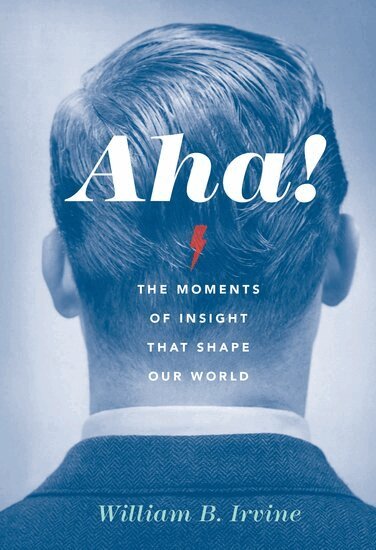
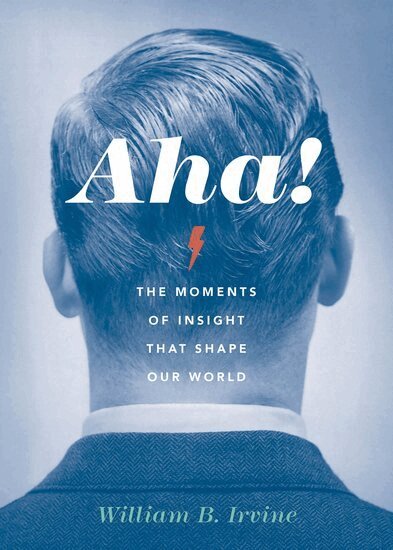
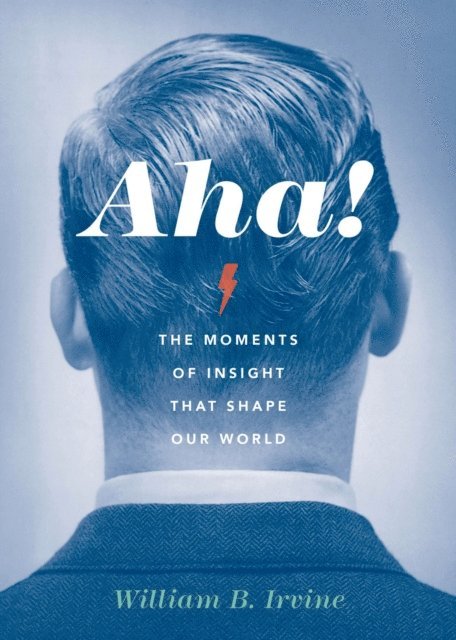
Great ideas often develop gradually after studying a problem at length--but not always. Sometimes, an insight hits like a bolt from the blue. For Archimedes, clarity struck while he was taking a bath. For Gustav Mahler, it came as the blades of his oars touched the water. And for Albert Einstein, it emerged while he was talking to a friend. Why do these moments of insight strike so suddenly? Why do they so often come to us when we are focused on something completely unrelated? And when great ideas "come to" us, where do they come from? In Aha!: The Moments of Insight that Shape Our World, philosopher William B. Irvine, author of A Guide to the Good Life and On Desire, explores these epiphanies, from the minor insights that strike us all daily, to the major realizations that alter the course of history. Focusing on aha moments as they take place in five different domains--religion, morality, science, math, and art--Irvine provides case studies that shed light on the different ways epiphanies happen in different domains, and on their differing social impact. Along the way, he describes some of the great aha moments in history, from ancient times to the present day.We like to think that our greatest thoughts are the product of our conscious mind. Irvine demonstrates, though, that it is our unconscious mind that is the source of our most significant insights, and that the role the conscious mind plays in eliciting these insights is to try, unsuccessfully, to solve certain problems. Only if the conscious mind is willing to do this--and thereby experience considerable frustration--is the unconscious mind likely to reward it with a breakthrough insight, for which the conscious mind will then take credit. Irvine explores not only the neuroscience of aha moments but also their personal and social ramifications. How does a person respond to having a breakthrough insight that goes against a dominant paradigm? And how does the world respond when she shares that insight? Irvine shows that in many cases, what is most remarkable about those who have had the great insights of human history is not their discoveries, but their courage and perseverance in fighting for the world to accept those insights.Aha! is a must-read for cognitive scientists, intellectual historians, philosophers, and anyone who has ever been blown away by the ideas that enlighten us when we least expect them.
253 kr
Skickas
What are you? Obviously, you are a person with human ancestors that can be plotted on a family tree, but you have other identities as well. According to evolutionary biologists, for example, you are a member of the species Homo sapiens. To a microbiologist, though, you are a collection of cells, each of which has its own cellular ancestry. A geneticist might point out that besides these identities, you can be understood as a gene-replication machine, which can be plotted on a "genetic tree." Finally a physicist will give a rather different answer to the identity question: you can be understood as a collection of atoms, each of which has a very long history. Some have been around since the Big Bang, and others are the result of nuclear fusion that took place within a star. Not only that, but most of your atoms belonged to other living things before joining you. From your atoms' point of view, then, you are just a way station on a multibillion-year-long journey. You: A Natural History offers a multi-disciplinary investigation of your hyper-extended family tree, going all the way back to the Big Bang. And while your family tree may contain surprises, your hyper-extended history contains some truly amazing stories. As the result of learning more about who and what you are, and about how you came to be here, you will likely see the world around you with fresh eyes. You will also become aware of all the one-off events that had to take place for your existence to be possible: stars had to explode, the earth had to be hit 4.5 billion years ago by a planetesimal and 65 million years ago by an asteroid, microbes had to engulf microbes, the African savanna had to undergo climate change, and of course, any number of your direct ancestors had to meet and mate. It is difficult, on becoming aware of just how contingent your own existence is, not to feel very lucky to be part of our universe.
185 kr
Skickas inom 5-8 vardagar
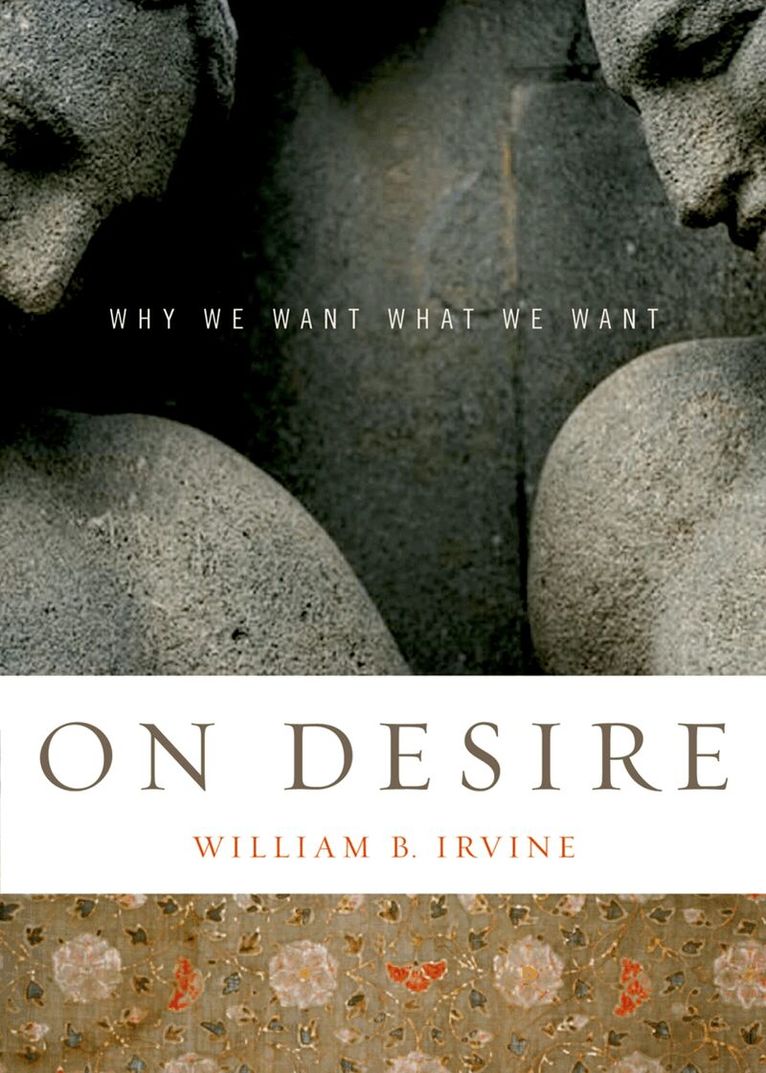
A married person falls deeply in love with someone else. A man of average income feels he cannot be truly happy unless he owns an expensive luxury car. A dieter has an irresistible craving for ice cream. Desires often come to us unbidden and unwanted, and they can have a dramatic impact, sometimes changing the course of our lives.In On Desire, William B. Irvine takes us on a wide-ranging tour of our impulses, wants, and needs, showing us where these feelings come from and how we can try to rein them in. Spicing his account with engaging observations by writers like Seneca, Tolstoy, and Freud, Irvine considers the teachings of Buddhists, Hindus, the Amish, Shakers, and Catholic saints, as well as those of ancient Greek and Roman and modern European philosophers. Irvine also looks at what modern science can tell us about desire--such as what happens in the brain when we desire something and how animals evolved particular desires--and he advances a new theory about how desire itself evolved. Irvine also suggests that at the same time that we gained the ability to desire, we were "programmed" to find some things more desirable than others. Irvine concludes that the best way to attain lasting happiness is not to change the world around us or our place in it, but to change ourselves. If we can convince ourselves to want what we already have, we can dramatically enhance our happiness.Brimming with wisdom and practical advice, On Desire offers a thoughtful approach to controlling unwanted passions and attaining a more meaningful life.
308 kr
Skickas inom 5-8 vardagar
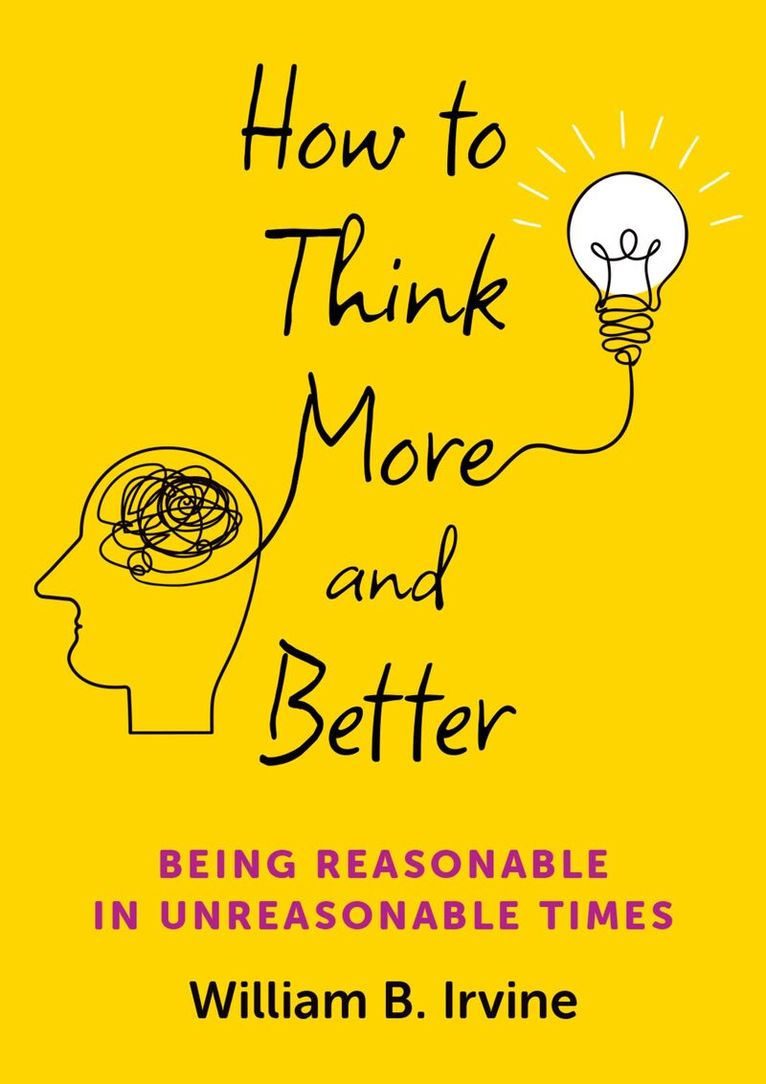
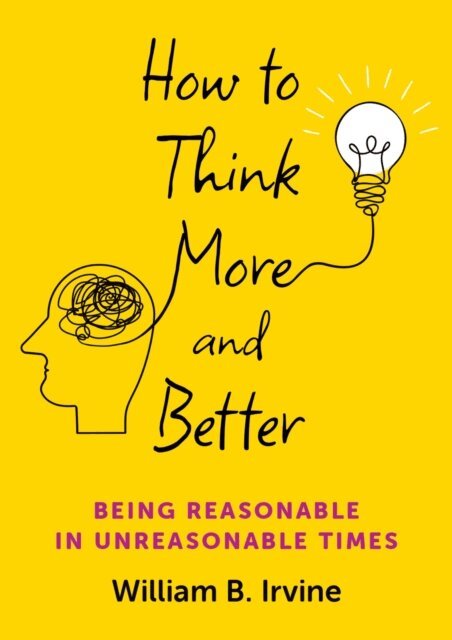
William B. Irvine, author of the popular book "A Guide to the Good Life," offers much needed philosophical advice on how to become a more rational and critical thinker in today's emotionally-driven and complex world.Even the most reasonable of us can be selective about when we think reasonably. We may realize that the best thing to do is to take the advice of our doctor when facing a medical issue. When shopping for a new car or appliance we might carefully assess online reviews and weigh our options calmly before making an informed decision. But when it comes to things that feel more fraught --voting, navigating a challenge in our family, figuring out what to do in a difficult professional situation-- we might throw this approach out the window, dismissing facts and patterns that form a body of evidence, and trust our gut. (Of course, there is a time and place for this, but not every big decision is purely a matter of the heart.) Likewise, when we think about big ideas, about right and wrong, or about concepts so complex they make anyone's head spin, we can freeze, jumping to conclusions rather than wading into the details, or considering the existing arguments that others offer as a trail through challenging terrain. How can we do better? How can we train our minds to be more consistent? How can we practice using the best of our rational abilities when it matters most?How to Think More and Better offers a philosopher's advice on becoming a more rational and critical thinker, rather than relying on emotions or hearsay to reach important decisions. It trains the reader in open-minded critical thinking. This thinking is crucial in a time of political polarization, social media, politicized news media, and echo chambers, to help us pursue truth and understanding in a world of rabbit holes, echo chambers, and disinformation. Irvine explains the prevalence of emotion-driven thinking is often at the expense of engagement with evidence, and then lays out strategies readers can use to train themselves to think more critically, drawn from what worked for him in the classroom. He also covers important areas to aid intellectual self-transformation, such as Mindcare and Mindcleaning. With practice, most people can become evidence-based thinkers. Seemingly intractable contemporary problems might be solved if we all start engaging more in this kind of slow and careful thinking, considering arguments and evidence even from those on opposite sides of key debates.
229 kr
Skickas inom 5-8 vardagar
Great ideas often develop gradually after studying a problem at length--but not always. Sometimes, an insight hits like a bolt from the blue. For Archimedes, clarity struck while he was taking a bath. For Gustav Mahler, it came as the blades of his oars touched the water. And for Albert Einstein, it emerged while he was talking to a friend. Why do these moments of insight strike so suddenly? Why do they so often come to us when we are focused on something completely unrelated? And when great ideas "come to" us, where do they come from? In Aha!: The Moments of Insight that Shape Our World, philosopher William B. Irvine, author of A Guide to the Good Life and On Desire, explores these epiphanies, from the minor insights that strike us all daily, to the major realizations that alter the course of history. Focusing on aha moments as they take place in five different domains--religion, morality, science, math, and art--Irvine provides case studies that shed light on the different ways epiphanies happen in the different domains, and on their differing social impact. Along the way, he describes some of the great aha moments in history, from ancient times to the present day.We like to think that our greatest thoughts are the product of our conscious mind. Irvine demonstrates, though, that it is our unconscious mind that is the source of our most significant insights, and that the role the conscious mind plays in eliciting these insights is to try, unsuccessfully, to solve certain problems. Only if the conscious mind is willing to do this--and thereby experience considerable frustration--is the unconscious mind likely to reward it with a breakthrough insight-that the conscious mind will then take credit for.Irvine explores not only the neuroscience of aha moments but also their personal and social ramifications. How does a person respond to having a breakthrough insight that goes against a dominant paradigm? And how does the world respond when she shares that insight? Irvine shows that in many cases, what is most remarkable about those who have had the great insights of human history is not their but their courage and perseverance in fighting for the world to accept those insights.Aha! is a must-read for cognitive scientists, intellectual historians, philosophers, and anyone who has ever been blown away by the ideas that enlighten us when we least expect it.
325 kr
Skickas inom 5-8 vardagar
Insults are part of the fabric of daily life. But why do we insult each other? Why do insults cause us such pain? Can we do anything to prevent or lessen this pain? Most importantly, how can we overcome our inclination to insult others? In A Slap in the Face, William Irvine undertakes a wide-ranging investigation of insults, their history, the role they play in social relationships, and the science behind them. He examines not just memorable zingers, such as Elizabeth Bowen's description of Aldous Huxley as "The stupid person's idea of a clever person," but subtle insults as well, such as when someone insults us by reporting the insulting things others have said about us: "I never read bad reviews about myself," wrote entertainer Oscar Levant, "because my best friends invariably tell me about them." Irvine also considers the role insults play in our society: they can be used to cement relations, as when a woman playfully teases her husband, or to enforce a social hierarchy, as when a boss publicly berates an employee. He goes on to investigate the many ways society has tried to deal with insults-by adopting codes of politeness, for example, and outlawing hate speech-but concludes that the best way to deal with insults is to immunize ourselves against them: We need to transform ourselves in the manner recommended by Stoic philosophers. We should, more precisely, become insult pacifists, trying hard not to insult others and laughing off their attempts to insult us.A rousing follow-up to The Good Life, A Slap in the Face will interest anyone who's ever delivered an insult or felt the sting of one--in other words, everyone.
Stoic Challenge
A Philosopher's Guide to Becoming Tougher, Calmer, and More Resilient
Inbunden, Engelska, 2019
241 kr
Skickas inom 7-10 vardagar
Some people bounce back in response to setbacks; others break. We often think that these responses are hardwired but this is not the case. William B. Irvine combines key lessons from the ancient Stoics with modern psychological techniques to develop a simple strategy for dealing with life’s unpleasant surprises. These include minor setbacks like being caught in a traffic jam or having a flight cancelled, as well as major setbacks, like those experienced by Stephen Hawking or Bethany Hamilton.By using the updated Stoic strategy, life’s setbacks can be transformed into opportunities to become calmer, tougher and more resilient. The Stoic Challenge is a practical guide to using centuries-old wisdom to help us better-cope with the stresses of modern living.
201 kr
Skickas inom 3-6 vardagar
197 kr
Skickas inom 3-6 vardagar
198 kr
Skickas inom 3-6 vardagar