William Bradford Smith – författare
Visar alla böcker från författaren . Handla med fri frakt och snabb leverans.
2 produkter
2 produkter
Inbunden, Engelska, 2026
789 kr
Kommande
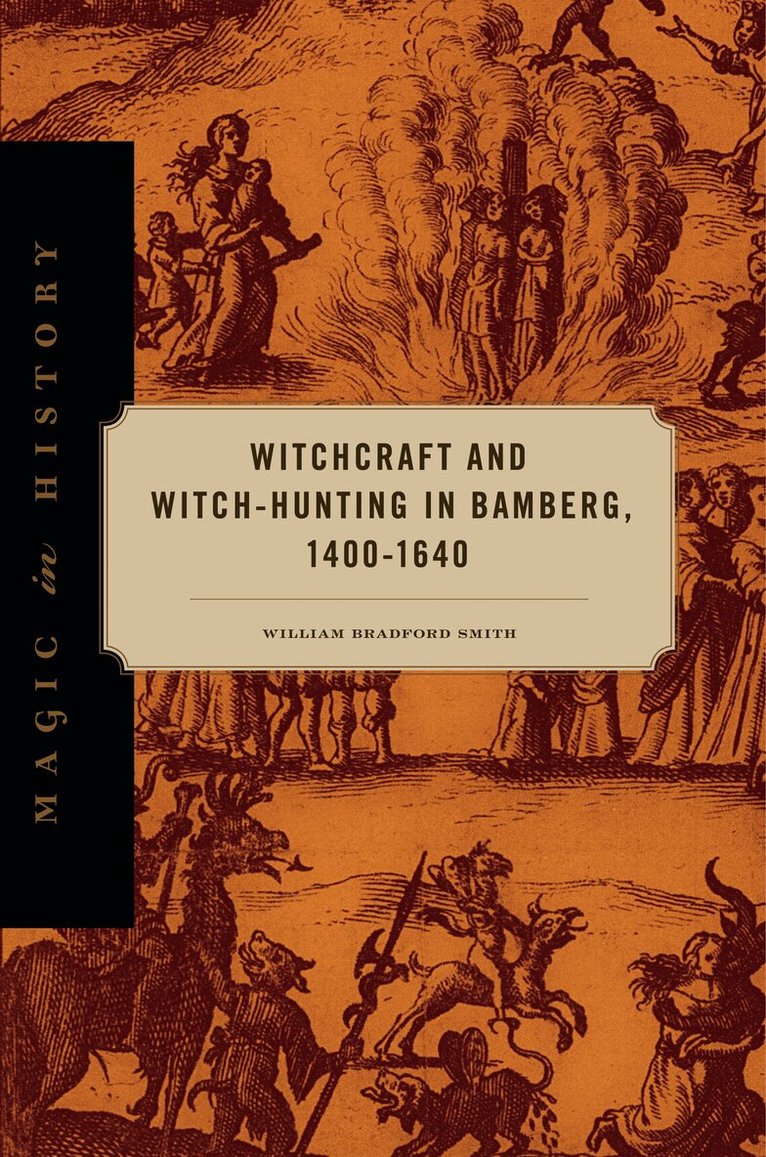
In the early modern period, the Prince-Bishopric of Bamberg witnessed one of the largest and most sustained persecutions of witches in history. Between 1584 and 1631, more than 1,100 people were investigated for witchcraft, and as many as 900 died. This book examines how such an extraordinary wave of persecution emerged and why it reached such devastating intensity. William Bradford Smith traces the origins and escalation of the Bamberg witch trials. He situates the persecutions within a landscape of long-standing popular beliefs about witchcraft and magic and the growing body of legal doctrine addressing superstition that culminated in the Bamberg Criminal Code. The study follows how local panics, religious tensions associated with the Counter-Reformation, economic crises, and the centralization of justice converged to produce organized persecution. Using trial records, sermons, mandates, newssheets, and other contemporary sources, Smith shows how propaganda, preaching, the press, rumor, and gossip built support for persecution in Bamberg while bringing to light the struggles of those caught up in the trials.Based on a wealth of archival evidence, much of it previously unpublished, the book illuminates the social, political, and emotional dynamics that sustained one of Europe’s most notorious witch hunts. It will be of particular interest to students and scholars of witchcraft persecution and early modern European history.
Del 8 - Changing Perspectives on Early Modern Europe
Reformation and the German Territorial State
Upper Franconia, 1300-1630
Häftad, Engelska, 2016
351 kr
Skickas inom 10-15 vardagar
A richly documented study of the interrelation between religious reformation and territorial state-building in the German region of upper Franconia from the later Middle Ages through the Confessional era.Religious reform and the rise of the territorial state were the central features of early modern German history. Reformation and state-building, however, had a much longer history, beginning in the later Middle Ages and continuingthrough the early modern period. In this insightful new study, Smith explores the key relationship between the rise of the territorial state and religious upheavals of the age, centering his investigation on the diocese of Bamberg in upper Franconia.During the Reformation, the diocese was split in half: the parishes in the domains of the Franconian Hohenzollerns became Lutheran; those under the secular jurisdiction of the bishops of Bamberg remainedCatholic. Drawing from a broad range of archival sources, Smith offers a compelling look at the origins and course of Catholic and Protestant reform. He examines the major religious crises of the period -- the Great Schism, the Conciliar Movement, the Hussite War, the Peasant's War, the Thirty Years' War, and the Witch Craze -- comparing their impact on the two states and showing how events played out on the local, territorial, and imperial stages. Careful analysis of the sources reveals how religious beliefs shaped politics in the emerging territorial principalities, explaining both the similarities as well as the profound differences between Lutheran and Catholic conceptions ofthe state.William Bradford Smith is Professor of History at Oglethorpe University.