William Brock – författare
Visar alla böcker från författaren William Brock. Handla med fri frakt och snabb leverans.
11 produkter
Fontana History of Chemistry
Häftad, 2008
296 kr
Lägg i varukorg
The Fontana History of Chemistry, which draws extensively on both the author’s own original research and that of other scholars world wide, is conceived as a work of synthesis. Nothing like it has been attempted in decades.Beginning with the first tentative chemical explorations where primitive …
Fontana History of Chemistry
E-bok, 2012
198 kr
Lägg i varukorg
The Fontana History of Chemistry, which draws on both the author’s own original research and that of other scholars, is an unrivalled work of synthesis.Beginning with the first tentative chemical explorations, Dr Brock proceeds via the alchemists’ futile, but frequently profitable, efforts to turn …
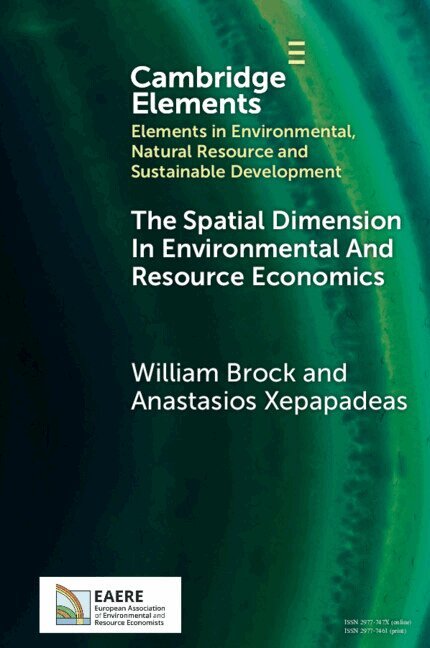
Spatial Dimension In Environmental and Resource Economics
Av Anastasios Xepapadeas, William Brock
E-bok, 2026
287 kr
Lägg i varukorg
Spatial Dimension In Environmental and Resource Economics
Av Anastasios Xepapadeas, William Brock
E-bok, 2026
294 kr
Lägg i varukorg
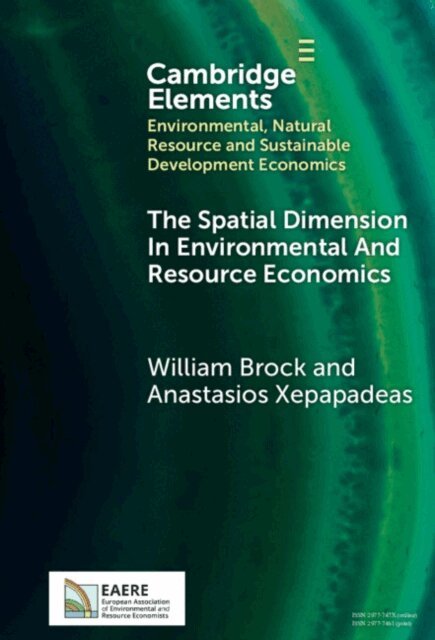
The Spatial Dimension In Environmental and Resource Economics
Av William Brock, Anastasios Xepapadeas
Häftad, 2026
276 kr
Lägg i varukorg
Although the spatial dimension is embedded in most issues studied by environmental and resource economics, its incorporation into economic models is not widespread. As a result, significant aspects of important problems remain hidden, which could lead to policy failures. This Element fills this gap …
The Spatial Dimension In Environmental and Resource Economics
Av William Brock, Anastasios Xepapadeas
Inbunden, 2026
911 kr
Lägg i varukorg
Although the spatial dimension is embedded in most issues studied by environmental and resource economics, its incorporation into economic models is not widespread. As a result, significant aspects of important problems remain hidden, which could lead to policy failures. This Element fills this gap …