William Caferro - Böcker
Visar alla böcker från författaren William Caferro. Handla med fri frakt och snabb leverans.
14 produkter
14 produkter
1 441 kr
Skickas inom 7-10 vardagar
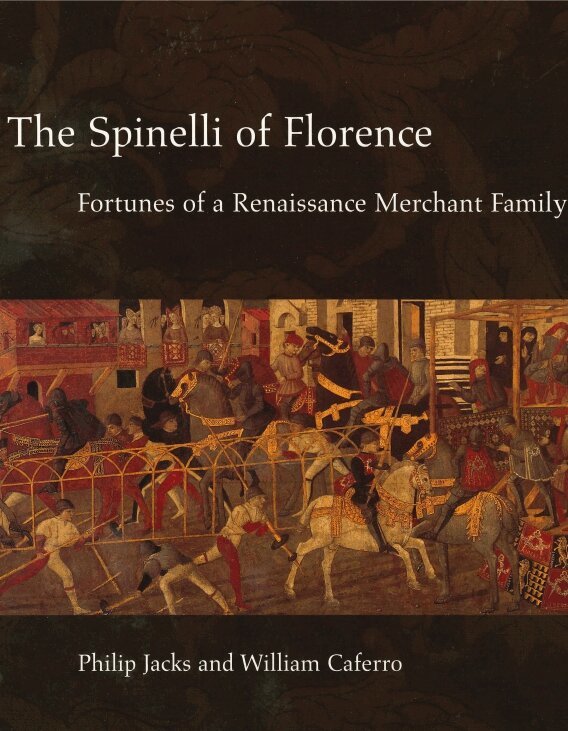
The private archive of the Spinelli, acquired by Yale University’s Beinecke Library in 1988, constitutes the largest fund of information about a Florentine family anywhere outside Italy. The Spinelli of Florence tells the story of these merchants and their ascent to social and economic prominence during the fourteenth and fifteenth centuries. This book gives an intimate portrait of daily life—the worlds of papal finance, silk and wool manufacturing, and household affairs—as recorded in letters and financial ledgers preserved for two hundred years since the extinction of the male line.The fame of this family rests largely on the extraordinary success of one individual, Tommaso Spinelli, who broke into banking through the Alberti and Borromei organizations, later to serve as depository general under Pope Eugenius IV and financial officer to three subsequent popes. Tommaso sought to raise his status in society through ties of marriage and business rather than entering the political arena, which had led to the demise and exile of older, established Florentine families, notably the Peruzzi and Alberti. Like his contemporaries, Cosimo de’Medici, Giovanni Rucellai, and Francesco Sassetti, Tommaso poured his considerable wealth into the patronage of private palaces and villas in Rome and Florence, as well as through donations to the great Franciscan church of Santa Croce. Despite his reputation for magnificence, it was Tommaso’s obeisance to the codes of religious decorum and his adherence to older artistic traditions that allowed him to commemorate himself and his family without censure.The authors of this collaborative study, an architectural historian and economic historian, add significantly to our knowledge of private and papal banking, wool and silk manufacturing, and patronage of the arts. The Spinelli of Florence is important for scholars of history, economic history, social history, and art history.
502 kr
Skickas inom 5-8 vardagar
A discussion by a broadly respected authority of the complicated relationship between theology and ordinary life in the early church. The first section of the book scrutinizes theology with a view to understanding its bearing upon Christian understandings of life (the theological “stories” of Irenaeus, Gregory of Nyssa, and Augustine). The second section examines aspects of ordinary life and explores how Christians related them to religious ideas (the family, hospitality, citizenship, monasticism, and attitudes toward the collapse of the Roman Empire in the West).This very learned piece of work, which reflects lengthy study of original texts as well as of the current and important secondary literature, is distinctive because it does not conform to the present reigning ideology: The author writes as a convinced Christian thinker. He believes that there is no such thing as a purely detached observer and that the best way of being critical and fair is to make no secret of one’s presuppositions, but to face them so as to be able to discount them when necessary. This quality makes the work interesting and suggestive. The book is of importance to scholars and theologians and to all concerned with the early church.
705 kr
Skickas inom 10-15 vardagar
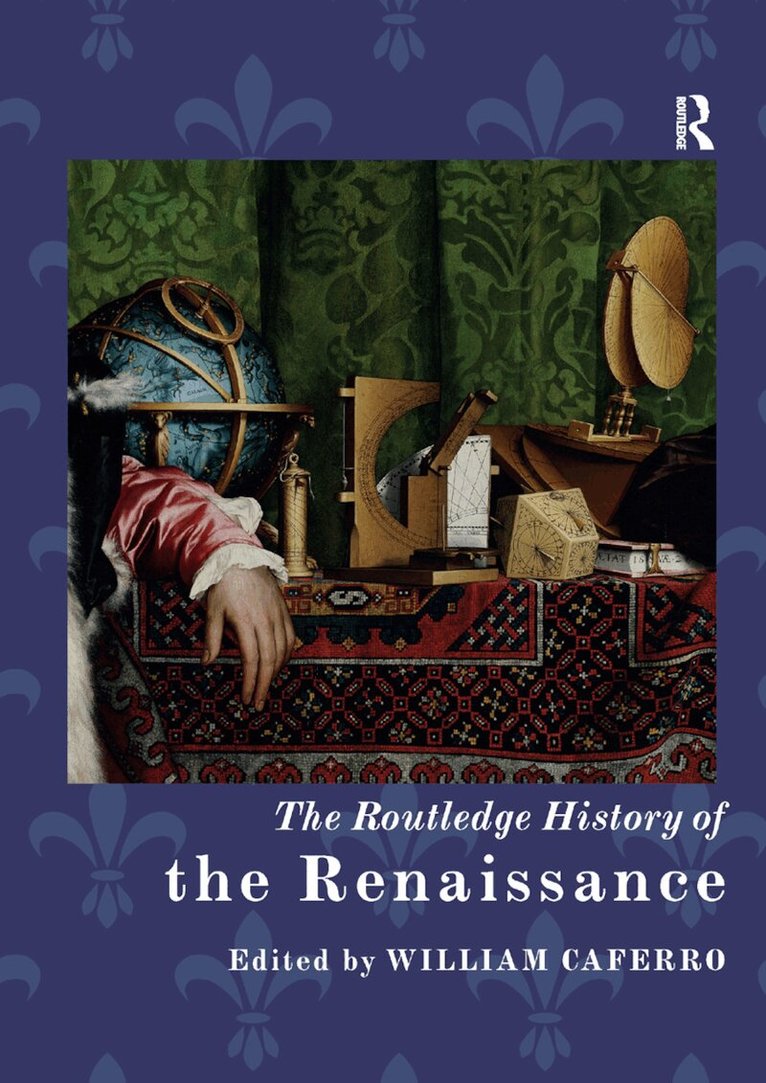
Drawing together the latest research in the field, The Routledge History of the Renaissance treats the Renaissance not as a static concept, but as one of ongoing change within an international framework. It takes as its unifying theme the idea of exchange and interchange through the movement of goods, ideas, disease and people, across social, religious, political and physical boundaries. Covering a broad range of temporal periods and geographic regions, the chapters discuss topics such as the material cultures of Renaissance societies; the increased popularity of shopping as a pastime in fourteenth-century Italy; military entrepreneurs and their networks across Europe; the emergence and development of the Ottoman empire from the early fourteenth to the late sixteenth century; and women and humanism in Renaissance Europe. The volume is interdisciplinary in nature, combining historical methodology with techniques from the fields of anthropology, sociology, psychology and literary criticism. It allows for juxtapositions of approaches that are usually segregated into traditional subfields, such as intellectual, political, gender, military and economic history. Capturing dynamic new approaches to the study of this fascinating period and illustrated throughout with images, figures and tables, this comprehensive volume is a valuable resource for all students and scholars of the Renaissance.
Del 116 - The Johns Hopkins University Studies in Historical and Political Science
Mercenary Companies and the Decline of Siena
Inbunden, Engelska, 1998
749 kr
Skickas inom 5-8 vardagar
Among the most dramatic problems faced on the Italian peninsula in the fourteenth century were the raids of marauding mercenary companies. These companies, known locally as Companies of Adventure and more generally as Free Companies, were private armies, composed of professional soldiers and adventurers from throughout Europe. They sold their services to the highest bidder in times of war, and staged ruinous raids in times of peace. The city of Siena, visually opulent and wedged between Florence and the lands of the pope-two frequent employers of mercenaries-was an especial target. In this groundbreaking volume, William Caferro explores the social, economic and administrative impact of the companies on Siena from the arrival of Werner of Urslingen and the Great Company in 1342 until the fall of the Sienese republic in 1399. During this time, Caferro explains, Siena endured some thirty-seven raids, characterized by arson, pillage, and looting in the countryside and extortion of enormous bribes from the city government. He shows that the raids constituted a persistent and significant drain on both the human and financial resources of Siena.Payments to the companies siphoned off valuable (and limited) funds, damaging an already circumscribed economy, while the government was forced to borrow money on an unprecedented scale from its citizens. Sienese officials pressed money out of every available resource, including the Church (which had previously been taxed only sporadically) and Jews (who were belatedly granted the "right" to lend money to the state). Other desperate measures included pawning land, forcing purchases of salt, and readmitting exiles for a fee. The stresses caused by the mercenaries were greatly exacerbated by plague and famine, which often coincided precisely with the raids-each disaster serving to intensify the effects of the other. Caferro concludes that the stress of the companies acted as an agent of change on the machinery of state, bringing both decentralization and confusion. If, as some historians have argued, military expenditure led to more streamlined bureaucracies and helped "make" states elsewhere, it is nonetheless clear that the same phenomenon helped "unmake" Siena.The raids, therefore, were more than an exotic nuisance, but a key factor in Siena's decision to abandon independence in 1399.
401 kr
Tillfälligt slut
John Hawkwood was fourteenth-century Italy's most notorious and successful soldier. A man known for cleverness and daring, he was the most feared mercenary in Renaissance Italy. Born in England, Hawkood began his career in France during the Hundred Years' War and crossed into Italy with the famed White Company in 1361. From that time until his death in 1394, Hawkwood fought throughout the peninsula as a captain of armies in times of war and as a commander of marauding bands during times of peace. He achieved international fame, and his acquaintances included such prominent people as Geoffrey Chaucer, Catherine of Siena, Jean Froissart, and Francis Petrarch. City-states constantly tried to outbid each other for his services, for which he received money, land, and in the case of Florence, citizenship-a most unusual honor for an Englishman. When Hawkwood died, the Florentines buried him with great ceremony in their cathedral, an honor denied their greatest poet, Dante. His final resting place, however, is disputed. Historian William Caferro's ambitious account of Hawkwood is both a biography and a study of warfare and statecraft.Caferro has mined more than twenty archives in England and Italy, creating an authoritative portrait of Hawkwood as an extraordinary military leader, if not always an admirable human being. Caferro's Hawkwood possessed a talent for dissimulation and craft both on the battlefield and at the negotiating table, and, ironically, managed to gain a reputation for "honesty" while beating his Italian hosts at their own game of duplicity and manipulation. In addition to a thorough account of Hawkwood's life and career, Caferro's study offers a fundamental reassessment of the Italian military situation and of the mercenary system. Hawkwood's career is treated not in isolation but firmly within the context of Italian society, against the backdrop of unfolding crises: famine, plague, popular unrest, and religious schism. Indeed, Hawkwood's life and career offer a unique vantage point from which we can study the economic, social, and political impacts of war.
1 282 kr
Skickas inom 7-10 vardagar
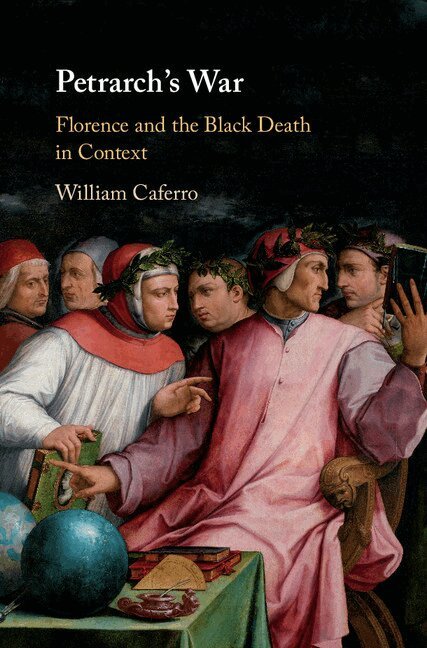
This revisionist account of the economic, literary and social history of Florence in the immediate aftermath of the Black Death connects warfare with the plague narrative. Organised around Petrarch's 'war' against the Ubaldini clan of 1349-1350, which formed the prelude to his meeting and friendship with Boccaccio, William Caferro's work examines the institutional and economic effects of the war, alongside literary and historical patterns. Caferro pays close attention to the meaning of wages in context, including those of soldiers, thereby revising our understanding of wage data in the distant past and highlighting the consequences of a constricted workforce that resulted in the use of cooks and servants on important embassies. Drawing on rigorous archival research, this book will stimulate discussion among academics and offers a new contribution to our understanding of Renaissance Florence. It stresses the importance of short-termism and contradiction as subjects of historical inquiry.
441 kr
Skickas inom 7-10 vardagar
This revisionist account of the economic, literary and social history of Florence in the immediate aftermath of the Black Death connects warfare with the plague narrative. Organised around Petrarch's 'war' against the Ubaldini clan of 1349-1350, which formed the prelude to his meeting and friendship with Boccaccio, William Caferro's work examines the institutional and economic effects of the war, alongside literary and historical patterns. Caferro pays close attention to the meaning of wages in context, including those of soldiers, thereby revising our understanding of wage data in the distant past and highlighting the consequences of a constricted workforce that resulted in the use of cooks and servants on important embassies. Drawing on rigorous archival research, this book will stimulate discussion among academics and offers a new contribution to our understanding of Renaissance Florence. It stresses the importance of short-termism and contradiction as subjects of historical inquiry.
967 kr
Skickas inom 7-10 vardagar
A practical and engaging guide to the art of teaching history Well-grounded in scholarly literature and practical experience, Teaching History offers an instructors’ guide for developing and teaching classroom history. Written in the author’s engaging (and often humorous) style, the book discusses the challenges teachers encounter, explores effective teaching strategies, and offers insight for managing burgeoning technologies. William Caferro presents an assessment of the current debates on the study of history in a broad historical context and evaluates the changing role of the discipline in our increasingly globalized world. Teaching History reveals that the valuable skills of teaching are highly transferable. It stresses the importance of careful organization as well as the advantages of combining research agendas with teaching agendas. Inspired by the Scholarship of Teaching and Learning movement, the book encourages careful reflection on teaching methods and stresses the importance of applying various approaches to promote active learning. Drawing on the author’s experience as an instructor at the high school and university levels, Teaching History: Contains an authoritative and humorous look at the profession and the strategies and techniques of teaching history Incorporates a review of the current teaching practice in terms of previous methods, examining nineteenth and twentieth century debates and strategies Includes a discussion of the use of technology in the history classroom, from the advent of course management (Blackboard) systems to today’s digital resources Covers techniques for teaching the history of any nation not only American history Written for graduate and undergraduate students of history teaching and methods, historiography, history skills, and education, Teaching History is a comprehensive book that explores the strategies, challenges, and changes that have occurred in the profession.
432 kr
Skickas inom 7-10 vardagar
A practical and engaging guide to the art of teaching history Well-grounded in scholarly literature and practical experience, Teaching History offers an instructors’ guide for developing and teaching classroom history. Written in the author’s engaging (and often humorous) style, the book discusses the challenges teachers encounter, explores effective teaching strategies, and offers insight for managing burgeoning technologies. William Caferro presents an assessment of the current debates on the study of history in a broad historical context and evaluates the changing role of the discipline in our increasingly globalized world. Teaching History reveals that the valuable skills of teaching are highly transferable. It stresses the importance of careful organization as well as the advantages of combining research agendas with teaching agendas. Inspired by the Scholarship of Teaching and Learning movement, the book encourages careful reflection on teaching methods and stresses the importance of applying various approaches to promote active learning. Drawing on the author’s experience as an instructor at the high school and university levels, Teaching History: Contains an authoritative and humorous look at the profession and the strategies and techniques of teaching history Incorporates a review of the current teaching practice in terms of previous methods, examining nineteenth and twentieth century debates and strategies Includes a discussion of the use of technology in the history classroom, from the advent of course management (Blackboard) systems to today’s digital resources Covers techniques for teaching the history of any nation not only American history Written for graduate and undergraduate students of history teaching and methods, historiography, history skills, and education, Teaching History is a comprehensive book that explores the strategies, challenges, and changes that have occurred in the profession.
3 378 kr
Skickas inom 10-15 vardagar
Drawing together the latest research in the field, The Routledge History of the Renaissance treats the Renaissance not as a static concept, but as one of ongoing change within an international framework. It takes as its unifying theme the idea of exchange and interchange through the movement of goods, ideas, disease and people, across social, religious, political and physical boundaries. Covering a broad range of temporal periods and geographic regions, the chapters discuss topics such as the material cultures of Renaissance societies; the increased popularity of shopping as a pastime in fourteenth-century Italy; military entrepreneurs and their networks across Europe; the emergence and development of the Ottoman empire from the early fourteenth to the late sixteenth century; and women and humanism in Renaissance Europe. The volume is interdisciplinary in nature, combining historical methodology with techniques from the fields of anthropology, sociology, psychology and literary criticism. It allows for juxtapositions of approaches that are usually segregated into traditional subfields, such as intellectual, political, gender, military and economic history. Capturing dynamic new approaches to the study of this fascinating period and illustrated throughout with images, figures and tables, this comprehensive volume is a valuable resource for all students and scholars of the Renaissance.
1 068 kr
Skickas inom 7-10 vardagar
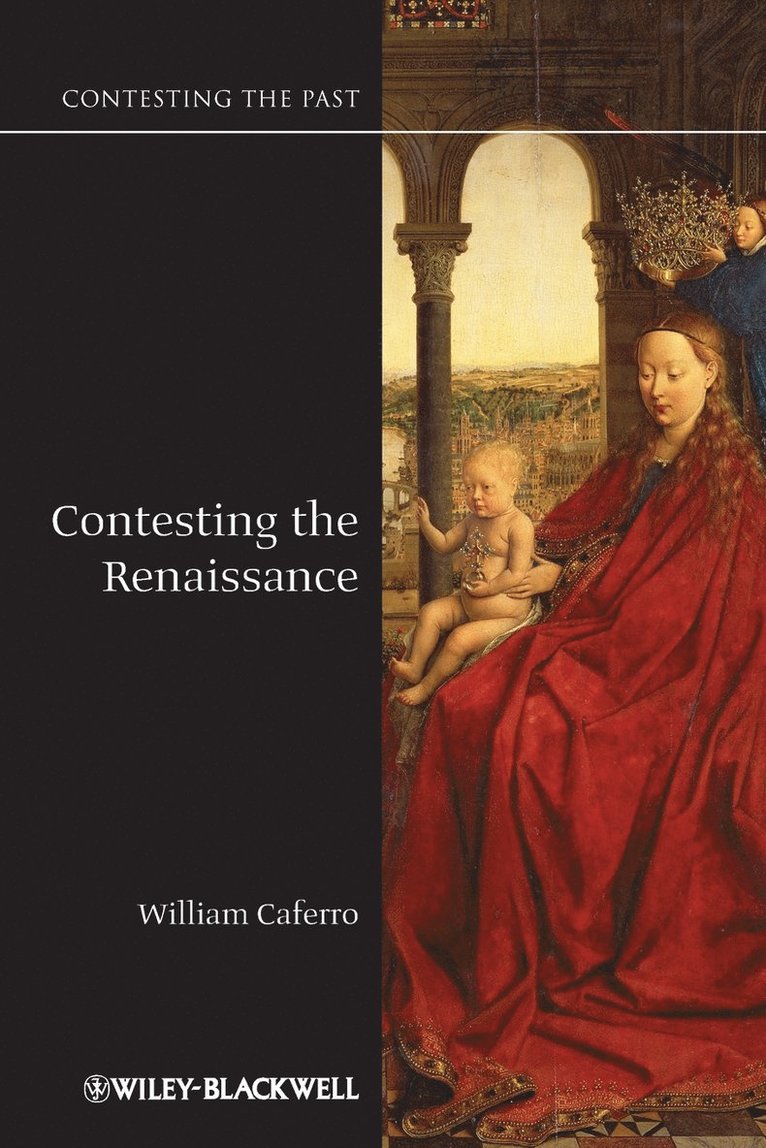
In this book, William Caferro asks if the Renaissance was really a period of progress, reason, the emergence of the individual, and the beginning of modernity. An influential investigation into the nature of the European RenaissanceSummarizes scholarly debates about the nature of the RenaissanceEngages with specific controversies concerning gender identity, economics, the emergence of the modern state, and reason and faithTakes a balanced approach to the many different problems and perspectives that characterize Renaissance studies
428 kr
Skickas inom 7-10 vardagar
In this book, William Caferro asks if the Renaissance was really a period of progress, reason, the emergence of the individual, and the beginning of modernity. An influential investigation into the nature of the European RenaissanceSummarizes scholarly debates about the nature of the RenaissanceEngages with specific controversies concerning gender identity, economics, the emergence of the modern state, and reason and faithTakes a balanced approach to the many different problems and perspectives that characterize Renaissance studies
432 kr
Skickas inom 7-10 vardagar
This book is the winner, 2008 Otto Grundler Book Prize, The Medieval Institute Notorious for his cleverness and daring, John Hawkwood was the most feared mercenary in early Renaissance Italy. Born in England, Hawkwood began his career in France during the Hundred Years' War and crossed into Italy with the famed White Company in 1361. From that time until his death in 1394, Hawkwood fought throughout the peninsula as a captain of armies in times of war and as a commander of marauding bands during times of peace. He achieved international fame, and city-states constantly tried to outbid each other for his services, for which he received money, land, and, in the case of Florence, citizenship-a most unusual honor for an Englishman. When Hawkwood died, the Florentines buried him with great ceremony in their cathedral, an honor denied their greatest poet, Dante. William Caferro's ambitious account of Hawkwood is both a biography and a study of warfare and statecraft. Caferro has mined more than twenty archives in Britain and Italy, creating an authoritative portrait of Hawkwood as an extraordinary military leader, if not always an admirable human being.
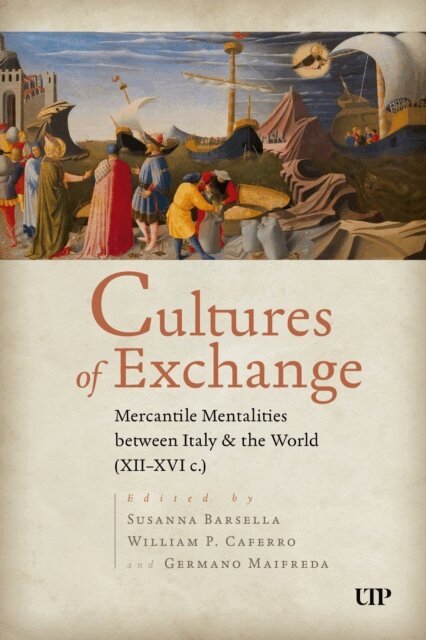
Cultures of Exchange
Mercantile Mentalities Between Italy & the World (XII-XVI C.)
Inbunden, Engelska, 2026
1 054 kr
Kommande
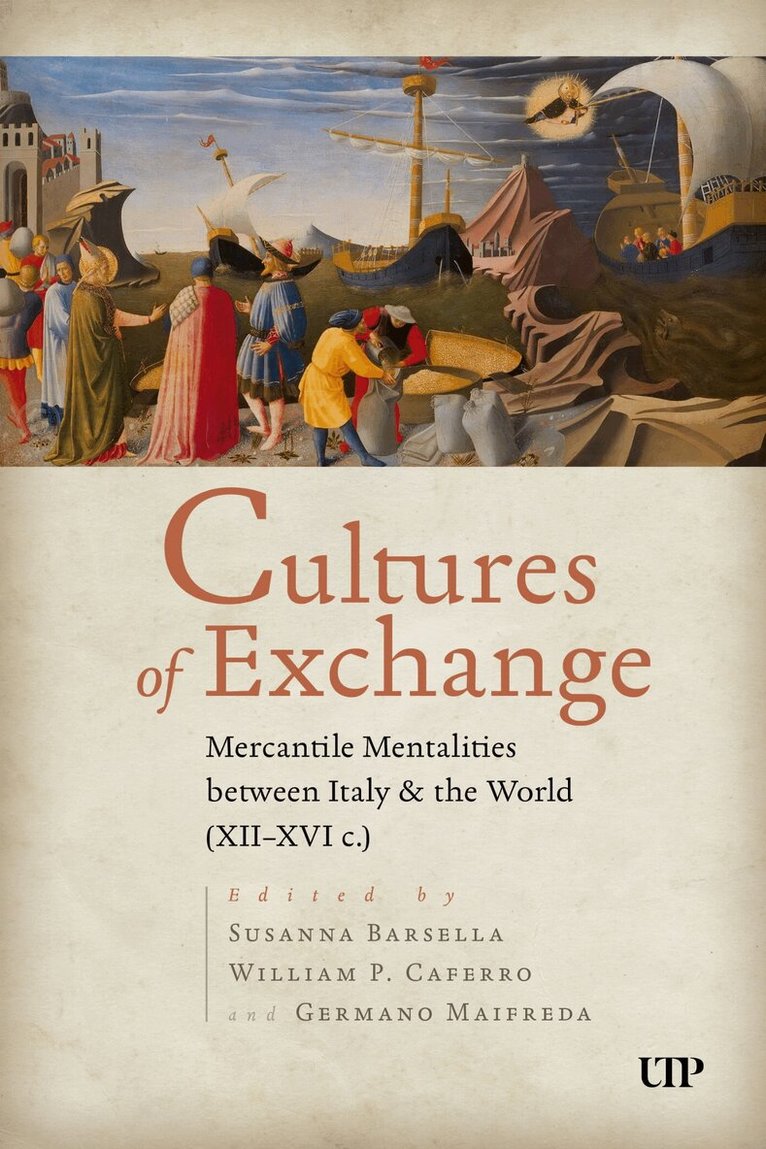
Cultures of Exchange examines the mercantile culture of the Italian peninsula, whose wealth and geographic location made it a focal point of cultural exchange in the Mediterranean. The volume explores the integration of the peninsula into international and global networks, the effect on societal structures and attitudes, and the role in the transfer and reception of knowledge, goods, and peoples. Susanna Barsella, William Caferro, and Germano Maifreda bring together the work of an array of scholars – literary critics, art historians, numismatists, and historians – using diverse methodologies that provide a genuinely interdisciplinary discussion of a field that is still in its elemental stages. The chapters in the volume deal with interrelated issues from diverse perspectives, questioning whether cultural exchange also involved cultural appropriation, while interrogating the political, economic, social, religious, material, artistic, gendered, and racial aspects of exchange. Essays on cartography offer a strong visual component to the book, and the use of digital humanities adds to the methodological sophistication in assessing primary source materials. Bringing into conversation the work of a broad range of scholars, Cultures of Exchange is written with accessibility and readability in mind and is a major intervention in the growing field of Mediterranean Studies.