William Connolly - Böcker
Visar alla böcker från författaren William Connolly. Handla med fri frakt och snabb leverans.
11 produkter
11 produkter
671 kr
Skickas inom 10-15 vardagar
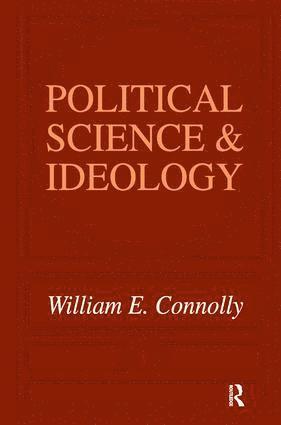
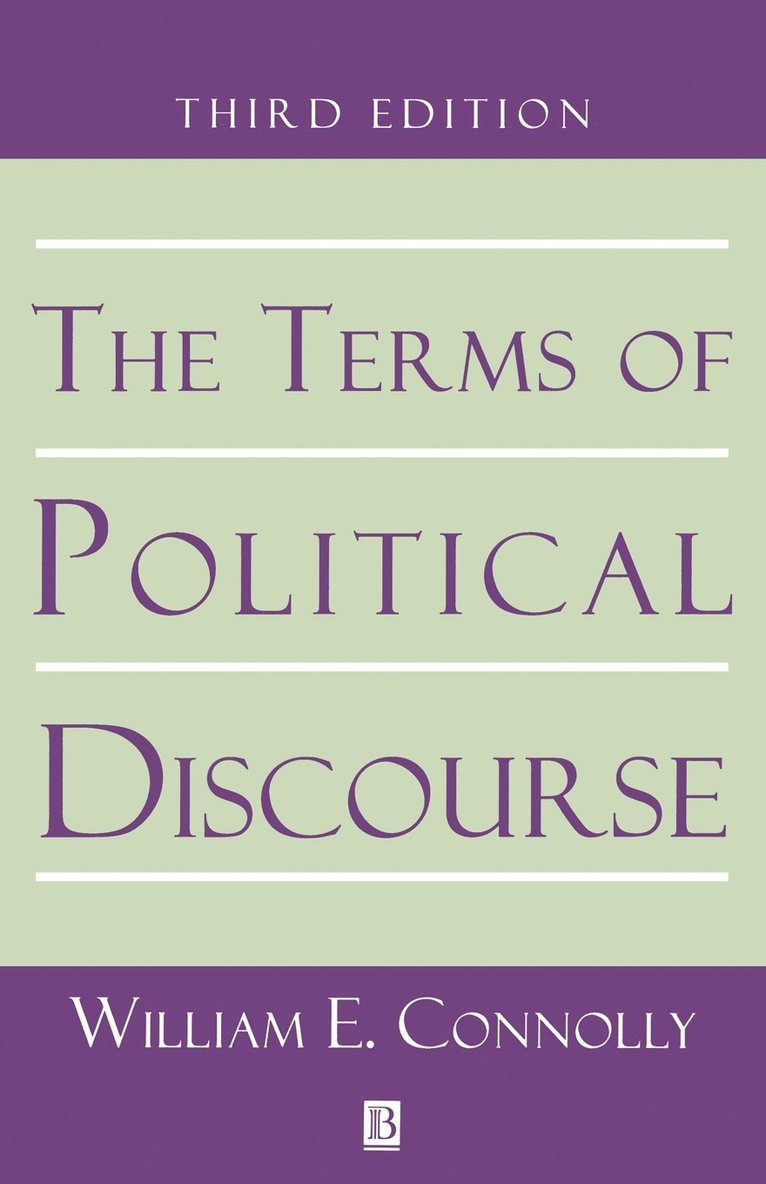
Professor David Kettler commented at the time of initial release, that this book is "writing with great poise and clarity, the author says important things in a deceptively simple way about a problem of paramount significance. A fine piece of clarification, blending just the right mixture of respect and impiety toward the important heroes of contemporary political science, this is the kind of book I look forward to having available for our courses in political theory."Ideology, though long pronounced moribund, continues to play a central role in contemporary political inquiry. In this reevaluation of the true function of political science, the author lays down guidelines for the construction of fruitful political interpretations in the large areas where ideological assumptions and claims cannot be adequately tested. He analyzes two representative theories of power in American society-those of the "pluralists" who affirm and the "elitists" who dispute the case for democracy-and demonstrates how personal preferences and group-oriented interests enter into the development of these concepts. Speaking to all social scientists and students engaged in the study of political processes, Connolly details the methods by which the investigator-who inevitably brings his own beliefs and values to the task-can lay bare and control the ideological aspects of his own work and that of others.A critical examination of the writings of some of the leading figures in recent and contemporary political inquiry, such as Karl Mannheim, C. Wright Mills, Robert Dahl, Daniel Bell, and Seymour Martin Lipset leads him to assign a decisive role for the political scientist in the creation of carefully formulated ideologies. An original mind, drawing upon an exceptionally rich store of knowledge, has here produced an important book which will be of immediate-and challenging-relevance to the work and studies of all scholars, graduate students, and majors in the field of government and to all concerned with fundamental problems in social science.William E. Connolly was Professor of Political Science at Ohio University. He has held a Horace Rackham Graduate Fellowship and has taught at the University of Michigan, where he received his undergraduate and graduate training in political and social science. He is currently Krieger-Eisenhower Professor of Political Science at John Hopkins University.
671 kr
Skickas inom 10-15 vardagar
The theory of democratic pluralism has long provided the dominant ideal and description of politics in industrial societies with competing party systems. The purpose of this classic collection, including some of the leading theorists of the late 1960s, is to subject this theory to systematic scrutiny. The authors examine the work of such pluralists as Robert Dahl, David Truman, Adolf Berle, Arthur Bentley, Joseph Schumpeter, and Walter Lippmann, as well as of such critics of pluralist theory as C. Wright Mills, Herbert Marcuse, Henry Kariel, and Grant McConnell.Voicing the respective points of view of science, economics, philosophy, and psychology, the authors converge in their agreement that the conventional, pluralist interpretation of contemporary politics requires significant revision. The views of these diverse critics coalesce into the outline of what they see as a more enlightened political ideal and a more relevant descriptive theory. This collective portrait offers a provocatively new interpretative framework for the understanding of the politics of contemporary industrial society.Connolly includes a sophisticated discussion of such concepts as power, decision-making, politics, and interest groups and devotes considerable attention to the need to promote positive change, particularly where the pluralist system shows bias against certain segments of society as well as against some dimensions of social life affecting everyone's existence in the society. Intended for use in Comparative Government, Contemporary Political Theory, Political Parties and Pressure Groups, and advanced courses in American Government, this volume remains a challenging resource for those dealing with the nature and possible change of the organization of contemporary democratic society.
531 kr
Skickas inom 7-10 vardagar
Modernity is marked by acrimonious debate over the form of the good society and the proper shape of politics. But these struggles are set within a frame that supports some arguments and rules other possibilities out of contention. If late-modernity is a time of danger as well as significant achievement, it is necessary to ask: how can we become more reflective about the economies of thought which have governed modern political discourse? William Connolly clarifies the affinities binding together disparate theorists who have sought to comprehend the shape and prospects of modernity. He reveals how thinkers adamantly opposed to one another at one level implicitly share assumptions and demands at a more basic level; and invites Nietzsche - the thinker who disturbs modern theories by assessing them from the hypothetical perspective of a non-modern future - to expose patterns of insistence inside the theories of his predecessors.
452 kr
Skickas inom 7-10 vardagar
Power. Interest. Freedom. Responsibility. Connolly explores and confronts sets of interrelated concepts such as these - concepts whose meanings are persistently subject to debate in the context of political discourse. He illuminates the role played in political life and political enquiry by such conceptual contests. And in staking out his own position in these contests, he seeks both to politicize broad areas of social life and to weave norms of responsibility more thoroughly into politics.
298 kr
Skickas inom 7-10 vardagar
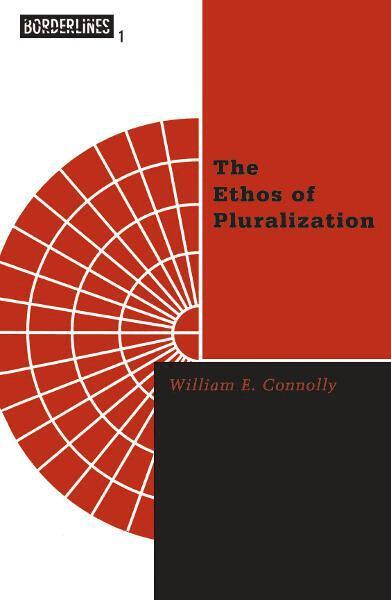
A skeptical examination of the inclusiveness of pluralism.How plural, really, is pluralism today? In this book a prominent political theorist reworks the traditional pluralist imagination, rendering it more inclusive and responsive to new drives to pluralization. Traditional pluralism, William E. Connolly shows, gives too much priority to past political settlements, allotments of public space and power relations already made and fixed. It deflates the politics of pluralization. The Ethos of Pluralization explores the constitutive tension between pluralism and pluralization, pursuing an ethos of politics that enables new forces of pluralization to find receptive responses in public life. Connolly explores how contemporary drives to pluralize stir the reactionary forces of political fundamentalism and how fundamentalism generates the cultural fragmentation it purports to resist. The reluctance of traditional pluralists to address the tension between pluralism and pluralization plays into the hands of fundamentalist forces. The Ethos of Pluralization eventually ranges beyond the borders of the territorial state to explore relations between the globalization of economic life and a more adventurous pluralization of political identities. Engaging images of pluralism and nationalism advanced by Tocqueville, Schumpeter, Ricoeur, Walzer, Herz, and Kurth, Connolly draws selectively upon Nietzsche, Foucault, Butler and Deleuze to delineate an ethos of politics that makes for new identities while protecting conditions that make pluralism and governance possible.
341 kr
Skickas inom 10-15 vardagar
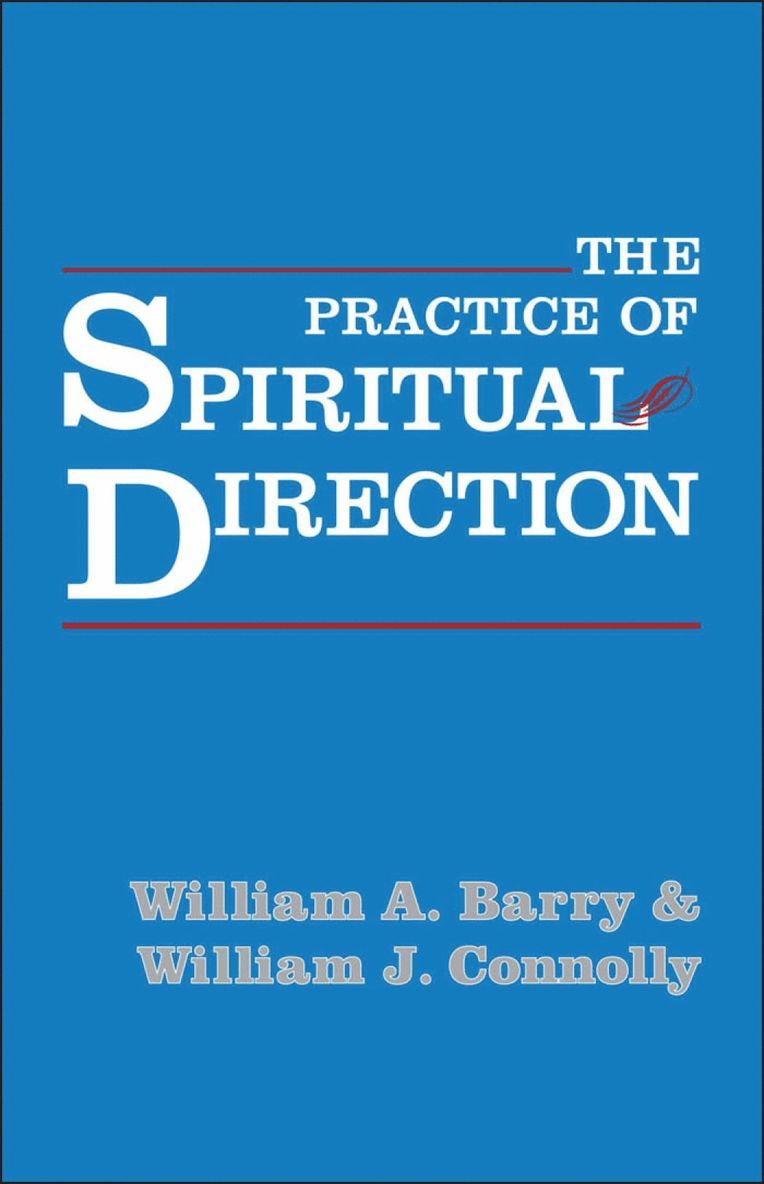
The classic work on helping people become closer to God. Fathers Barry and Connolly see the work of spiritual direction as helping people to develop their relationship with God. In thinking and practice they have absorbed the insights of modern psychotherapy, but have not been absorbed by them. This highly practical book reflects the authors' experience at the Center for Religious Development in Cambridge, Massachusetts, where spiritual direction is available and where directors are trained.
2 103 kr
Skickas inom 10-15 vardagar
The theory of democratic pluralism has long provided the dominant ideal and description of politics in industrial societies with competing party systems. The purpose of this classic collection, including some of the leading theorists of the late 1960s, is to subject this theory to systematic scrutiny. The authors examine the work of such pluralists as Robert Dahl, David Truman, Adolf Berle, Arthur Bentley, Joseph Schumpeter, and Walter Lippmann, as well as of such critics of pluralist theory as C. Wright Mills, Herbert Marcuse, Henry Kariel, and Grant McConnell.Voicing the respective points of view of science, economics, philosophy, and psychology, the authors converge in their agreement that the conventional, pluralist interpretation of contemporary politics requires significant revision. The views of these diverse critics coalesce into the outline of what they see as a more enlightened political ideal and a more relevant descriptive theory. This collective portrait offers a provocatively new interpretative framework for the understanding of the politics of contemporary industrial society.Connolly includes a sophisticated discussion of such concepts as power, decision-making, politics, and interest groups and devotes considerable attention to the need to promote positive change, particularly where the pluralist system shows bias against certain segments of society as well as against some dimensions of social life affecting everyone's existence in the society. Intended for use in Comparative Government, Contemporary Political Theory, Political Parties and Pressure Groups, and advanced courses in American Government, this volume remains a challenging resource for those dealing with the nature and possible change of the organization of contemporary democratic society.
2 103 kr
Skickas inom 10-15 vardagar
Professor David Kettler commented at the time of initial release, that this book is "writing with great poise and clarity, the author says important things in a deceptively simple way about a problem of paramount significance. A fine piece of clarification, blending just the right mixture of respect and impiety toward the important heroes of contemporary political science, this is the kind of book I look forward to having available for our courses in political theory."Ideology, though long pronounced moribund, continues to play a central role in contemporary political inquiry. In this reevaluation of the true function of political science, the author lays down guidelines for the construction of fruitful political interpretations in the large areas where ideological assumptions and claims cannot be adequately tested. He analyzes two representative theories of power in American society-those of the "pluralists" who affirm and the "elitists" who dispute the case for democracy-and demonstrates how personal preferences and group-oriented interests enter into the development of these concepts. Speaking to all social scientists and students engaged in the study of political processes, Connolly details the methods by which the investigator-who inevitably brings his own beliefs and values to the task-can lay bare and control the ideological aspects of his own work and that of others.A critical examination of the writings of some of the leading figures in recent and contemporary political inquiry, such as Karl Mannheim, C. Wright Mills, Robert Dahl, Daniel Bell, and Seymour Martin Lipset leads him to assign a decisive role for the political scientist in the creation of carefully formulated ideologies. An original mind, drawing upon an exceptionally rich store of knowledge, has here produced an important book which will be of immediate-and challenging-relevance to the work and studies of all scholars, graduate students, and majors in the field of government and to all concerned with fundamental problems in social science.William E. Connolly was Professor of Political Science at Ohio University. He has held a Horace Rackham Graduate Fellowship and has taught at the University of Michigan, where he received his undergraduate and graduate training in political and social science. He is currently Krieger-Eisenhower Professor of Political Science at John Hopkins University.
271 kr
Skickas inom 5-8 vardagar
198 kr
Skickas inom 5-8 vardagar
207 kr
Skickas inom 10-15 vardagar
The practice of spiritual direction is a large part of the faith journey for many people. This study looks at the actuality of spiritual direction in concrete terms.