William F. Wright – författare
Visar alla böcker från författaren William F. Wright. Handla med fri frakt och snabb leverans.
3 produkter
3 produkter
1 482 kr
Tillfälligt slut
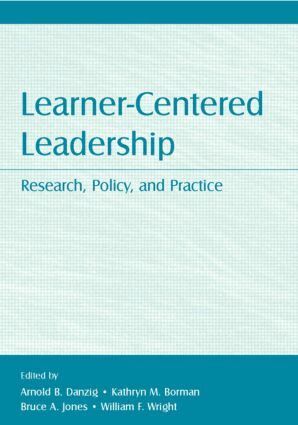
Many new approaches to school improvement are being proposed in the current climate of assessment and school accountability. This book explores one of these approaches, a new model of leadership training known as Learner-Centered Leadership (LCL). It is built around the fundamental idea that learning and learning communities are natural processes that, when properly harnessed, can lead to the highest levels of professional engagement and problem solving. Key features of this exciting new approach to school leadership include the following:Broad-based and Generative—The book’s narratives vividly illustrate the extraordinary ability of LCL to generate new approaches to leadership development. For example, encouraging and assisting school leaders to reflect on their own leadership attributes relative to the implementation of the school mission to ensure high teacher efficacy and student learning. In this respect the volume contributes significantly to the field of school leadership and professional development by extending above and beyond a narrow focus on instructional leadership. Practice Oriented—By creating communities that encourage conversation and analysis the new data-driven models of school improvement are more likely to be successfully implemented. Without analytical discourse, the process of interpreting school data and transforming it into practice would be largely lost. Conceptually Appropriate—The realization that everyone within a school (students, teachers, administrators) belongs to the same learning community minimizes status differences and encourages teamwork. The LCL administrator is much less likely to be authoritarian and power-oriented and much more likely to be transformative and student outcome focused. This book is appropriate for master’s level courses and certification seminars, and for inservice workshops dealing with school leadership.
825 kr
Skickas inom 10-15 vardagar
Many new approaches to school improvement are being proposed in the current climate of assessment and school accountability. This book explores one of these approaches, a new model of leadership training known as Learner-Centered Leadership (LCL). It is built around the fundamental idea that learning and learning communities are natural processes that, when properly harnessed, can lead to the highest levels of professional engagement and problem solving. Key features of this exciting new approach to school leadership include the following:Broad-based and Generative—The book’s narratives vividly illustrate the extraordinary ability of LCL to generate new approaches to leadership development. For example, encouraging and assisting school leaders to reflect on their own leadership attributes relative to the implementation of the school mission to ensure high teacher efficacy and student learning. In this respect the volume contributes significantly to the field of school leadership and professional development by extending above and beyond a narrow focus on instructional leadership. Practice Oriented—By creating communities that encourage conversation and analysis the new data-driven models of school improvement are more likely to be successfully implemented. Without analytical discourse, the process of interpreting school data and transforming it into practice would be largely lost. Conceptually Appropriate—The realization that everyone within a school (students, teachers, administrators) belongs to the same learning community minimizes status differences and encourages teamwork. The LCL administrator is much less likely to be authoritarian and power-oriented and much more likely to be transformative and student outcome focused. This book is appropriate for master’s level courses and certification seminars, and for inservice workshops dealing with school leadership.
765 kr
Skickas inom 5-8 vardagar
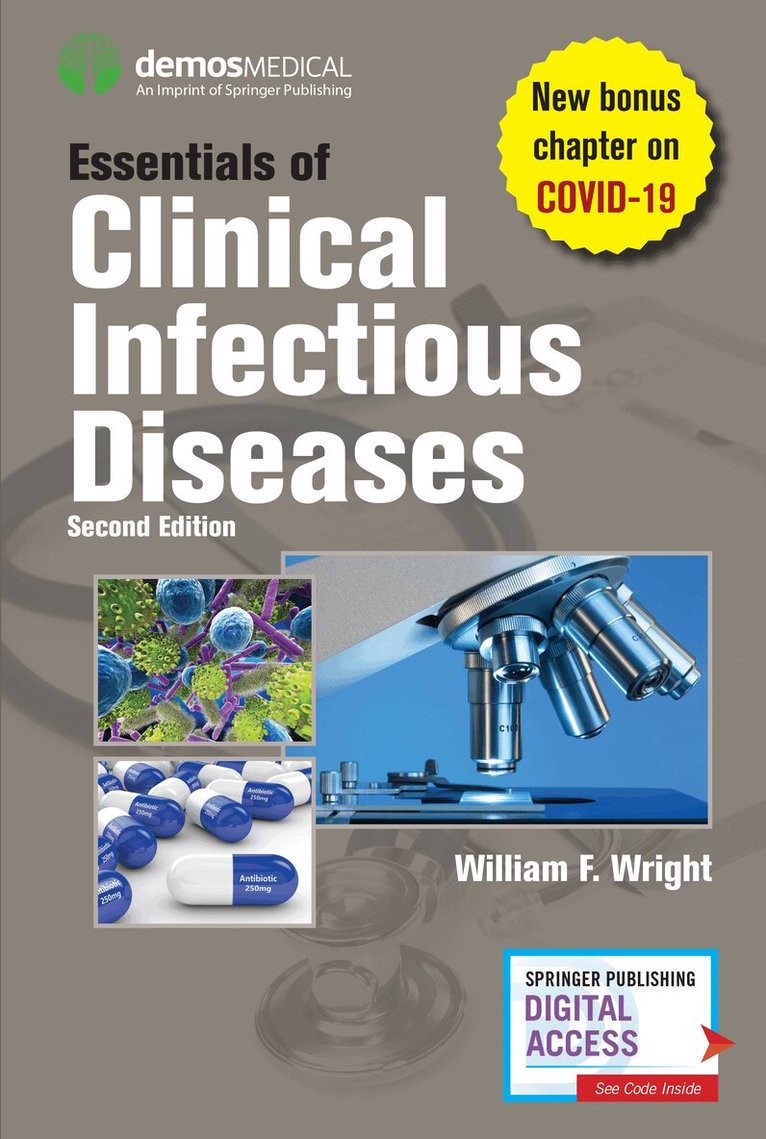
Praise for the previous edition:“Approaches near perfection…This is an excellent introduction to infectious diseases by a group of authors who take a straightforward and bullet-point approach to thinking and talking about clinical issues…”—Doody’s ReviewsUpdated second edition of the concise but comprehensive handbook of clinical infectious disease for students, residents, primary care medical providers, nurses, and PAs. Written in outline format with short, focused chapters, the book presents a systematic method for understanding basic mechanisms, establishing a diagnosis, and implementing appropriate treatment for commonly encountered problems.Essentials of Clinical Infectious Diseases, Second Edition begins with a general framework covering clinical reasoning, antimicrobial agents and microbiology, and antimicrobial stewardship. Individual chapters devoted to the broad range of infectious diseases are organized by body system and feature targeted presentation of pathogenesis and risk factors, microbial causes, clinical manifestations, patient work-up, diagnostic criteria, and medical, antimicrobial, and surgical management. The book also addresses important related topics including fever and neutropenia, approach to evaluating ectoparasite-related infections, sepsis and travel medicine, infection control, and hospital epidemiology. Designed for busy practitioners at any level looking to sharpen the clinical problem-solving skills required to provide the highest quality care to patients with infectious diseases.Key Features:Includes a new bonus chapter that addresses severe acute respiratory syndrome coronavirus 2 (SARS-CoV-2), also known as coronavirus disease 2019 (COVID-19)Presents core clinical infectious disease topics in concise easy-to-read formatRevised and updated to reflect recent developments in the field consistent with evidence-based literature and current clinical practice guidelinesSix new chapters on Lyme disease, anorectal infections, travel medicine, dental infections, antimicrobial stewardship, and clinical reasoning and statisticsFocus on the approach to evaluation and management of the patientIncorporates essential antimicrobial therapy information with adult, pediatric, and OB-GYN dosing considerations