William Facey - Böcker
Visar alla böcker från författaren William Facey. Handla med fri frakt och snabb leverans.
2 produkter
2 produkter
356 kr
Skickas
The French-Alsatian geographer, Charles Huber (1847-84) achieved fame as one of the 19th century's great Arabian explorers. During his two heroic journeys between 1880 and 1884, he pioneered the scientific mapping of inland Arabia and made some of the earliest records of ancient North Arabian inscriptions and rock art. His tragic murder in 1884 meant that he published little and the only connected narrative that he managed to write was of his first journey in 1880-81. This highly significant document of Arabian exploration has not been published since 1885 and is presented here for the first time in English translation. Despite Huber's great posthumous reputation, almost nothing has been written about him. William Facey's biographical introduction fills this void, revealing much that was hitherto unknown about Huber's complex and risk-taking personality and his colourful life as a fervent French patriot coming of age in Strasbourg during a time of Franco-German conflict. New light is shed on the dates and itinerary of Huber's first Arabian journey, an epic quest of some 5,000 kilometres on camelback requiring immense fortitude. He used Ha'il as a base before travelling with the pilgrim caravan to Iraq and then to Syria. The focus then shifts to his return to Arabia in 1883 with Julius Euting, the eminent German Semitist and the twists and turns of their unsuccessful collaboration.Having parted company with Euting at the great Nabataean site of Mada'in Salih in the northern Hijaz, Huber returned to central Arabia before making a dangerous journey to Jeddah. He was murdered shortly after on 29 July 1884 by his guides on the Red Sea coast. Finally, the affair of the Tayma Stele—the celebrated Aramaic inscription now in the Musée du Louvre— comes under the spotlight. In a new analysis of this notorious Franco-German imbroglio, the prevailing idea that Huber first saw it in 1880 is held up to scrutiny and Euting at last given his due for its discovery in 1884.
1 487 kr
Skickas
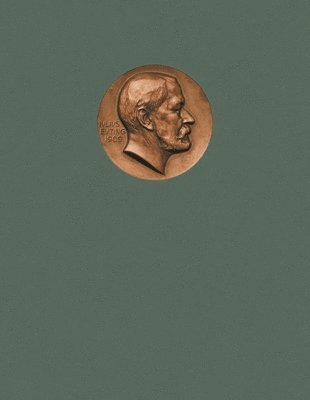
Julius Euting (1839–1913), a pioneering German scholar, made significant contributions to Punic, Hebrew, and Aramaic studies. After moving to Strasbourg in 1872, Euting embarked on a perilous 1883 expedition to northern Arabia with Charles Huber, aiming to collect ancient texts and investigate archaeological sites. Despite a strained relationship, Euting’s detailed notebooks, rich with observations, anecdotes, and original watercolours, provide a crucial record of Aramaic and Nabataean inscriptions. This book presents Euting’s work in English for the first time, featuring his artwork and William Facey's introduction, which re-evaluates Euting’s role in the discovery of the Tayma Stele and contextualises his journey in 19th-century Arabian exploration.