William H. Foege - Böcker
Visar alla böcker från författaren William H. Foege. Handla med fri frakt och snabb leverans.
6 produkter
6 produkter
Del 21 - California/Milbank Books on Health and the Public
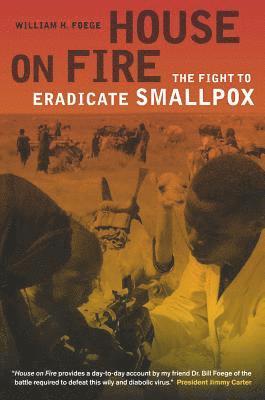
House on Fire
The Fight to Eradicate Smallpox
Inbunden, Engelska, 2011
453 kr
Skickas inom 7-10 vardagar
A story of courage and risk-taking, "House on Fire" tells how smallpox, a disease that killed, blinded, and scarred millions over centuries of human history, was completely eradicated in a spectacular triumph of medicine and public health. Part autobiography, part mystery, the story is told by a man who was one of the architects of a radical vaccination scheme that became a key strategy in ending the horrible disease when it was finally contained in India. In "House on Fire", William H. Foege describes his own experiences in public health and details the remarkable program that involved people from countries around the world in pursuit of a single objective - eliminating smallpox forever. Rich with the details of everyday life, as well as a few adventures, "House on Fire" gives an intimate sense of what it is like to work on the ground in some of the world's most impoverished countries - and tells what it is like to contribute to programs that really do change the world.
Del 21 - California/Milbank Books on Health and the Public
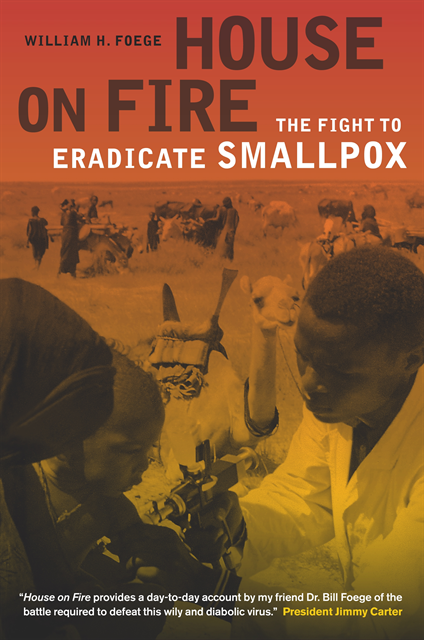
House on Fire
The Fight to Eradicate Smallpox
Häftad, Engelska, 2011
210 kr
Skickas inom 7-10 vardagar
A story of courage and risk-taking, "House on Fire" tells how smallpox, a disease that killed, blinded, and scarred millions over centuries of human history, was completely eradicated in a spectacular triumph of medicine and public health. Part autobiography, part mystery, the story is told by a man who was one of the architects of a radical vaccination scheme that became a key strategy in ending the horrible disease when it was finally contained in India. In "House on Fire", William H. Foege describes his own experiences in public health and details the remarkable program that involved people from countries around the world in pursuit of a single objective - eliminating smallpox forever. Rich with the details of everyday life, as well as a few adventures, "House on Fire" gives an intimate sense of what it is like to work on the ground in some of the world's most impoverished countries - and tells what it is like to contribute to programs that really do change the world.
821 kr
Skickas inom 7-10 vardagar
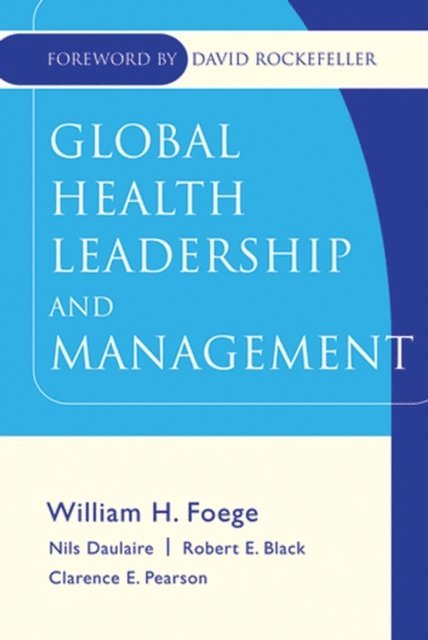
Written by an international panel of distinguished global health experts, this book distills valuable lessons from a wide variety of successful health programs that have been implemented around the world. Global Health Leadership and Management gives practical suggestions for enhancing and developing the essential skills of leadership, management, communication, and project planning for health care leaders. The book will assist health leaders to work well within their communities and effectively plan, direct, implement, and evaluate effective programs and activities. Global Health Leadership and Management outlines and describes such core competencies as Identifying challenges and developing and managing policyDeveloping strategies, pathways, and solutionsCreating networks and partnerships and planning for changeLearning from experience to build a generation of leadersLeading and managing teams by recognizing and celebrating success
272 kr
Skickas inom 7-10 vardagar
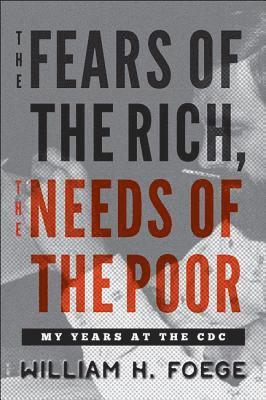
William H. Foege, one of the most respected leaders in global public health, takes readers on a tour of his time at the CDC.In its seventy years, the Centers for Disease Control and Prevention (CDC) has evolved from a malaria control program to an institution dedicated to improving health for all people across the world. The Fears of the Rich, The Needs of the Poor is a revealing account of the CDC’s development by its former director, public health luminary William H. Foege.Dr. Foege tells the stories of pivotal moments in public health, including the eradication of smallpox (made possible due in part to Foege’s research) and the discovery of Legionnaires’ disease, Reye syndrome, toxic shock syndrome, and HIV/AIDS. With good humor and optimism, he recounts the various crises he surmounted, from threats of terrorist attacks to contentious congressional hearings and funding cuts. Highlighting the people who made possible some of public health’s biggest successes, Foege outlines the work required behind the scenes and describes the occasional tensions between professionals in the field and the politicians in charge of oversight. In recent years, global public health initiatives have come from unanticipated sources. Giants in the field now include President Jimmy Carter and his wife, Rosalynn, who promote programs aimed at neglected diseases. Melinda and Bill Gates have invigorated the field through research and direct program support, especially in the area of vaccine-preventable diseases. And the Merck Mectizan program has dramatically reduced river blindness in Africa. Foege has been involved in all of these efforts, among others, and he brings to this book the knowledge and wisdom derived from a long and accomplished career. The Fears of the Rich, The Needs of the Poor is an inviting but unvarnished account of that career and offers a plethora of lessons for those interested in public health.
275 kr
Tillfälligt slut
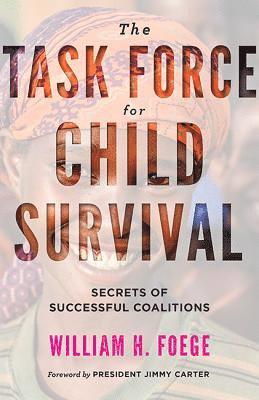
How did coalition-building give rise to the incredible achievements of the Task Force for Childhood Survival?Dr. Bill Foege, one of the best-known names in global health, brings readers to the table during the creation of one of the world’s most famous and successful global health efforts—the Task Force for Child Survival.In 1984, the US immunization program was so successful that many childhood diseases were at record lows—yet 40,000 children a day were dying around the world from preventable diseases. That year, Dr. Foege, former director of the Centers for Disease Control and Prevention, came together with Jonas Salk, Robert McNamara, and representatives from UNICEF, the World Health Organization, the World Bank, the United Nations Development Programme, and the Rockefeller Foundation to see how some of the lessons learned in America could be applied to global programs. The assembled participants recommended the formation of a small task force to help UN agencies improve immunization coverage. They dubbed it the Task Force for Child Survival and installed Foege as its first leader.In this book, Dr. Foege describes the task force from its conception through its landmark success. Over its first six years, as more resources were allocated to the task force, immunization coverage climbed from approximately 15 percent of the world’s children for some vaccines to 80 percent of the world’s children for at least one vaccine. UNICEF head Jim Grant called it the greatest peacetime endeavor the world had ever seen. How did this small, independent, low-profile group leverage change in the largest of global health agencies? Foege dissects each element for clues as to why the task force was able to accomplish so much so quickly, ultimately concluding that coalition-building played a major role and explaining how to strengthen coalitions by scrupulously avoiding the turf guarding and credit seeking that are so common to international endeavors.Inspiring and accessible, this brief book combines the distilled advice of one of global health's major leaders with the history of an iconic public health program.
385 kr
Skickas inom 7-10 vardagar
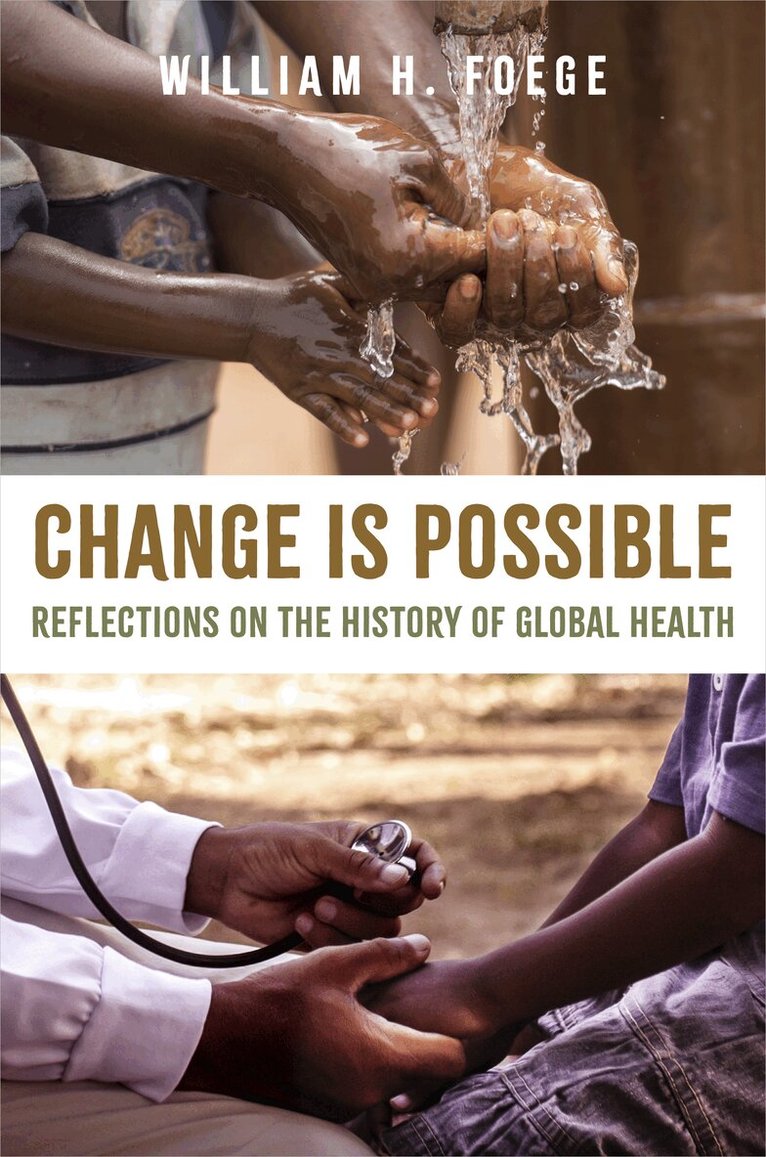
A groundbreaking new history of global health from one of the greatest leaders in the field.In Change Is Possible, public health legend William H. Foege and five coauthors chronicle the failures and successes of global health through the modern age, including the massive impacts of colonialism, religious groups, philanthropies, politics, NGOs, and more.Foege, who has served in local, national, and international public health contexts—including as the director of the Centers for Disease Control and Prevention—is uniquely qualified to reflect on the history of global health. He and his Rollins School of Public Health coauthors explain why colonialism has been the greatest disaster for global health, whereas military medicine may have been its greatest asset. From the rapid development of NGOs to the impact of pharmaceutical companies over the last 35 years to the hybrid programs that are now responsible for innovative contributions, the authors discuss multiple impacts on global health. In chapters with coauthors Paul Elish, Alison T. Hoover, Madison Gabriella Lee, Deborah Chen Tseng, and Kiera Chan, Foege explores additional essential topics such as the legacy of colonialism in global health, early philanthropy versus new philanthropy, and how to promote positive change. Foege also shares critical lessons from the smallpox campaign—a disease he helped eradicate—and how these historical lessons can be applied in global health work today.The book's research and reflections make this an essential book for students and readers interested in global health. In a narrative that is both deeply personal and universal, Foege shares lessons learned and personal experiences that craft a strikingly new history of global health.