William H. Sewell Jr. – författare
Visar alla böcker från författaren William H. Sewell Jr.. Handla med fri frakt och snabb leverans.
6 produkter
6 produkter
366 kr
Skickas inom 7-10 vardagar
While social scientists and historians have been exchanging ideas for a long time, they have never developed a proper dialogue about social theory. William H. Sewell Jr. observes that on questions of theory the communication has been mostly one way: from social science to history. Logics of History argues that both history and the social sciences have something crucial to offer each other. While historians do not think of themeselves as theorists, they know something social scientists do not: how to think about the temporalities of social life. On the other hand, while social scientists' treatments of temporality are usually clumsy, their theoretical sophistication and penchant for structural accounts of social life could offer much to historians. Renowned for his work at the crossroads of history, sociology, political science, and anthropology, Sewell argues that only by combining a more sophisticated understanding of historical time with a concern for larger theoretical questions can a satisfying social theory emerge.In Logics of History, he reveals the shape such an engagement could take, some of the topics it could illuminate, and how it might affect both sides of the disciplinary divide.
1 025 kr
Skickas inom 7-10 vardagar
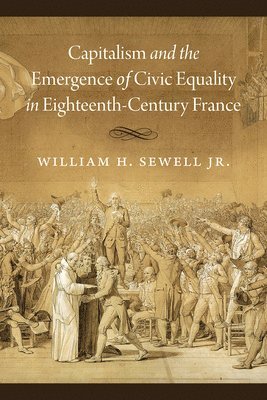
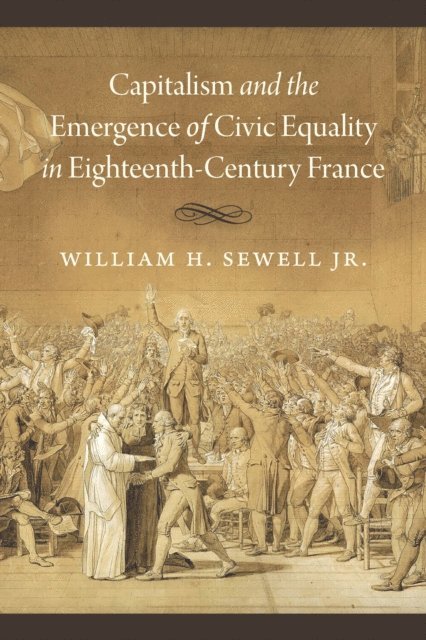
There is little doubt that the French Revolution of 1789 changed the course of Western history. But why did the idea of civic equality—a distinctive signature of that revolution—find such fertile ground in France? How might changing economic and social realities have affected political opinions? William H. Sewell Jr. argues that the flourishing of commercial capitalism in eighteenth-century France introduced a new independence, flexibility, and anonymity to French social life. By entering the interstices of this otherwise rigidly hierarchical society, expanded commodity exchange colored everyday experience in ways that made civic equality thinkable, possible, even desirable, when the crisis of the French Revolution arrived. Sewell ties together masterful analyses of a multitude of interrelated topics: the rise of commerce, the emergence of urban publics, the careers of the philosophes, commercial publishing, patronage, political economy, trade, and state finance. Capitalism and the Emergence of Civic Equality in Eighteenth-Century France offers an original interpretation of one of history’s pivotal moments.
317 kr
Skickas inom 7-10 vardagar
There is little doubt that the French Revolution of 1789 changed the course of Western history. But why did the idea of civic equality—a distinctive signature of that revolution—find such fertile ground in France? How might changing economic and social realities have affected political opinions? William H. Sewell Jr. argues that the flourishing of commercial capitalism in eighteenth-century France introduced a new independence, flexibility, and anonymity to French social life. By entering the interstices of this otherwise rigidly hierarchical society, expanded commodity exchange colored everyday experience in ways that made civic equality thinkable, possible, even desirable, when the crisis of the French Revolution arrived. Sewell ties together masterful analyses of a multitude of interrelated topics: the rise of commerce, the emergence of urban publics, the careers of the philosophes, commercial publishing, patronage, political economy, trade, and state finance. Capitalism and the Emergence of Civic Equality in Eighteenth-Century France offers an original interpretation of one of history’s pivotal moments.
360 kr
Skickas inom 7-10 vardagar
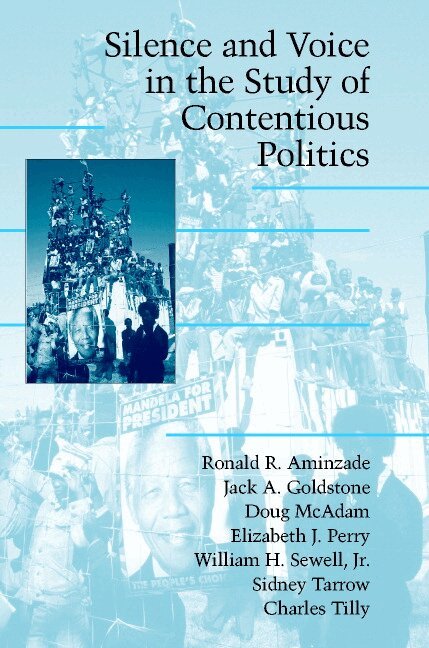
The aim of this book is to highlight and begin to give 'voice' to some of the notable 'silences' evident in recent years in the study of contentious politics. The seven co-authors take up seven specific topics in the volume: the relationship between emotions and contention; temporality in the study of contention; the spatial dimensions of contention; leadership in contention; the role of threat in contention; religion and contention; and contention in the context of demographic and life-course processes. The seven spent three years involved in an ongoing project designed to take stock, and attempt a partial synthesis, of various literatures that have grown up around the study of non-routine or contentious politics. As such, it is likely to be viewed as a groundbreaking volume that not only undermines conventional disciplinary understanding of contentious politics, but also lays out a number of provocative new research agendas.
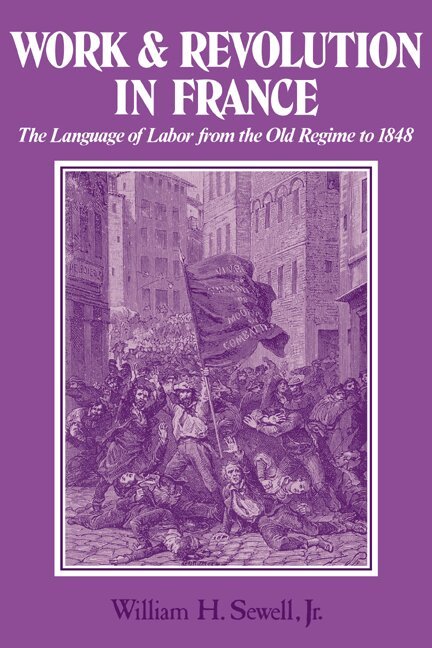
Work and Revolution in France
The Language of Labor from the Old Regime to 1848
Häftad, Engelska, 1980
370 kr
Skickas inom 7-10 vardagar
Work and Revolution in France is particularly appropriate for students of French history interested in the crucial revolutions that took place in 1789, 1830, and 1848. Sewell has reconstructed the artisans' world from the corporate communities of the old regime, through the revolutions in 1789 and 1830, to the socialist experiments of 1848. Research has revealed that the most important class struggles took place in craft workshops, not in 'dark satanic mills'. In the 1830s and 1840s, workers combined the collectivism of the corporate guild tradition with the egalitarianism of the revolutionary tradition, producing a distinct artisan form of socialism and class consciousness that climaxed in the Parisian Revolution of 1848. The book follows artisans into their everyday experience of work, fellowship, and struggles and places their history in the context of wider political, economic, and social developments. Sewell analyzes the 'language of labor' in the broadest sense, dealing not only with what the workers and others wrote and said about labour but with the whole range of institutional conventions, economic practices, social struggles, ritual gestures, customs, and actions that gave the workers' world a comprehensive shape.
1 034 kr
Skickas inom 7-10 vardagar
The aim of this book is to highlight and begin to give 'voice' to some of the notable 'silences' evident in recent years in the study of contentious politics. The seven co-authors take up seven specific topics in the volume: the relationship between emotions and contention; temporality in the study of contention; the spatial dimensions of contention; leadership in contention; the role of threat in contention; religion and contention; and contention in the context of demographic and life-course processes. The seven spent three years involved in an ongoing project designed to take stock, and attempt a partial synthesis, of various literatures that have grown up around the study of non-routine or contentious politics. As such, it is likely to be viewed as a groundbreaking volume that not only undermines conventional disciplinary understanding of contentious politics, but also lays out a number of provocative new research agendas.