William L. Jungers – författare
Visar alla böcker från författaren William L. Jungers. Handla med fri frakt och snabb leverans.
4 produkter
4 produkter
Inbunden, Engelska, 2014
407 kr
Skickas inom 5-8 vardagar
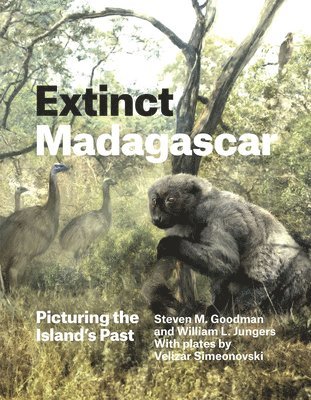
The landscapes of Madagascar have long delighted zoologists, who have discovered, in and among the island's baobad trees and thickets, a dizzying array of animals, including something approaching one hundred species of lemur. Madagascar's mammal fauna, for example, is far more diverse, and more endemic, than early explorers and naturalists ever dreamed of. But in the 2,500 or so years since the arrival of the island's first human settlers, the vast majority of its forests have disappeared, and in the wake of this loss a number of species unique to Madagascar have vanished forever into extinction. In Extinct Madagascar, noted scientists Steven M. Goodman and William L. Jungers explore the recent past of these land animal extinctions. Beginning with an introduction to the geologic and ecological history of Madagascar that provides context for the evolution, diversification, and, in some cases, rapid decline of the Malagasy fauna, Goodman and Jungers then seek to recapture these extinct mammals in their environs.Aided in their quest by artist Velizar Simeonovski's beautiful and haunting paintings - images of both individual species and ecosystem assemblages reproduced here in full color - Goodman and Jungers reconstruct the lives of these lost animals and trace their relationships to those still living. Published in conjunction with an exhibition of Simeonovski's paintings set to open at the Field Museum, Chicago, in the fall of 2014, Goodman and Jungers' awe-inspiring book will serve not only as a sobering reminder of the very real threat of extinction, but also as a stunning tribute to Madagascar's biodiversity and a catalyst for further research and conservation.
Inbunden, Engelska, 2001
1 633 kr
Skickas inom 10-15 vardagar
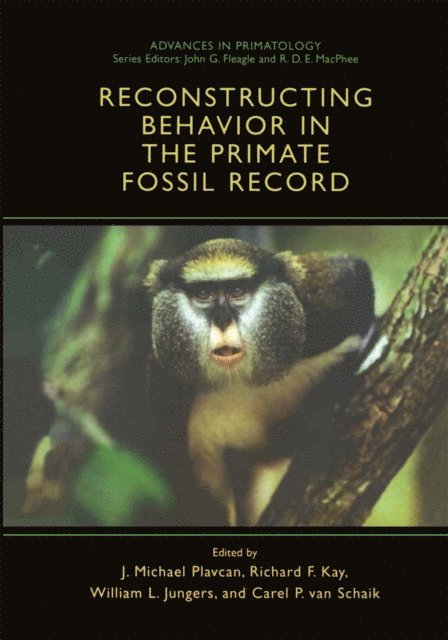
This volume brings together a series of papers that address the topic of reconstructing behavior in the primate fossil record. The literature devoted to reconstructing behavior in extinct species is ovelWhelming and very diverse. Sometimes, it seems as though behavioral reconstruction is done as an afterthought in the discussion section of papers, relegated to the status of informed speculation. But recent years have seen an explosion in studies of adaptation, functional anatomy, comparative sociobiology, and development. Powerful new comparative methods are now available on the internet. At the same time, we face a rapidly growing fossil record that offers more and more information on the morphology and paleoenvironments of extinct species. Consequently, inferences of behavior in extinct species have become better grounded in comparative studies of living species and are becoming increas ingly rigorous. We offer here a series of papers that review broad issues related to reconstructing various aspects of behavior from very different types of evi dence. We hope that in so doing, the reader will gain a perspective on the various types of evidence that can be brought to bear on reconstructing behavior, the strengths and weaknesses of different approaches, and, perhaps, new approaches to the topic. We define behavior as broadly as we can including life-history traits, locomotion, diet, and social behavior, giving the authors considerable freedom in choosing what, exactly, they wish to explore.
Häftad, Engelska, 2012
1 633 kr
Skickas inom 10-15 vardagar
This volume brings together a series of papers that address the topic of reconstructing behavior in the primate fossil record. The literature devoted to reconstructing behavior in extinct species is ovelWhelming and very diverse. Sometimes, it seems as though behavioral reconstruction is done as an afterthought in the discussion section of papers, relegated to the status of informed speculation. But recent years have seen an explosion in studies of adaptation, functional anatomy, comparative sociobiology, and development. Powerful new comparative methods are now available on the internet. At the same time, we face a rapidly growing fossil record that offers more and more information on the morphology and paleoenvironments of extinct species. Consequently, inferences of behavior in extinct species have become better grounded in comparative studies of living species and are becoming increas ingly rigorous. We offer here a series of papers that review broad issues related to reconstructing various aspects of behavior from very different types of evi dence. We hope that in so doing, the reader will gain a perspective on the various types of evidence that can be brought to bear on reconstructing behavior, the strengths and weaknesses of different approaches, and, perhaps, new approaches to the topic. We define behavior as broadly as we can including life-history traits, locomotion, diet, and social behavior, giving the authors considerable freedom in choosing what, exactly, they wish to explore.
E-bok
PDF, Engelska, 20121 977 kr
Läs direkt efter köp
This volume brings together a series of papers that address the topic of reconstructing behavior in the primate fossil record. The literature devoted to reconstructing behavior in extinct species is ovelWhelming and very diverse. Sometimes, it seems as though behavioral reconstruction is done as an afterthought in the discussion section of papers, relegated to the status of informed speculation. But recent years have seen an explosion in studies of adaptation, functional anatomy, comparative sociobiology, and development. Powerful new comparative methods are now available on the internet. At the same time, we face a rapidly growing fossil record that offers more and more information on the morphology and paleoenvironments of extinct species. Consequently, inferences of behavior in extinct species have become better grounded in comparative studies of living species and are becoming increas ingly rigorous. We offer here a series of papers that review broad issues related to reconstructing various aspects of behavior from very different types of evi dence. We hope that in so doing, the reader will gain a perspective on the various types of evidence that can be brought to bear on reconstructing behavior, the strengths and weaknesses of different approaches, and, perhaps, new approaches to the topic. We define behavior as broadly as we can including life-history traits, locomotion, diet, and social behavior, giving the authors considerable freedom in choosing what, exactly, they wish to explore.