William Lockeretz – författare
Visar alla böcker från författaren William Lockeretz. Handla med fri frakt och snabb leverans.
5 produkter
Agriculture and Energy
E-bok, 2012
717 kr
Lägg i varukorg
Agriculture and Energy consists of the proceedings of a conference held at Washington University, St. Louis, Missouri, on June 17-19, 1976. The conference aims to bring together a broad spectrum of researchers concerned with obtaining a better understanding of the energy consumption by agriculture. …
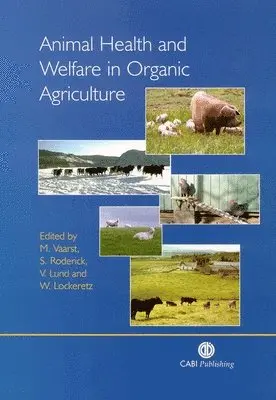
Animal Health and Welfare in Organic Agriculture
Av Mette Vaarst, Stephen Roderick m. fl.
Inbunden, 2003
1782 kr
Lägg i varukorg
The rapid growth of organic farming has been amongst the most remarkable changes in global agriculture in recent decades. Initially, more attention was paid to the crop side of organic systems, but that has now changed and there is greater recognition of the need to understand animal health and …
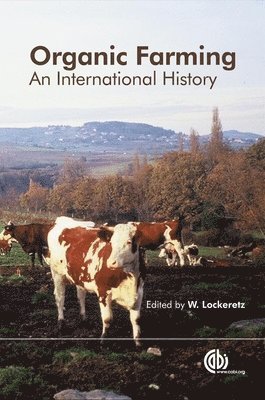
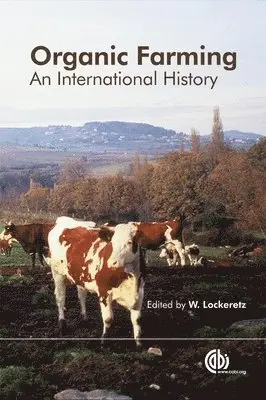
Organic Farming
An International History
Av William Lockeretz, William Lockeretz
Inbunden, 2007
1836 kr
Lägg i varukorg
Beginning as a small protest to the industrialization of agriculture in the 1920s, organic farming has become a significant force in agricultural policy, marketing, and research. No longer dismissed as unscientific and counterproductive, organic techniques are now taken seriously by farmers, …
Agricultural Research Alternatives
Av William Lockeretz, Molly D. Anderson
Inbunden, 1993
566 kr
Tillfälligt slut
Clearly, the debate is no longer over agricultural sustainability as a legitimate goal, but about how to fulfill that goal. Research is a vital factor contributing to the creation of a sustainable agriculture. Entrenched ideas about the way agricultural research is conducted have been challenged by …
Organic Farming
An International History
Av William Lockeretz, William Lockeretz
Häftad, 2011
633 kr
Tillfälligt slut
Beginning as a small protest to the industrialization of agriculture in the 1920s, organic farming has become a significant force in agricultural policy, marketing, and research. No longer dismissed as unscientific and counterproductive, organic techniques are now taken seriously by farmers, …