William M Fox – författare
Visar alla böcker från författaren William M Fox. Handla med fri frakt och snabb leverans.
14 produkter
14 produkter
Häftad, Engelska, 2014
211 kr
Skickas inom 5-8 vardagar
E-bok
Engelska, 201453 kr
Läs direkt efter köp
This book provides a set of proven and easy-to-use procedures for conducting problem-solving meetings more efficiently and productively, with less frustration, effort, and conflict. The effectiveness of conventional meetings is seriously limited by such factors asthe added time required for the use of in-meeting rather than pre-meeting introduction of ideas;meeting time being allocated on the basis of the order in which individuals get the floor, rather than on the relevance and importance of the ideas being presented;an individuals fear of being punished for publicly opposing the ideas of a boss or other important person;reluctance on the part of low-status members to contribute;the pursuit of personal objectives on group time; time required to brief absentees, latecomers, and consultants on what has transpired; andcompulsive talkers.Author William M. Fox presents an approach called the Improved Nominal Group Technique (INGT) that eliminates or minimizes these limitations. He also tests of its use in many different, ongoing groups to show that most participants indicate, anonymously, that they prefer it to what they had been doing.Very interesting and practical It can serve as a handbook for the novice or a reference book for the experienced problem solver.James Showkier, supervisor of Training and Development at TRWThis is a book of basic theoretical importance as well as a manual for practitioners A new and distinctive contribution.Eric Trist, founder of the sociotechnical systems approach to organizational designThis short, highly readable book should find its way into the hands of managers truly willing to tap the wellspring of employee creativity and motivation its prescriptions and recommendations, if followed, could do much to improve organizational productivity.William Werther, Samuel Friedland Professor of Executive Management, University of Miami
Häftad, Engelska, 2000
568 kr
Skickas inom 5-8 vardagar
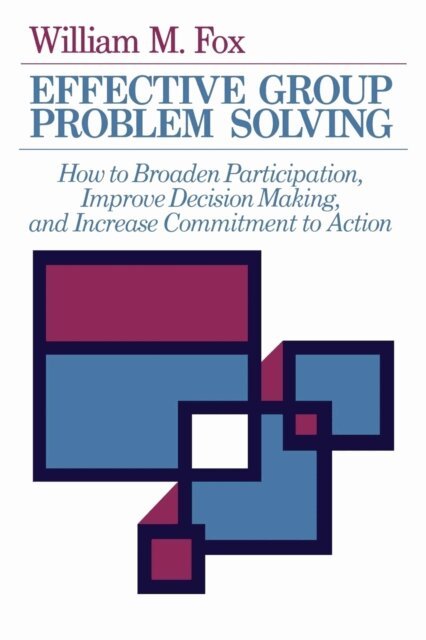
This book provides a set of easy to use and proven techniques and procedures for conducting problem solving meetings more efficiently and productively, with less frustration, effort, and conflict. William M. Fox presents an approach to group problem solving—the Improved Nominal Group Technique (INGT)—that will help minimize or eliminate the common problems, such as personality clashes or wasted time, that are often found in groups. And he demonstrates how this approach will enhance employee involvement, increase productivity, and encourage innovation.Throughout, Fox provides numerous practical suggestions for handling all phases of group problem solving—including how to conduct a meeting, how to keep discussions on track, and how to handle voting. He also describes in detail how to effectively implement the rules and procedures of INGT to achieve such objectives as identifying problems, solving a problem when no standard solution is available, and refining written proposals or other documents. And he discusses how his method encourages full participation by group members and saves valuable meeting time by making use of premeeting preparation. Fox shows how INGT can help improve the competence of group leaders and make it possible for new leaders or new groups to get to work as quickly as possible. And he explains how this approach can be implemented in a broad range of programs and special groups—including quality circles, job redesign teams, program planning groups, confrontation meetings, and conflict resolution teams.
Häftad, Engelska, 2008
634 kr
Skickas inom 5-8 vardagar
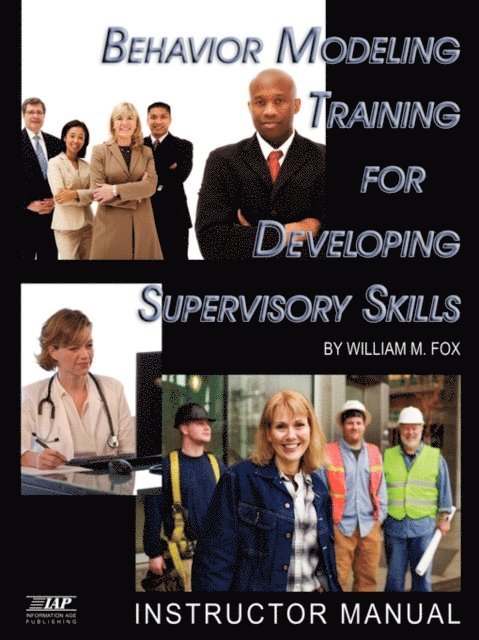
Behavior modeling has been a highly successful training method for centuries. However, refinements based upon extensive research about its components began only recently. This manual presents the fruits of this research, and provides hands-on, proven, detailed instructions for productive implementation. It is designed to be used in conjunction with Behavior Modeling Traning for Developimg Supervisor Skill:Trainee Manual by the same author, which contains multiple copies of various forms that the trainee will use.
Häftad, Engelska, 2009
657 kr
Skickas inom 5-8 vardagar
This Trainee Manual is designed to be used in conjunction with an instructor-directed program based on material in Behavior Modeling Training for Developing Supervisory Skills: Instructor Manual, by the same author.Behavior-modeling training is a form of skill-development training that is distinguished by the manner in which it integrates “knowledge about” and “experience with.” Both of these elements are essential for effective skill training. To illustrate: think of what we must do to master some skill, such as dancing, driving a car, or making a presentation. We must go beyond merely reading about, hearing about, or observing the techniques involved—we must add guided practice, feedback, and adjusted practice.Various sets of learning points—learning-point modules—have been developed for various training needs; such as, for Delegating Work, Handling a Complaining Employee, Handling Insubordination, Giving Recognition, Conducting a Performance— Review Interview, Mediating Between Conflicting Individuals, and so on. Examples of these, along with proecdures for developing new modules, are presented in the Instructor Manual Your initial training will utilize two modules for Dealing With an Individual Performance Problem.
Häftad, Engelska, 2009
709 kr
Skickas inom 5-8 vardagar
(Originally Published in 1963 by R.D. Irwin)The Management Process presents new and traditional subject matter in a diff erent context because it is felt that greater emphasis should be given to the interaction of the management functions. All managers plan, organize, and control the work of others, but not in a simple, sequential pattern. Managing is a continuous operation or process involving the interaction of these functions. Managers must plan for organizing activity, organize for it, and control it, and they must perform these same functions for control. It is felt that practicing managers do, in eff ect, think in these terms. Consequently, an analysis of traditional and other materials in this context should not only be more realistic but also more meaningful to the student or practitioner. Reference to the chapter headings in the Table of Contents will illustrate the way in which this interaction approach provides a basic framework for the organization of this book. As a text this book is intended for a fi rst course in management, or a more advanced course, depending upon the characteristics of the curriculum in which it is used. No specifi c course preparation, however, need be regarded as prerequisite to its use.
E-bok
Engelska, 2009492 kr
Läs direkt efter köp
(Originally Published in 1963 by R.D. Irwin)The Management Process presents new and traditional subject matter in a diff erent context because it is felt that greater emphasis should be given to the interaction of the management functions. All managers plan, organize, and control the work of others, but not in a simple, sequential pattern. Managing is a continuous operation or process involving the interaction of these functions. Managers must plan for organizing activity, organize for it, and control it, and they must perform these same functions for control. It is felt that practicing managers do, in eff ect, think in these terms. Consequently, an analysis of traditional and other materials in this context should not only be more realistic but also more meaningful to the student or practitioner. Reference to the chapter headings in the Table of Contents will illustrate the way in which this interaction approach provides a basic framework for the organization of this book. As a text this book is intended for a fi rst course in management, or a more advanced course, depending upon the characteristics of the curriculum in which it is used. No specifi c course preparation, however, need be regarded as prerequisite to its use.
357 kr
Läs direkt efter köp
Behavior modeling has been a highly successful training method for centuries. However, refinements based upon extensive research about its components began only recently. This manual presents the fruits of this research, and provides hands-on, proven, detailed instructions for productive implementation. It is designed to be used in conjunction with Behavior Modeling Traning for Developimg Supervisor Skill:Trainee Manual by the same author, which contains multiple copies of various forms that the trainee will use.
E-bok
Engelska, 2000408 kr
Läs direkt efter köp
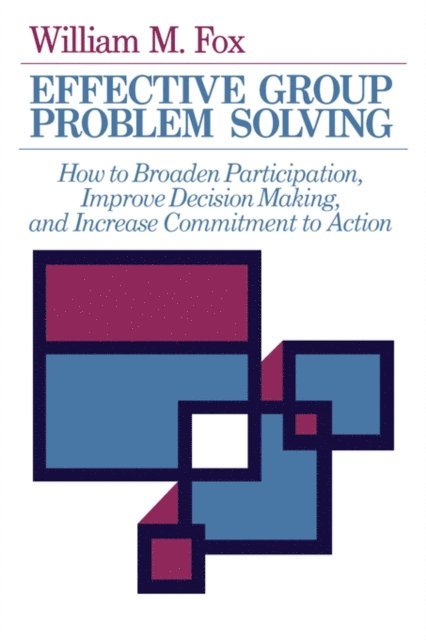
This book provides a set of easy to use and proven techniques and procedures for conducting problem solving meetings more efficiently and productively, with less frustration, effort, and conflict. William M. Fox presents an approach to group problem solving-the Improved Nominal Group Technique (INGT)-that will help minimize or eliminate the common problems, such as personality clashes or wasted time, that are often found in groups. And he demonstrates how this approach will enhance employee involvement, increase productivity, and encourage innovation.Throughout, Fox provides numerous practical suggestions for handling all phases of group problem solving-including how to conduct a meeting, how to keep discussions on track, and how to handle voting. He also describes in detail how to effectively implement the rules and procedures of INGT to achieve such objectives as identifying problems, solving a problem when no standard solution is available, and refining written proposals or other documents. And he discusses how his method encourages full participation by group members and saves valuable meeting time by making use of premeeting preparation. Fox shows how INGT can help improve the competence of group leaders and make it possible for new leaders or new groups to get to work as quickly as possible. And he explains how this approach can be implemented in a broad range of programs and special groups-including quality circles, job redesign teams, program planning groups, confrontation meetings, and conflict resolution teams.
344 kr
Läs direkt efter köp
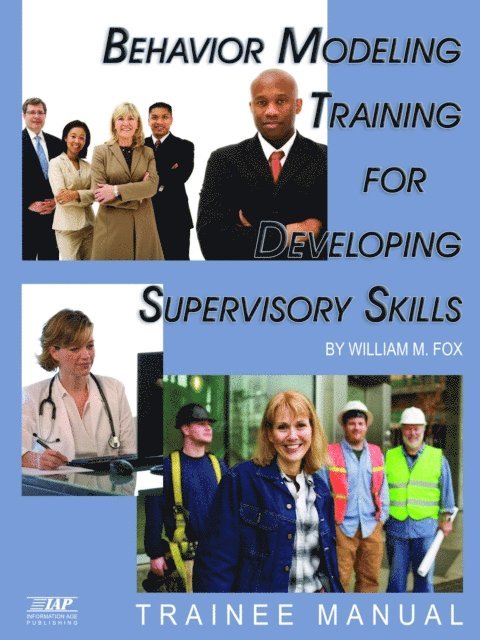
This Trainee Manual is designed to be used in conjunction with an instructor-directed program based on material in Behavior Modeling Training for Developing Supervisory Skills: Instructor Manual, by the same author.Behavior-modeling training is a form of skill-development training that is distinguished by the manner in which it integrates "e;knowledge about"e; and "e;experience with."e; Both of these elements are essential for effective skill training. To illustrate: think of what we must do to master some skill, such as dancing, driving a car, or making a presentation. We must go beyond merely reading about, hearing about, or observing the techniques involved-we must add guided practice, feedback, and adjusted practice.Various sets of learning points-learning-point modules-have been developed for various training needs; such as, for Delegating Work, Handling a Complaining Employee, Handling Insubordination, Giving Recognition, Conducting a Performance- Review Interview, Mediating Between Conflicting Individuals, and so on. Examples of these, along with proecdures for developing new modules, are presented in the Instructor Manual Your initial training will utilize two modules for Dealing With an Individual Performance Problem.
E-bok
Engelska, 2009737 kr
Läs direkt efter köp
(Originally Published in 1963 by R.D. Irwin)The Management Process presents new and traditional subject matter in a diff erent context because it is felt that greater emphasis should be given to the interaction of the management functions. All managers plan, organize, and control the work of others, but not in a simple, sequential pattern. Managing is a continuous operation or process involving the interaction of these functions. Managers must plan for organizing activity, organize for it, and control it, and they must perform these same functions for control. It is felt that practicing managers do, in eff ect, think in these terms. Consequently, an analysis of traditional and other materials in this context should not only be more realistic but also more meaningful to the student or practitioner. Reference to the chapter headings in the Table of Contents will illustrate the way in which this interaction approach provides a basic framework for the organization of this book. As a text this book is intended for a fi rst course in management, or a more advanced course, depending upon the characteristics of the curriculum in which it is used. No specifi c course preparation, however, need be regarded as prerequisite to its use.
516 kr
Läs direkt efter köp
This Trainee Manual is designed to be used in conjunction with an instructor-directed program based on material in Behavior Modeling Training for Developing Supervisory Skills: Instructor Manual, by the same author.Behavior-modeling training is a form of skill-development training that is distinguished by the manner in which it integrates "e;knowledge about"e; and "e;experience with."e; Both of these elements are essential for effective skill training. To illustrate: think of what we must do to master some skill, such as dancing, driving a car, or making a presentation. We must go beyond merely reading about, hearing about, or observing the techniques involved-we must add guided practice, feedback, and adjusted practice.Various sets of learning points-learning-point modules-have been developed for various training needs; such as, for Delegating Work, Handling a Complaining Employee, Handling Insubordination, Giving Recognition, Conducting a Performance- Review Interview, Mediating Between Conflicting Individuals, and so on. Examples of these, along with proecdures for developing new modules, are presented in the Instructor Manual Your initial training will utilize two modules for Dealing With an Individual Performance Problem.
516 kr
Läs direkt efter köp
Behavior modeling has been a highly successful training method for centuries. However, refinements based upon extensive research about its components began only recently. This manual presents the fruits of this research, and provides hands-on, proven, detailed instructions for productive implementation. It is designed to be used in conjunction with Behavior Modeling Traning for Developimg Supervisor Skill:Trainee Manual by the same author, which contains multiple copies of various forms that the trainee will use.
E-bok
Engelska, 2000595 kr
Läs direkt efter köp
This book provides a set of easy to use and proven techniques and procedures for conducting problem solving meetings more efficiently and productively, with less frustration, effort, and conflict. William M. Fox presents an approach to group problem solving-the Improved Nominal Group Technique (INGT)-that will help minimize or eliminate the common problems, such as personality clashes or wasted time, that are often found in groups. And he demonstrates how this approach will enhance employee involvement, increase productivity, and encourage innovation.Throughout, Fox provides numerous practical suggestions for handling all phases of group problem solving-including how to conduct a meeting, how to keep discussions on track, and how to handle voting. He also describes in detail how to effectively implement the rules and procedures of INGT to achieve such objectives as identifying problems, solving a problem when no standard solution is available, and refining written proposals or other documents. And he discusses how his method encourages full participation by group members and saves valuable meeting time by making use of premeeting preparation. Fox shows how INGT can help improve the competence of group leaders and make it possible for new leaders or new groups to get to work as quickly as possible. And he explains how this approach can be implemented in a broad range of programs and special groups-including quality circles, job redesign teams, program planning groups, confrontation meetings, and conflict resolution teams.