William M. Rohe – författare
Visar alla böcker från författaren William M. Rohe. Handla med fri frakt och snabb leverans.
5 produkter
5 produkter
Inbunden, Engelska, 2007
1 139 kr
Skickas inom 10-15 vardagar
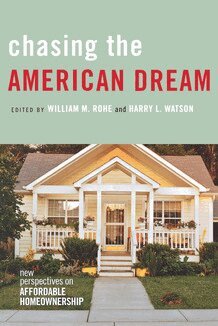
Providing decent, safe, and affordable housing to low- and moderate-income families has been an important public policy goal for more than a century. In recent years there has been a clear shift of emphasis among policymakers from a focus on providing affordable rental units to providing affordable homeownership opportunities. Due in part to programs introduced by the Clinton and Bush administrations, the nation's homeownership rate is currently at an all-time high.Does a house become a home only when it comes with a deed attached? Is participation in the real-estate market a precondition to engaged citizenship or wealth creation? The real estate industry's marketing efforts and government policy initiatives might lead one to believe so. The shift in emphasis from rental subsidies to affordable homeownership opportunities has been justified in many ways. Claims for the benefits of homeownership have been largely accepted without close scrutiny. But is homeownership always beneficial for low-income Americans, or are its benefits undermined by the difficulties caused by unfavorable mortgage terms and by the poor condition or location of the homes bought?Chasing the American Dream provides a critical assessment of affordable homeownership policies and goals. Its contributors represent a variety of disciplinary perspectives and offer a thorough understanding of the economic, social, political, architectural, and cultural effects of homeownership programs, as well as their history. The editors draw together the assessments included in this book to prescribe a plan of action that lays out what must be done to make homeownership policy both effective and equitable.Contributors: Eric S. Belsky, Harvard University; Charles C. Bohl, University of Miami; Rachel G. Bratt, Tufts University; J. Michael Collins, Policy Lab Consulting Group, LLC; Walter Davis, Statistics New Zealand; Mark Duda, Harvard University; Avi Friedman, McGill University; Edward G. Goetz, University of Minnesota; Roberto G. Quercia, University of North Carolina at Chapel Hill; Carolina Katz Reid, Federal Reserve Bank of San Francisco; Nicolas Retsinas, Harvard University; William M. Rohe, University of North Carolina at Chapel Hill; Michael A. Stegman, John D. and Catherine T. MacArthur Foundation; Lawrence J. Vale, Massachusetts Institute of Technology; Shannon Van Zandt, Texas A&M University; Harry L. Watson, University of North Carolina at Chapel Hill
Häftad, Engelska, 2007
480 kr
Skickas inom 10-15 vardagar
Providing decent, safe, and affordable housing to low- and moderate-income families has been an important public policy goal for more than a century. In recent years there has been a clear shift of emphasis among policymakers from a focus on providing affordable rental units to providing affordable homeownership opportunities. Due in part to programs introduced by the Clinton and Bush administrations, the nation's homeownership rate is currently at an all-time high.Does a house become a home only when it comes with a deed attached? Is participation in the real-estate market a precondition to engaged citizenship or wealth creation? The real estate industry's marketing efforts and government policy initiatives might lead one to believe so. The shift in emphasis from rental subsidies to affordable homeownership opportunities has been justified in many ways. Claims for the benefits of homeownership have been largely accepted without close scrutiny. But is homeownership always beneficial for low-income Americans, or are its benefits undermined by the difficulties caused by unfavorable mortgage terms and by the poor condition or location of the homes bought?Chasing the American Dream provides a critical assessment of affordable homeownership policies and goals. Its contributors represent a variety of disciplinary perspectives and offer a thorough understanding of the economic, social, political, architectural, and cultural effects of homeownership programs, as well as their history. The editors draw together the assessments included in this book to prescribe a plan of action that lays out what must be done to make homeownership policy both effective and equitable.Contributors: Eric S. Belsky, Harvard University; Charles C. Bohl, University of Miami; Rachel G. Bratt, Tufts University; J. Michael Collins, Policy Lab Consulting Group, LLC; Walter Davis, Statistics New Zealand; Mark Duda, Harvard University; Avi Friedman, McGill University; Edward G. Goetz, University of Minnesota; Roberto G. Quercia, University of North Carolina at Chapel Hill; Carolina Katz Reid, Federal Reserve Bank of San Francisco; Nicolas Retsinas, Harvard University; William M. Rohe, University of North Carolina at Chapel Hill; Michael A. Stegman, John D. and Catherine T. MacArthur Foundation; Lawrence J. Vale, Massachusetts Institute of Technology; Shannon Van Zandt, Texas A&M University; Harry L. Watson, University of North Carolina at Chapel Hill
E-bok
Engelska, 2012475 kr
Läs direkt efter köp
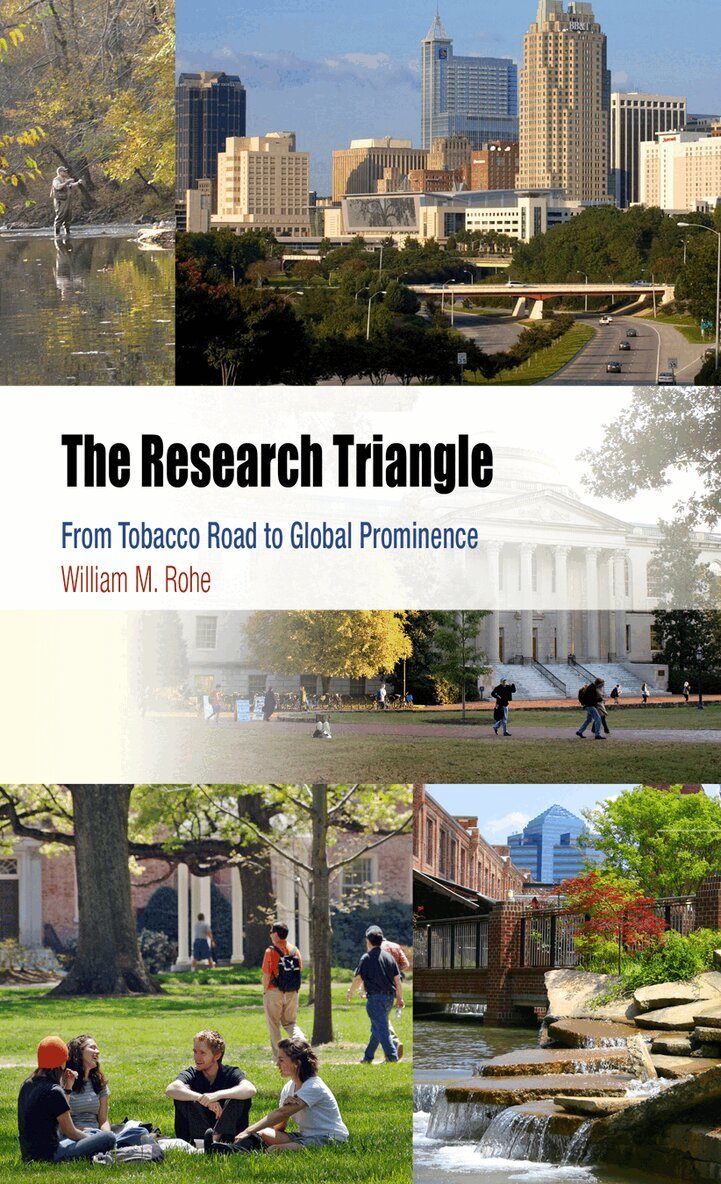
Over the past three decades, the economy of North Carolina's Research Triangle-defined by the cities of Raleigh, Durham, and Chapel Hill-has been transformed from one dependent on agriculture and textiles to one driven by knowledge-based jobs in technology, telecommunications, and pharmaceuticals. Now home to roughly 1.7 million people, the Research Triangle has attracted an influx of new residents from across the country and around the world while continuing to win praise for its high quality of life. At the region's center is the 7,000-acre Research Triangle Park, one of the nation's largest and most prominent research and development campuses. Founded in 1959 through a partnership of local governments, universities, and business leaders, Research Triangle Park has catalyzed the region's rapid growth and hastened its coalescence into a single metropolitan area.The Research Triangle: From Tobacco Road to Global Prominence describes the history, current challenges, and future prospects of this fascinating metropolitan area. Focusing on the personalities and perspectives of key actors in the development of the region, William M. Rohe traces the emergence of the Research Triangle Park and its role in the region's economic transformation. He also addresses some of the downsides of development, illustrating the strains that explosive population growth has placed on the region's school systems, natural resources, transportation infrastructure, and social cohesion. As Rohe shows, the Research Triangle is not a city in the traditional sense but a sprawling conurbation whose rapid, low-density growth and attendant problems are indicative of metropolitan life in much of America today. Although the Triangle's short-term prospects are bright, Rohe warns that troubling issues loom-the region is expected to add nearly a million residents over the next two decades-and will need to be addressed through improvements in governmental cooperation, regional planning, and civic leadership. Finally, the author outlines key lessons that other metropolitan areas can learn from the Research Triangle's dramatic rise to prominence.
E-bok
Engelska, 2017505 kr
Läs direkt efter köp
Neighborhood planning programs involve citizens in developing plans and self-help projects for their neighborhoods through local organizations. They also assist residents in reviewing projects developed by city agencies. Based on a survey of fifty–one neighborhood planning programs and in–depth case studies of Atlanta, Cincinnati, Houston, St. Paul, Wilmington, N.C., and Raleigh, Planning with Neighborhoods offers the first comprehensive description and evaluation of the effectiveness of these programs.Moving beyond theory, this study reviews the actual accomplishments and limitations of neighborhood planning programs and offers specific recommendations for designing a successful program. Included are a thorough history of neighborhood planning programs and an examination of the social, political, and planning theories that support their existence. Eight propositions on the benefits of a neighborood–based approach to planning are derived from this theory and evaluated on the basis of actual experience with this type of program. Speaking to both academics interested in neighborhood issues and planning practitioners, Planning with Neighborhoods concludes with recommendations for establishing effective neighborhood planning programs and improving existing programs.Originally published in 1985.A UNC Press Enduring Edition — UNC Press Enduring Editions use the latest in digital technology to make available again books from our distinguished backlist that were previously out of print. These editions are published unaltered from the original, and are presented in affordable paperback formats, bringing readers both historical and cultural value.
E-bok
PDF, Engelska, 2017387 kr
Läs direkt efter köp
Neighborhood planning programs involve citizens in developing plans and self-help projects for their neighborhoods through local organizations. They also assist residents in reviewing projects developed by city agencies. Based on a survey of fifty–one neighborhood planning programs and in–depth case studies of Atlanta, Cincinnati, Houston, St. Paul, Wilmington, N.C., and Raleigh, Planning with Neighborhoods offers the first comprehensive description and evaluation of the effectiveness of these programs.Moving beyond theory, this study reviews the actual accomplishments and limitations of neighborhood planning programs and offers specific recommendations for designing a successful program. Included are a thorough history of neighborhood planning programs and an examination of the social, political, and planning theories that support their existence. Eight propositions on the benefits of a neighborood–based approach to planning are derived from this theory and evaluated on the basis of actual experience with this type of program. Speaking to both academics interested in neighborhood issues and planning practitioners, Planning with Neighborhoods concludes with recommendations for establishing effective neighborhood planning programs and improving existing programs.Originally published in 1985.A UNC Press Enduring Edition — UNC Press Enduring Editions use the latest in digital technology to make available again books from our distinguished backlist that were previously out of print. These editions are published unaltered from the original, and are presented in affordable paperback formats, bringing readers both historical and cultural value.