William Massman – författare
Visar alla böcker från författaren William Massman. Handla med fri frakt och snabb leverans.
3 produkter
3 produkter
Inbunden, Engelska, 2004
3 016 kr
Skickas inom 10-15 vardagar
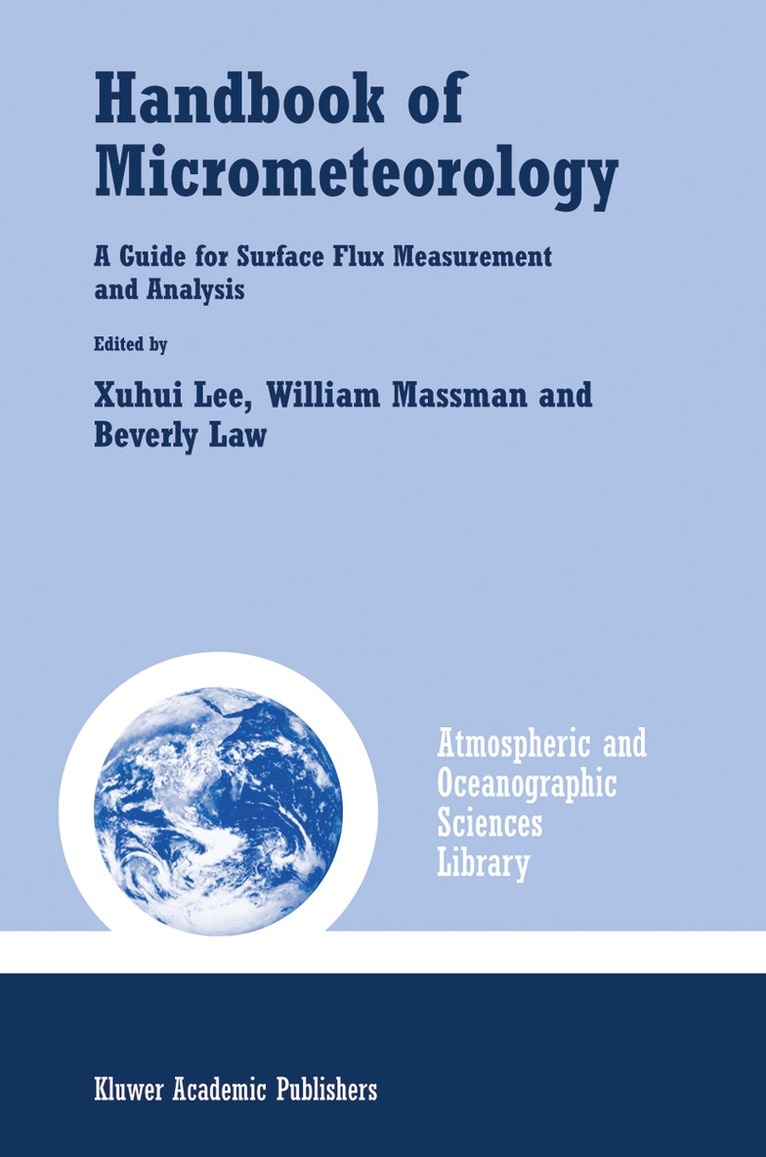
Micrometeorology is a branch of meteorology that is concerned with atmospheric phenomena and processes near the ground at scales of tens of meters to several kilometers. Progress in micrometeorologyismade throughexperimentalinvestigationofthesephenomenaandquantitative studyattemptingtobringordertoexperimentaldata. Studiesofsurfa- air ?ux play a crucial role in this endeavor. The current paradigm of micrometeorology builds on two premises: (i) that scale separation exists so that the microscale phenomena can be treated more or less in isolation of phenomena occurring at larger scales, and (ii) that these phenomena are in?uenced by the surface to such an extent that “external factors” can be ignored. Quantitative studies have been based on the assumption of horizontal homogeneity, which inevitably biases the investigation toward over-idealization of the real world by restricting it to perfectly ?at topography and daytime, fair weather conditions. This bias was noted by John Philip 40 years ago: “Experimenters attempt to avoid [advection] by working on sites downwind of extensive ‘homogeneous’ areas. Sometimes advection is invoked to explain otherwise inexplicable observations...” (J. Meteorol. 16, 535).
E-bok
PDF, Engelska, 20063 748 kr
Läs direkt efter köp
Micrometeorology is a branch of meteorology that is concerned with atmospheric phenomena and processes near the ground at scales of tens of meters to several kilometers. Progress in micrometeorologyismade throughexperimentalinvestigationofthesephenomenaandquantitative studyattemptingtobringordertoexperimentaldata. Studiesofsurfa- air ?ux play a crucial role in this endeavor. The current paradigm of micrometeorology builds on two premises: (i) that scale separation exists so that the microscale phenomena can be treated more or less in isolation of phenomena occurring at larger scales, and (ii) that these phenomena are in?uenced by the surface to such an extent that “external factors” can be ignored. Quantitative studies have been based on the assumption of horizontal homogeneity, which inevitably biases the investigation toward over-idealization of the real world by restricting it to perfectly ?at topography and daytime, fair weather conditions. This bias was noted by John Philip 40 years ago: “Experimenters attempt to avoid [advection] by working on sites downwind of extensive ‘homogeneous’ areas. Sometimes advection is invoked to explain otherwise inexplicable observations...” (J. Meteorol. 16, 535).
Häftad, Engelska, 2010
2 991 kr
Skickas inom 10-15 vardagar
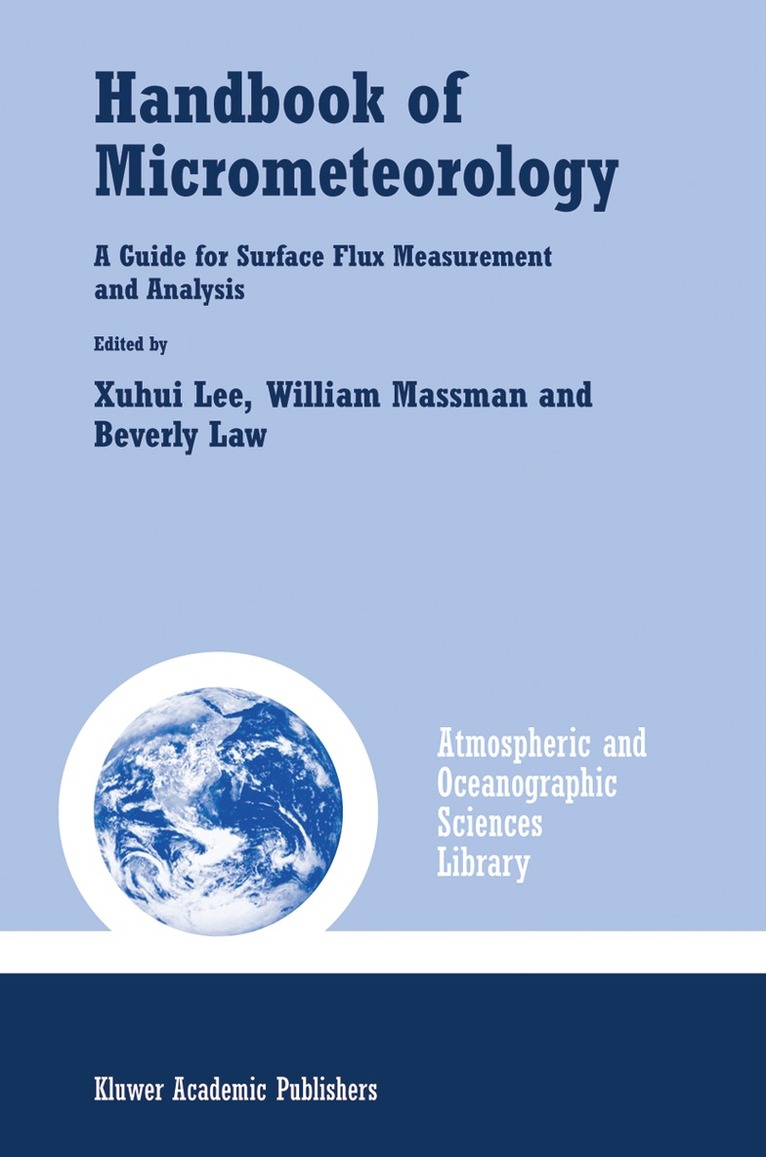
Micrometeorology is a branch of meteorology that is concerned with atmospheric phenomena and processes near the ground at scales of tens of meters to several kilometers. Progress in micrometeorologyismade throughexperimentalinvestigationofthesephenomenaandquantitative studyattemptingtobringordertoexperimentaldata. Studiesofsurfa- air ?ux play a crucial role in this endeavor. The current paradigm of micrometeorology builds on two premises: (i) that scale separation exists so that the microscale phenomena can be treated more or less in isolation of phenomena occurring at larger scales, and (ii) that these phenomena are in?uenced by the surface to such an extent that “external factors” can be ignored. Quantitative studies have been based on the assumption of horizontal homogeneity, which inevitably biases the investigation toward over-idealization of the real world by restricting it to perfectly ?at topography and daytime, fair weather conditions. This bias was noted by John Philip 40 years ago: “Experimenters attempt to avoid [advection] by working on sites downwind of extensive ‘homogeneous’ areas. Sometimes advection is invoked to explain otherwise inexplicable observations...” (J. Meteorol. 16, 535).