William McKee Evans – författare
Visar alla böcker från författaren William McKee Evans. Handla med fri frakt och snabb leverans.
4 produkter
4 produkter
E-bok
Engelska, 2010365 kr
Läs direkt efter köp
In this boldly interpretive narrative, William McKee Evans tells the story of America''s paradox of democracy entangled with a centuries-old system of racial oppression. This racial system of interacting practices and ideas first justified black slavery, then, after the Civil War, other forms of coerced black labor and, today, black poverty and unemployment. At three historical moments, a crisis in the larger society opened political space for idealists to challenge the racial system: during the American Revolution, then during the "irrepressible conflict" ending in the Civil War, and, finally, during the Cold War and the colonial liberation movements. Each challenge resulted in an historic advance. But none swept clean. Many African Americans remain segregated in jobless ghettoes with dilapidated schools and dismal prospects in an increasingly polarized class society. Evans sees a new crisis looming in a convergence of environmental disaster, endless wars, and economic collapse, which may again open space for a challenge to the racial system. African Americans, with their memory of their centuries-old struggle against oppressors, appear uniquely placed to play a central role.
E-bok
Engelska, 2015259 kr
Läs direkt efter köp
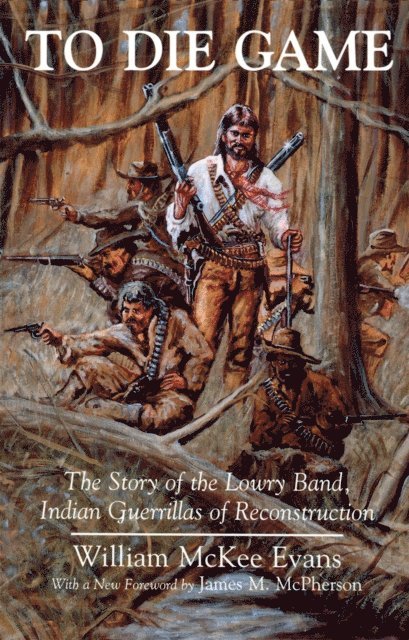
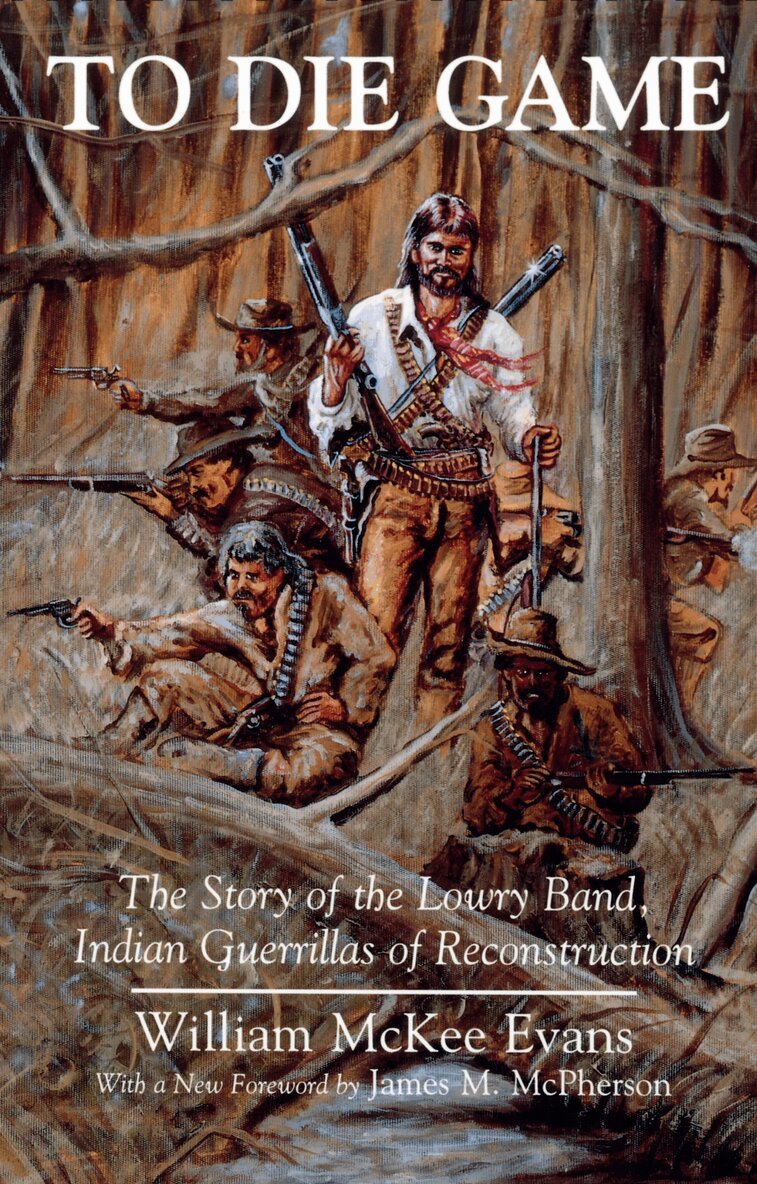
During the Civil War many young Lumbee Indians of North Carolina hid in the swamps to avoid conscription into Confederate labor battalions and carried on a running guerilla war. To Die Game is the story of Henry Berry Lowry, a Lumbee who was arrested for killing a Confederate official. While awaiting trial, he escaped and took to the swamps with a band of supporters. The Lowry band became as notorious as their contemporaries Jesse and Frank James, as they terrorized bush-whacked leaders of possses and military companies. For more than five years, with the support of local Indians and Negroes, they eluded capture. In 1872, Henry disappeared and some of his other followers were eventually hunted down and killed by bounty hunters.
Häftad, Engelska, 1996
220 kr
Skickas inom 10-15 vardagar
The dramatic and exciting story of Indian guerilla warfare against the Confederates during the Civil War. During the Civil War many young Lumbee Indians of North Carolina hid in the swamps to avoid conscription into Confederate labor battalions and carried on a running guerilla war. To Die Game is the story of Henry Berry Lowry, a Lumbee who was arrested for killing a Confederate official. While awaiting trial, he escaped and took to the swamps with a band of supporters. The Lowry band became as notorious as their contemporaries Jesse and Frank James, as they terrorized bush-whacked leaders of possses and military companies. For more than five years, with the support of local Indians and Negroes, they eluded capture. In 1872, Henry disappeared and some of his other followers were eventually hunted down and killed by bounty hunters.
Häftad, Engelska, 2004
511 kr
Skickas inom 5-8 vardagar
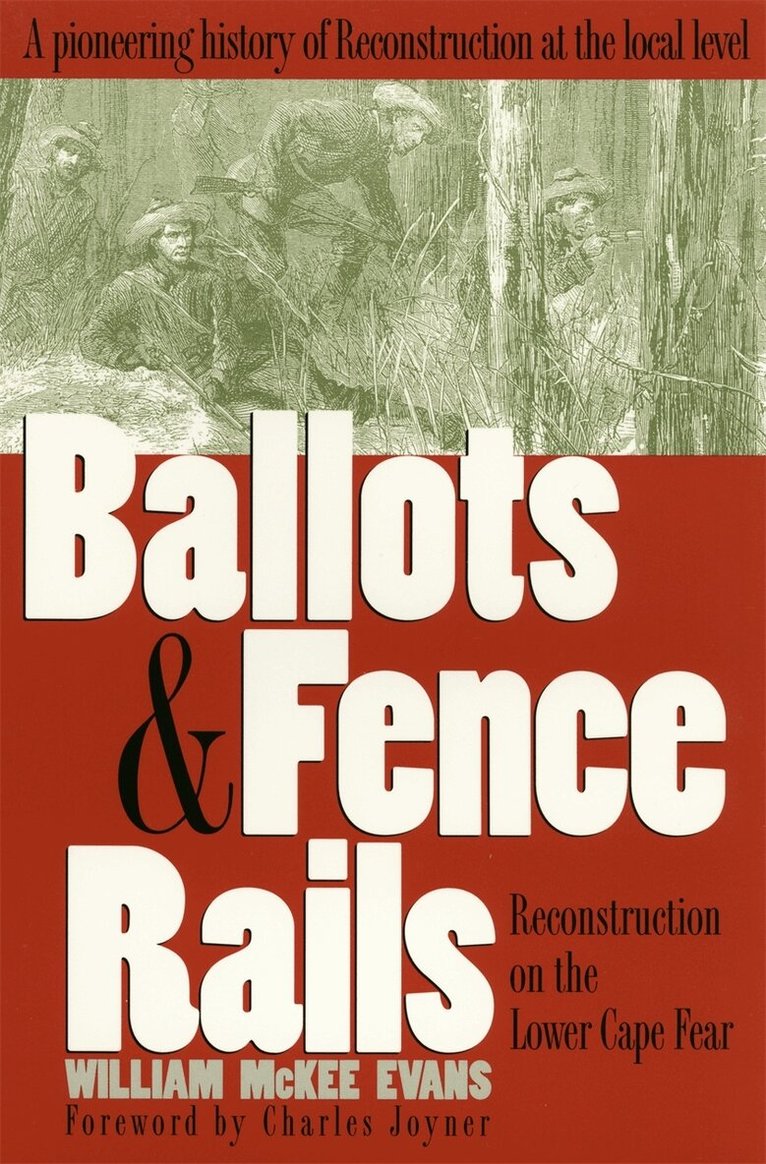
Ballots and Fence Rails recounts the struggle to reshape the post-Civil War society of the lower Cape Fear River in North Carolina, the Confederacy's last outlet to the sea. Focusing on events in the port city of Wilmington and its rural environs, William McKee Evans ranges in time from the region's occupation by Union forces in 1865 to the end of Reconstruction in 1877.Evans shows that although social change was sought at the ballot box, it was just as often resisted in the streets, with one faction armed with pistols and sabers and another, at one point, armed mostly with fence rails. Drawing on his extensive knowledge of the region, Evans dramatically portrays the conflict as it was viewed by former slaves, southern conservatives, carpetbaggers, and scalawags. Evans also clarifies many generalizations about Reconstruction that are often empty or unsubstantiated, showing that the right to vote cannot alone diffuse political power and that Reconstruction at the local level often differed from Reconstruction at the state level.First published in 1967, when local history was still viewed as parochial or less important than national history, Evans's work is now considered pioneering. In his foreword Charles Joyner writes that "by seeking the universal in the particular, by pursuing large questions in his small place, William McKee Evans in Ballots and Fence Rails makes an important and distinctive contribution to the historical discipline."