William O. Berry – författare
Visar alla böcker från författaren William O. Berry. Handla med fri frakt och snabb leverans.
3 produkter
3 produkter
E-bok
PDF, Engelska, 2013687 kr
Läs direkt efter köp
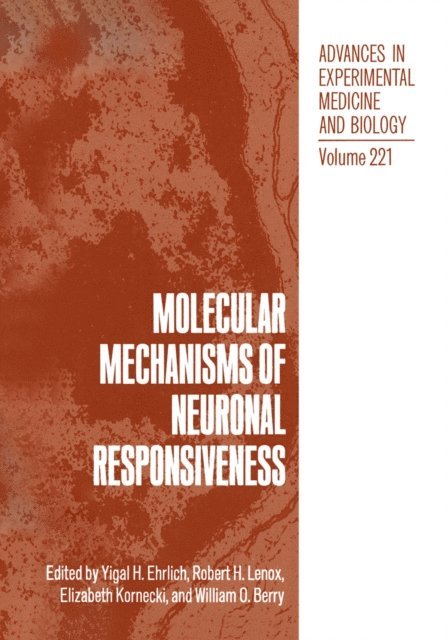
The interaction of neurotransmitters, neuromodulators and neuroactive drugs with receptors localized at the cell surface initiates a chain of molecular events leading to integrated neuronal responses to the triggering stimuli. Major advancements in the characterization and isolation of recep tor molecules have answered many quest ions regarding the nature of the ele ments that determine the specificity in these interactions. At the same time, recent studies have provided evidence that delicate regulation by intracellular enzymatic systems determines the efficiency of the stimulus response coupling process, mediates the interaction between receptors, operates in feedback control mechanisms and transduces signals from the receptors to various effector sites in a highly coordinated fashion. These studies are at the focus of the present volume, which is an outcome of a symposium held at the University of Vermont College of Medicine on March 21-23, 1986, in conjunction with the seventeenth annual meeting of the Amer ican Society for Neurochemistry. The symposium has demonstrated clearly that the concerted efforts of investigators in neurophysiology, biochemis try, pharmacology, cell-biology, molecular genetics, neurology, and psy chiatry are required to achieve better understanding of the processes under lying neuronal responsiveness. This volume includes contributions provided by prominent investigators in all these research areas. We hope that the readers will find here a useful source of information and ideas for stimu lating further studies which may serve to narrow the gap between basic neuroscience research and its clinical implications.
Häftad, Engelska, 2012
549 kr
Skickas inom 10-15 vardagar
The interaction of neurotransmitters, neuromodulators and neuroactive drugs with receptors localized at the cell surface initiates a chain of molecular events leading to integrated neuronal responses to the triggering stimuli. Major advancements in the characterization and isolation of recep tor molecules have answered many quest ions regarding the nature of the ele ments that determine the specificity in these interactions. At the same time, recent studies have provided evidence that delicate regulation by intracellular enzymatic systems determines the efficiency of the stimulus response coupling process, mediates the interaction between receptors, operates in feedback control mechanisms and transduces signals from the receptors to various effector sites in a highly coordinated fashion. These studies are at the focus of the present volume, which is an outcome of a symposium held at the University of Vermont College of Medicine on March 21-23, 1986, in conjunction with the seventeenth annual meeting of the Amer ican Society for Neurochemistry. The symposium has demonstrated clearly that the concerted efforts of investigators in neurophysiology, biochemis try, pharmacology, cell-biology, molecular genetics, neurology, and psy chiatry are required to achieve better understanding of the processes under lying neuronal responsiveness. This volume includes contributions provided by prominent investigators in all these research areas. We hope that the readers will find here a useful source of information and ideas for stimu lating further studies which may serve to narrow the gap between basic neuroscience research and its clinical implications.
E-bok
Engelska, 2013653 kr
Läs direkt efter köp
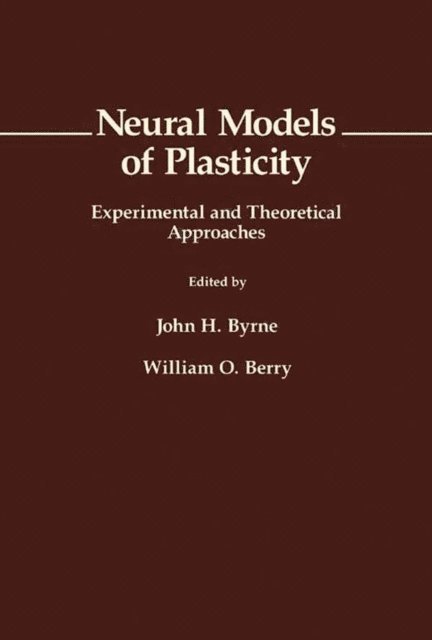
Neural Models of Plasticity: Experimental and Theoretical Approaches is an outgrowth of a conference that was held at Woods Hole, Massachusetts, in the spring of 1987. The purpose of that conference was to review recent developments in both areas and to foster communication between those researchers pursuing theoretical approaches and those pursuing more empirical approaches. Contributions have been solicited from individuals who represent both ends of the spectrum of approaches as well as those using a combination of the two. These indicate that our knowledge of the plastic capabilities of the nervous system is accelerating rapidly due to rapid advances in the understanding of basic subcellular and molecular mechanisms of plasticity, and because of the computational capabilities and plastic properties that emerge from neural networks and assemblies. The book contains 19 chapters and opens with a study on the role of the neuromodulator in associative learning of the marine mollusk Hermissend. Subsequent chapters examine topics such as learning and memory in Aplysia; the Hebb rule for synaptic plasticity; olfactory processing and associative memory in the mollusk Limax maximus; simulation of a classically conditioned response; and the neural substrates of memory, focusing on the role of the hippocampus.