William P. Malm – författare
Visar alla böcker från författaren . Handla med fri frakt och snabb leverans.
5 produkter
5 produkter
Häftad, Engelska, 2021
205 kr
Skickas inom 5-8 vardagar
Chinese and Japanese Music-Dramas is the result of a conference on the relations between Chinese and Japanese music-drama held at the University of Michigan, Ann Arbor, on October 1–4, 1971. In addition to the Association for Asian Studies, four U-M departments participated in the conference: the Center for Japanese Studies, the Center for Chinese Studies, the School of Music, and the Speech Department. One important inspiration for the creation of such an interdisciplinary conference was the fact that each participant had found, after years of individual research on music-drama in East Asia, consistent frustration caused by attempts to deal on their own with multiple cultural and technical problems. Another motivating force was an awareness among many members of the four disciplines involved that the topic is in fact one of the largest untouched fields of scholarly endeavor in both Asian and theatrical studies. The collection opens with J. I. Crump’s exploration of the Ming commentators who began to subject Yüan musical drama to the same critiques as other literature from the past. In the second chapter, Rulan Chao Pian looks to the structure of arias in Peking Opera for clues about what distinguishes this art form. William P. Malm turns to three key sources for the performance conventions of Japanese Noh drama to glean any Sino-Japanese music relationships that exist in technical terms and practices. In the fourth essay, Carl Sesar analyzes a Noh play that stages the tension between Chinese influence and Japanese originality. Roy E Teele concludes the volume with a formal study of Noh play structure to assess lineages of influence from Chinese dramatic forms. After each contribution, the editors print a transcript of the conference participants’ discussion of that paper, providing the reader with a detailed and nuanced view of how the contributors understood and responded to each other’s work.
Inbunden, Engelska, 2021
501 kr
Skickas inom 3-6 vardagar
Häftad, Engelska, 2021
359 kr
Skickas inom 3-6 vardagar
E-bok
Engelska, 1990199 kr
Läs direkt efter köp
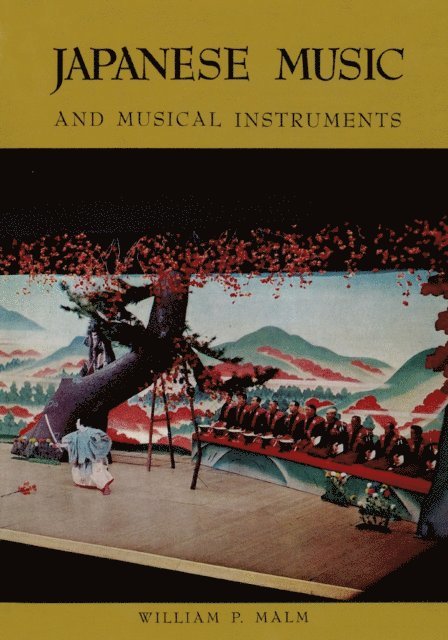
This interesting and authoritative book includes essential facts about the various forms of Japanese music and musical instruments and their place in the overall history of Japan. Japanese Music and Musical Instruments has three main orientations: The history of Japanese music Construction of the instruments Analysis of the music itself.The book covers in a lucidly written text and a wealth of fascinating photographs and drawings the main forms of musical expression. Many readers will find the useful hints on purchasing instruments, records, and books especially valuable, and for those who wish to pursue the matter further there is a selected bibliography and a guide to Tokyo''s somewhat hidden world of Japanese music. It will be found an invaluable aid to the understanding and appreciation of an important, but little-known, and fascinating aspect of Japanese culture.
E-bok
Engelska, 200641 kr
Läs direkt efter köp
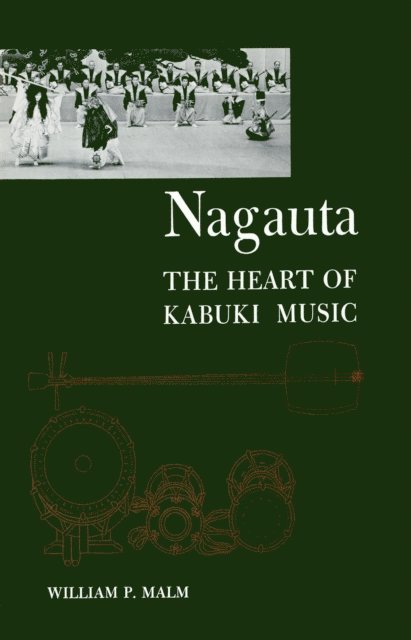
This study of Japanese music explore Nagauta or literally "long song"—the delicate and complex music that accompanies kabuki theater—in great detail.The Kabuki theater of Japan has achieved a growing reputation as one of the world''s most brilliant achievements in the field of theater. And the number of studies made on the subject in the West has been considerable. Yet, in spite of the fact that so much of the unique brilliance of the kabuki stage depends on the character of its music, the manner in which it is used, and its integral connection with the development of the dramatic impact of the plays, very little has been written on this phase of the genre.Of particular interest are the attempts to explore the various approaches to form music in the vast repertoire of this living art music. The playing techniques of the instruments are explained, and the relations of each instrument''s music to the vocal line and to the overall design is shown.The analysis is accompanied by two compete transcription of nagauta in Western notation. These transcriptions are the first complete scores of nagauta ever printed. Additional musical examples, bibliography, discography, and glossary-index add value to the text.