William P. Peterson – författare
Visar alla böcker från författaren William P. Peterson. Handla med fri frakt och snabb leverans.
2 produkter
2 produkter
Häftad, Engelska, 2011
706 kr
Skickas inom 5-8 vardagar
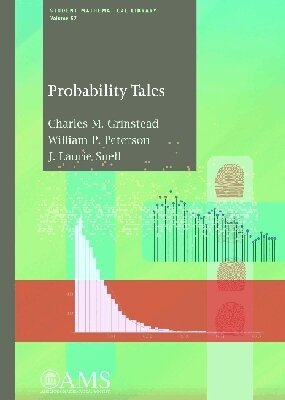
This book explores four real-world topics through the lens of probability theory. It can be used to supplement a standard text in probability or statistics. Most elementary textbooks present the basic theory and then illustrate the ideas with some neatly packaged examples. Here the authors assume that the reader has seen, or is learning, the basic theory from another book and concentrate in some depth on the following topics: streaks, the stock market, lotteries, and fingerprints. This extended format allows the authors to present multiple approaches to problems and to pursue promising side discussions in ways that would not be possible in a book constrained to cover a fixed set of topics. To keep the main narrative accessible, the authors have placed the more technical mathematical details in appendices. The appendices can be understood by someone who has taken one or two semesters of calculus.
E-bok
PDF, Engelska, 20091 451 kr
Läs direkt efter köp
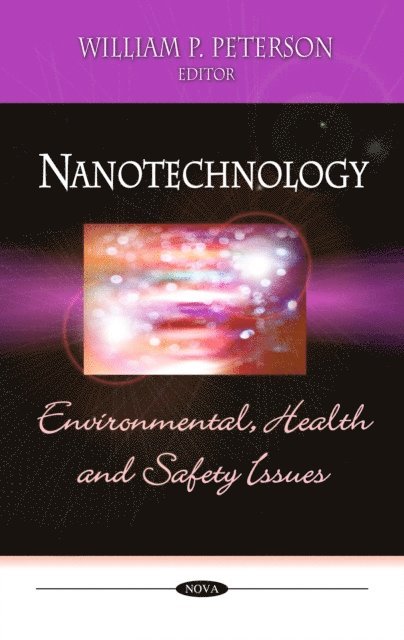
Nanotechnology - a term encompassing nanoscale science, engineering, and technology - is focused on understanding, controlling, and exploiting the unique properties of matter that can emerge at scales of one to 100 nanometers. A key issue before Congress regarding nanotechnology is how best to protect human health, safety, and the environment as nanoscale materials and products are researched,developed, manufactured, used, and discarded. While the rapidly emerging field of nanotechnology is believed by many to offer significant economic and societal benefits, some research results have raised concerns about the potential adverse environmental, health, and safety (EHS) implications of nanoscale materials. Potential detrimental effects of nanoscale materials and devices - both real and perceived - must be addressed to protect and improve human health, safety, and the environment; enable accurate and efficient risk assessment, risk management, and cost-benefit trade-offs; foster innovation and public confidence; and ensure that society can enjoy the widespread economic and societal benefits that nanotechnology may offer. This new book examines those issues.